

Guiyang, the capital of Guizhou province, is often called the “Summer Capital of China” for its pleasant year‑round climate and lush green hills. Unlike crowded megacities, this laid‑back mountain city offers a genuine glimpse into southwestern China’s ethnic minority cultures, spicy cuisine, and stunning karst landscapes. Whether you’re a nature lover or a foodie, Guiyang serves as a perfect gateway to explore less‑traveled corners of China.
What is the best time to visit Guiyang
If you hate sticky heat, Guiyang is a dream come true. Summers are cool, with average highs around 26°C (79°F), making June to August the peak season for travelers escaping hotter Chinese cities. Spring (March–May) brings blooming flowers and misty mountains, while autumn (September–November) offers crisp air and fewer crowds. Winters are chilly and damp, but you’ll find lower hotel rates and empty tourist sites. Avoid the first week of October (China’s National Holiday) when domestic tourists flood the city.

How to get around Guiyang efficiently
Guiyang’s public transport has improved dramatically. The modern metro system currently has three lines covering the city center and major stations like the North Railway Station. Buses are cheap but routes can be confusing for non‑Mandarin speakers. For short trips, Didi (China’s Uber) is your best friend – a ride across town typically costs $2‑4. Taxis start at around $1.50, but ensure the driver uses the meter. Walking is enjoyable in areas like the old town and along Nanming River, but be prepared for hills and occasional stairs.
What are the must‑try foods in Guiyang
Guiyang’s food is bold, sour, and spicy – a world away from sweet Cantonese dishes. You absolutely cannot leave without trying sour fish hotpot (suān tāng yú), a fermented tomato‑based broth loaded with tender river fish and herbs. For breakfast, hunt down changwang noodles – slippery noodles topped with braised pork intestine and blood curds. Street snacks are everywhere: sī wá wa (rice wrappers filled with julienned vegetables and peanut sauce), spicy tofu, and sticky rice cakes wrapped in bamboo leaves. Vegetarians can enjoy stir‑fried fern buds and wild mushrooms.
Where to stay in Guiyang for first‑timers
For convenience, book a hotel near the Dashizi or Huaguoyuan areas. Dashizi is the historic core,walking distance to Jiaxiu Tower and night markets. Huaguoyuan, despite its massive housing complexes, has budget hostels and mid‑range hotels with easy metro access. If you prefer serenity, look for a resort in the Huaxi District, where a giant park and river run through campus‑style university grounds. Avoid staying near the airport – it’s far from attractions and lacks dining options. Most three‑star hotels offer English booking via apps like .
Top 3 unmissable attractions in Guiyang
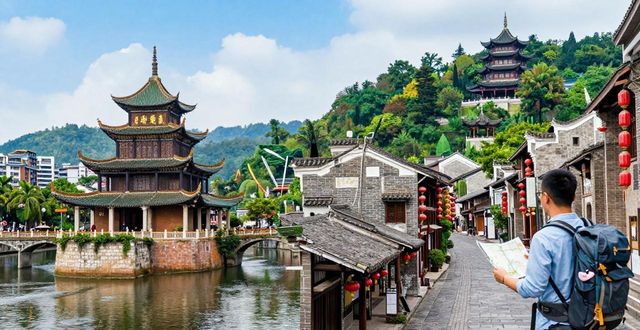
First, Jiaxiu Tower – the iconic Ming‑dynasty structure standing on a rock in Nanming River. Go at sunset when it lights up against the water. Second, Qianling Park, a massive urban park with wild monkeys, a tranquil lake, and a 300‑year‑old Buddhist temple at the top of the hill. The cable car ride costs only $3 round‑trip. Third, Qingyan Ancient Town, a 40‑minute bus ride from the city. This well‑preserved stone fortress is far less touristy than other Chinese ancient towns, with original city gates, old temples, and local snacks like rose candy.
Have you ever visited a Chinese city that isn’t Beijing or Shanghai? If you have, what surprised you the most about getting off the beaten path? Share your story in the comments below – and don’t forget to like and save this guide for your future Guiyang trip!