
Xi’an is not just about the Terracotta Warriors. Its food scene is a living museum of flavors, shaped by centuries of trade, migration, and climate. The city sits at the crossroads of China’s culinary north and west, and its dishes reflect a bold, hearty, and often surprising approach to eating. From street stalls to family kitchens, every bite tells a story of survival, adaptation, and pure pleasure.
Why is Xi’an food so different from other Chinese cities
The biggest difference is the heavy use of wheat over rice. Xi’an sits in the wheat belt of China, so noodles, flatbreads, and dumplings dominate the table. You will find fewer sweet and sour dishes and more savory, spicy, and tangy flavors. Another key factor is the Muslim influence. The Hui Muslim community has lived here for centuries, and their halal cooking methods created a unique fusion of Central Asian and Chinese techniques. Lamb and beef are common, and cumin, chili, and garlic are used generously. This is not your typical Cantonese or Sichuan food. It is rougher, smokier, and more rustic.
The climate also plays a role. Xi’an has cold, dry winters and hot summers. People historically needed food that preserved well and provided energy. That is why you see so many stews, breads that last days, and pickled vegetables. The famous cold noodles, or liangpi, are a summer staple that cools the body, while lamb soup with flatbread warms you up in winter. Every dish has a practical reason behind it.
Which unique dishes should you try first

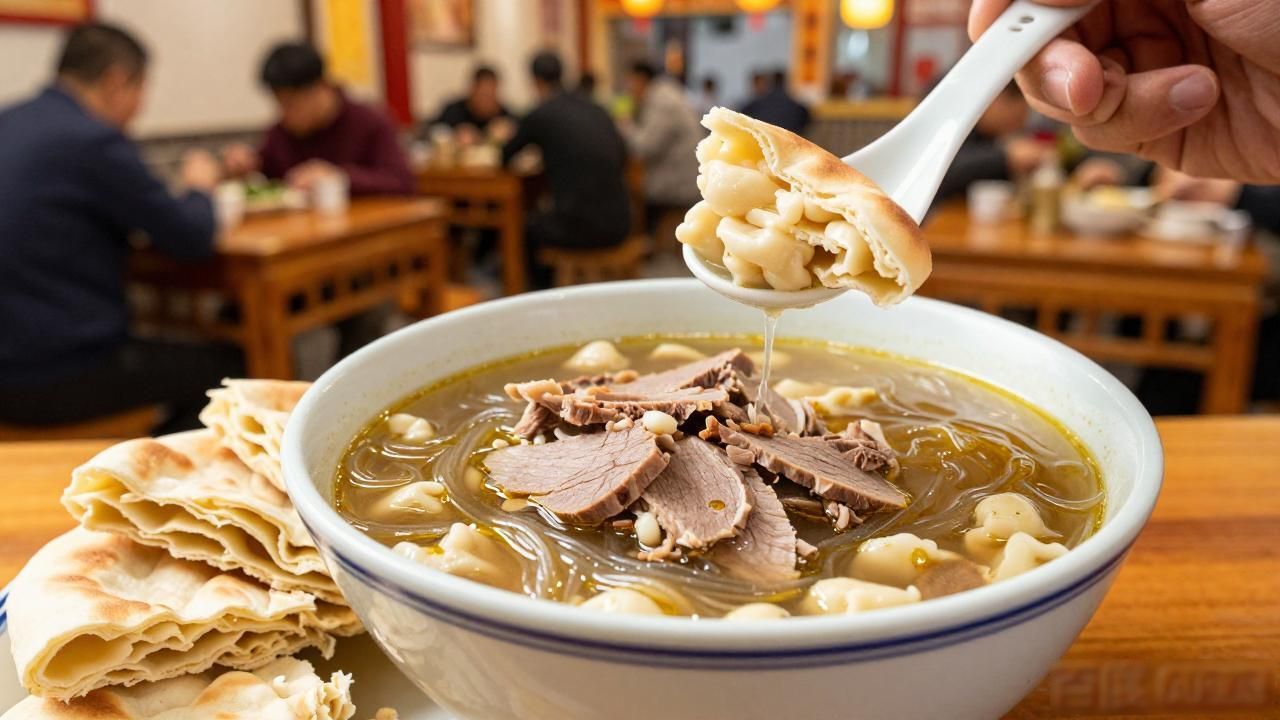
Start with the most iconic: yangrou paomo, or lamb soup with shredded flatbread. You tear the bread into tiny pieces,and the kitchen adds rich lamb broth, thin slices of meat, and vermicelli. It is eaten with a spoon, and the bread soaks up all the flavor. Locals argue fiercely over which restaurant does it best, but the dish itself is non-negotiable.
Next, try biangbiang noodles. These are thick, hand-pulled noodles, often served with chili oil, garlic, and vegetables. The name comes from the sound the dough makes when slapped on the counter. It is messy, filling, and incredibly satisfying. For something cold, order liangpi. These are steamed wheat or rice noodles, cut into strips, and tossed with vinegar, chili, and sesame paste. It is a perfect snack on a hot day.
Do not miss the street food. Grilled lamb skewers, called yangrou chuan, are seasoned with cumin and chili powder and cooked over charcoal. You eat them right off the stick. Another hidden gem is suan tang jiao, or sour soup dumplings, which are small and tangy, served in a light broth. These are less known to tourists but loved by locals.
End with a sweet treat: jing gao, or crystal cake. It is made from glutinous rice, dates, and beans, steamed until soft and sweet. It is simple, but the texture and natural sweetness make it a perfect finish to a heavy meal.
Xi’an’s food is not fancy. It is honest, bold, and deeply connected to the land and its people. If you want to understand the city, skip the tourist buffets and eat where the locals eat. Your taste buds will thank you.