

Watching giant pandas in their natural habitat is one of the most rewarding experiences for wildlife travelers. These gentle creatures have captivated people worldwide,and China offers several dedicated centers where you can observe them up close. The key is knowing where to go and when to visit for the best experience.
Where are the best places to see pandas
The Chengdu Research Base of Giant Panda Breeding in Sichuan Province remains the most popular destination. This sprawling facility houses over a hundred pandas and provides visitors with walking paths that wind through bamboo forests and enclosure areas. Early morning visits yield the best viewing since pandas are most active during cooler hours.

Beyond Chengdu, the Wolong National Nature Reserve offers a more authentic wilderness experience. Located about three hours from the city, this sanctuary focuses on conservation and rehabilitation. You can join guided tours that take you deeper into mountainous terrain where captive-bred pandas practice survival skills before potential release.
The Shaanxi Province hosts the China Conservation and Research Center for the Giant Panda at the Qinling Mountains. This facility represents a different subspecies found only in that region. The pandas here appear slightly darker with broader faces compared to their Sichuan counterparts.
How to plan your panda viewing trip
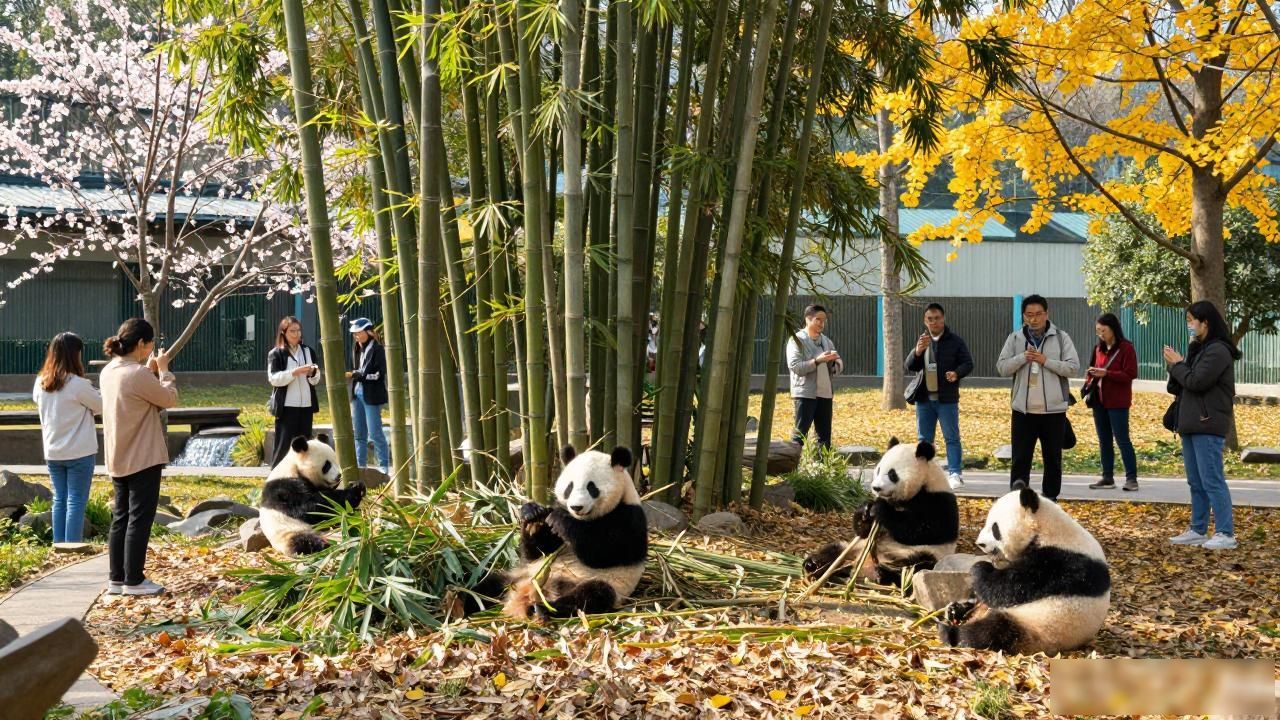
Spring and autumn provide the most comfortable weather for visiting these centers. Summer months bring heat and humidity that make pandas sluggish and less inclined to play or eat. Winter can be chilly but offers clearer skies and fewer crowds at popular sites.
Booking tickets online in advance saves considerable time during peak travel seasons. Many centers sell out days ahead, especially around Chinese holidays when domestic tourism surges. Consider visiting on weekdays rather than weekends for a quieter experience.
Photography enthusiasts should pack lenses with at least 200mm reach. Flash photography is strictly prohibited at all facilities to protect the animals’ eyesight. Respect all signage and barriers designed to keep both visitors and pandas safe.
What to expect when visiting pandas

Pandas spend roughly half their day eating bamboo and another quarter sleeping. The remaining time goes toward gentle movement between feeding areas or climbing trees. Understanding this schedule helps set realistic expectations about interaction opportunities.
Most centers feature educational exhibits about conservation efforts and breeding programs. Staff members sometimes conduct feeding demonstrations at scheduled times. These sessions provide excellent photo opportunities while teaching visitors about panda behavior and dietary needs.
Volunteer programs lasting one to four weeks exist at select facilities. Participants help prepare bamboo, clean enclosures, and sometimes assist with enrichment activities. Such programs require advance application and physical fitness but offer unparalleled behind-the-scenes access to these remarkable animals.