
Eating your way through China’s streets is one of the most rewarding experiences a visitor can have. The country’s snack culture runs deep, shaped by centuries of regional traditions, local ingredients, and an unapologetic love for bold flavors. Forget the polished restaurant scene for a moment and step into the steam-filled alleys where food carts line every corner, where aromas mix in ways that pull you off the sidewalk and into the chaos.
What Street Food to Try First
Start with jianbing, a savory crepe sold at breakfast stands across northern China. Thin batter spreads across a hot griddle, an egg cracks on top, then scallions and a crisp fried cracker get folded in before a brush of spicy bean sauce finishes it. You hold it in your hand and eat while walking. It is simple, affordable, and deeply satisfying.

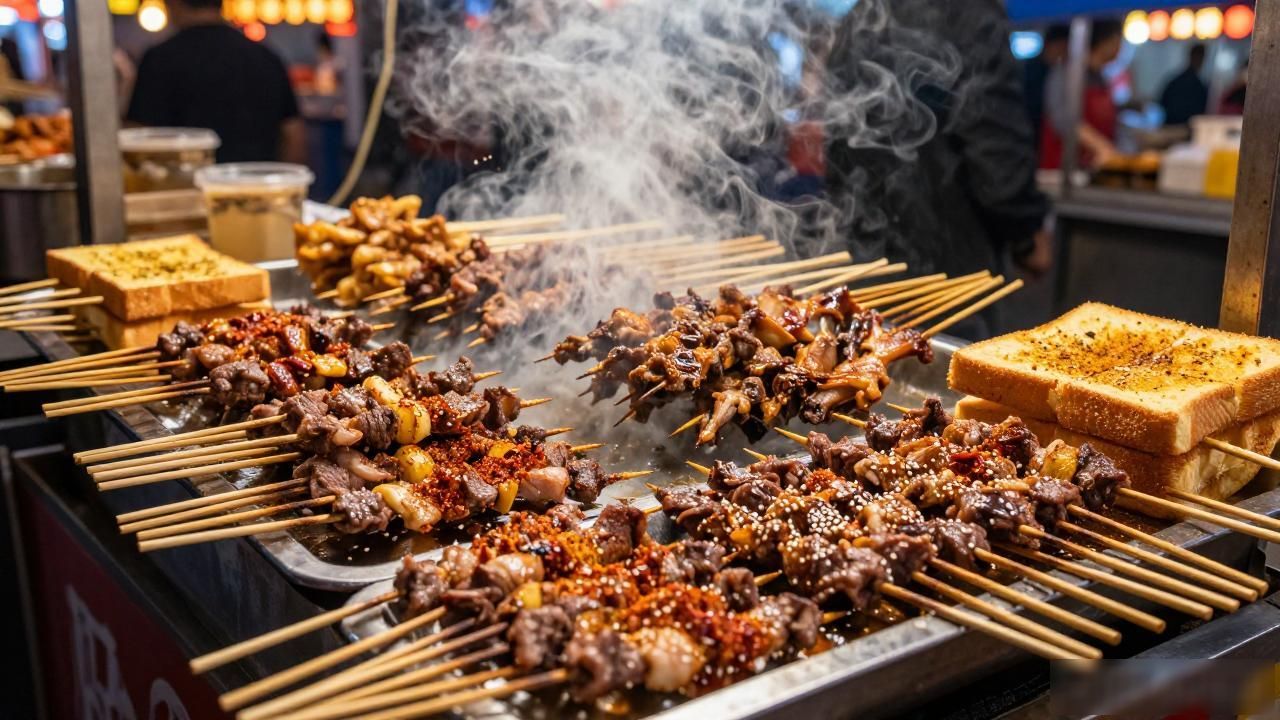
For something more intense, seek out chuan’r — skewered meats and vegetables grilled over charcoal. Beef, lamb, chicken cartilage, even bread slices all go on the stick, then get dusted with cumin,chili powder, and sesame seeds. Night markets come alive around these stalls, smoke rising into cool evening air.
Tanghulu deserves a mention too — candied hawthorn berries on a stick, sometimes filled with taro or wrapped around grapes. The glass-sharp sugar shell gives way to tart fruit inside. It looks almost too pretty to eat, but locals queue up anyway.
Where Are These Snacks Sold
Street food in China does not live in one type of place. Some of it hides in residential neighborhoods where lunch crowds gather around steaming woks. Others spill onto main streets after sunset, transforming entire blocks into open-air food markets.
Night markets represent the biggest concentration of street snacks. Chengdu’s Jinli Ancient Street, Changsha’s Pozi Street, and Xi’an’s Muslim Quarter draw both locals and visitors. The energy there is electric — plastic stools, hanging lanterns, vendors shouting over sizzling pans. These places survive because locals keep returning.
Breakfast streets tell a different story. Head to a busy intersection early in the morning and watch food carts materialize like clockwork. This is where people grab something quick before work or school. The rhythm here is faster, the portions smaller, the prices lower. It feels authentic precisely because it is routine for the community.
How to Spot the Best Stalls
The longest line usually means the best food. This rule holds true across nearly every Chinese city. If a stall has a steady stream of customers, do not hesitate. Wait in line. The people standing next to you know what they are doing.
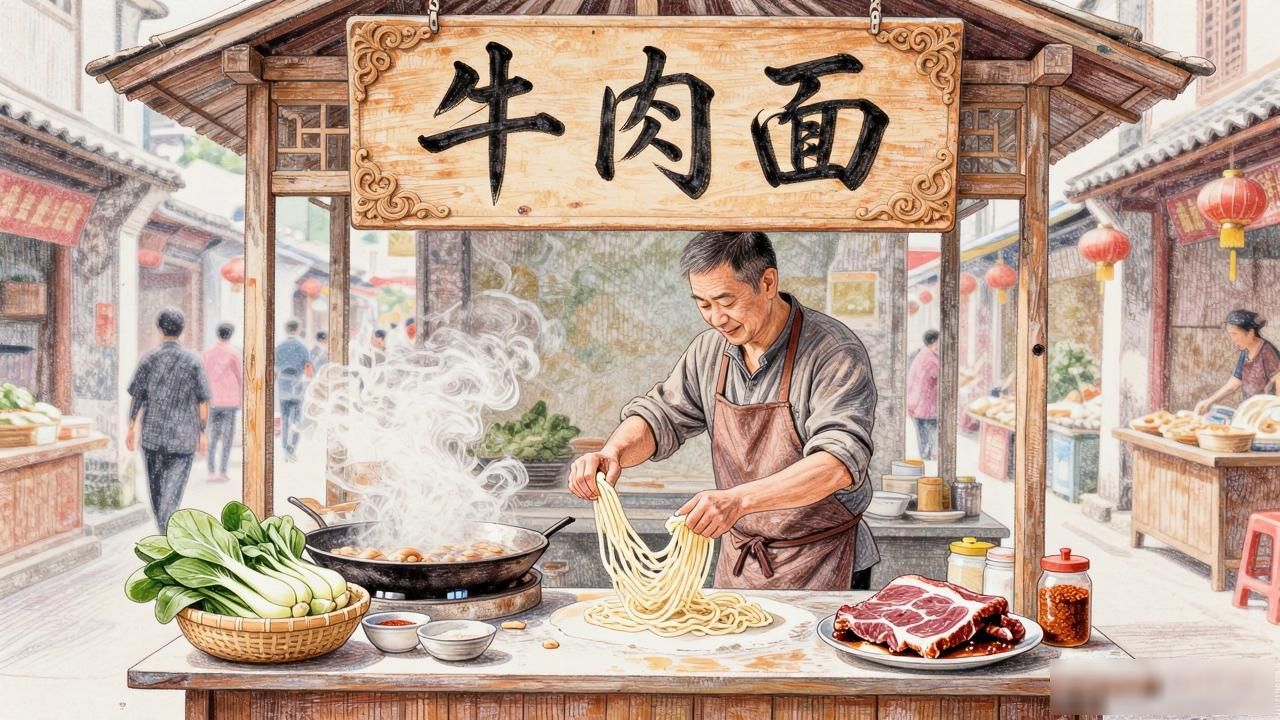
Look for stalls that specialize. A vendor who only makes one thing — say, beef noodles or stinky tofu — typically masters that single dish better than someone flipping ten different options. Mastery comes from repetition, and repetition demands focus.
Price tells you something too. Tourist traps price tourists. When a menu includes English translations alongside inflated prices, you are likely in a zone designed for visitors who do not know better. Walk two blocks further and prices drop while quality rises.
Street food in China is not about refinement. It is about personality, speed, and flavor that hits hard and stays with you. The best meals often come from the smallest setups, where a single wok and decades of practice speak louder than any rating on an app.