
Chinese paper cutting, or jianzhi, is a traditional folk art that turns simple paper into intricate designs. While the artist’s skill is key, the right tools make all the difference. Many beginners assume any scissors or knife will work, but using proper Chinese paper cutting tools can elevate your precision, speed, and enjoyment. In this article,I’ll break down the essential tools—scissors, carving knives, cutting mats, and paper—so you can start creating beautiful cutouts with confidence.
What scissors are best

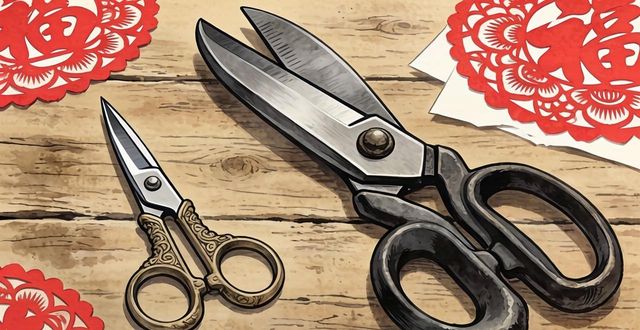
For traditional Chinese paper cutting, two types of scissors are commonly used. The first is a pair of sharp, pointed scissors with thin blades, often called embroidery scissors. They allow you to make tiny, curved cuts and reach into tight spaces. The second type is larger, heavier scissors for cutting multiple layers of paper at once. When choosing scissors, look for blades that meet tightly along the entire edge—any gap will tear rather than cut. Many Chinese artists prefer scissors with an adjustable screw, so they can control the blade tension. A good test is to cut a smooth circle: if the paper puckers or the cut is jagged, your scissors need sharpening or replacing.
How to choose a carving knife
While scissors are ideal for many designs, intricate patterns with fine internal details often require a carving knife. The most common choice among Chinese paper cutters is a swivel knife with a replaceable blade. Swivel knives allow the blade to rotate freely as you move the handle, making curved lines much smoother. For straight lines and tiny holes, a fixed blade knife works well. Blade material matters: carbon steel stays sharp longer but rusts easily, while stainless steel is lower maintenance but dulls faster. A comfortable, lightweight handle is crucial because you may carve for hours. Many professionals also keep a sharpening stone or strop handy, touching up the blade every few minutes to maintain a razor edge.
Why a cutting mat is essential
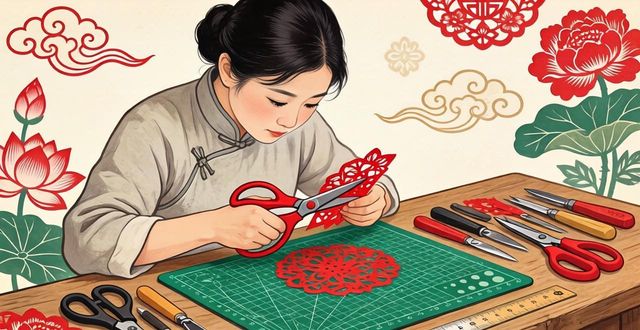
A proper cutting mat protects both your work surface and your blade. The best mats for Chinese paper cutting are self-healing, meaning the material closes up after each cut. This keeps the surface smooth and prevents your knife from slipping into old grooves. Look for a mat that is at least A3 size (about 16 x 12 inches) so you have room to rotate your paper. The ideal hardness is medium—too soft and the blade sinks in too deep; too hard and it dulls quickly. Many Chinese artists use a green or blue mat with a grid pattern printed on it. The grid helps you align symmetrical designs and keep cuts straight. Never use a glass or metal surface; they will destroy your blade instantly.
Which paper works best
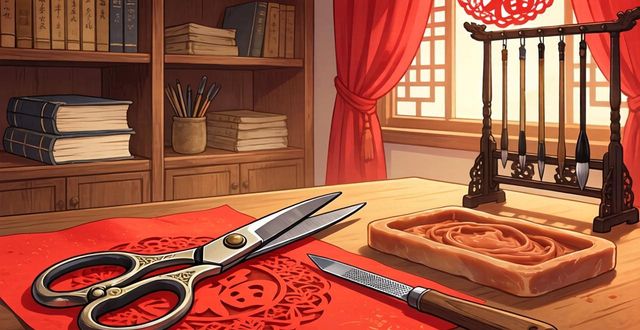
Even the sharpest tool is useless without the right paper. Traditional Chinese paper cutting uses xuan paper (rice paper) or red la jian paper. Xuan paper is thin, strong, and slightly translucent, making it easy to trace patterns. Red paper symbolizes good fortune and is the most common color for festivals. For practice, choose a paper weight between 20 and 30 gsm (grams per square meter). Too heavy, and it resists cutting; too light, and it tears easily. You can also stack three to five sheets together to cut multiple copies at once—a technique used by folk artists to sell their designs. Avoid glossy or coated papers; the coating gums up blades and causes slipping.
Now that you know the essential Chinese paper cutting tools, which one do you think is the hardest to master—scissors, the carving knife, or something else? Share your thoughts in the comments, and don’t forget to like and share this article with fellow craft lovers.