
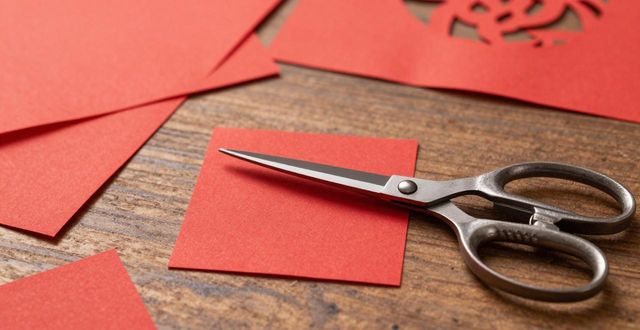
Chinese paper cutting, or jianzhi, is a delicate folk art that has been passed down for centuries. While creativity and patience are vital, having the right tools makes all the difference between a frustrating mess and a beautiful masterpiece. Many beginners assume any scissors or knife will do, but traditional Chinese paper cutting demands specific tools that allow for precision, control, and clean cuts. In this guide,I will walk you through the essential tools you need to start cutting like a pro, from basic scissors to specialty knives and proper work surfaces.
What are the basic tools for Chinese paper cutting
The absolute must-have tool for Chinese paper cutting is a pair of high-quality, sharp-tipped scissors. Unlike standard household scissors, traditional Chinese paper cutting scissors have long, slender blades and very fine points. These features allow you to snip intricate curves, sharp corners, and tiny details inside a design without tearing the paper. Many experienced artists prefer scissors with a spring mechanism that automatically opens after each cut, reducing hand fatigue during long sessions. The blades should be made of stainless steel or carbon steel to maintain sharpness over time.

Besides scissors, you will need a small, sharp carving knife for cutting extremely delicate patterns or layered paper. While scissors are used for most freehand cuts, a knife gives you more control when removing tiny interior sections or creating fine lines that scissors cannot reach. Traditional Chinese artists often use a straight-blade knife with a wooden handle, similar to an X-Acto knife but with a thinner, more flexible blade. The paper itself also matters—red Xuan paper or thin rice paper is ideal because it is strong yet easy to cut without fraying.
How to choose the right scissors for paper cutting
When selecting scissors for Chinese paper cutting, pay close attention to the blade length and tip sharpness. The best scissors have blades between 3 to 4 inches long, which is short enough for maneuverability but long enough to cut smooth arcs. Avoid scissors with thick, blunt tips because they cannot reach into small loops or tight spaces. Test the pivot screw: it should be adjustable so you can loosen or tighten the blades as needed. Many professional paper cutters recommend brands like Zhang Xiaoquan, a famous Chinese scissor maker, or Japanese precision scissors for their exceptional sharpness and durability.
Another crucial factor is the handle design. Traditional Chinese paper cutting scissors often have asymmetrical handles—one large loop for the thumb and a smaller, flattened loop for the middle and ring fingers. This design gives you better control and allows the scissors to glide through paper effortlessly. If you have large hands, look for scissors with rubberized grips to prevent slipping. Remember that even the best scissors will dull over time, so invest in a small sharpening stone or ceramic rod to keep the blades in top condition. Never use your paper cutting scissors on any other material.
Why is a cutting mat or wax board essential
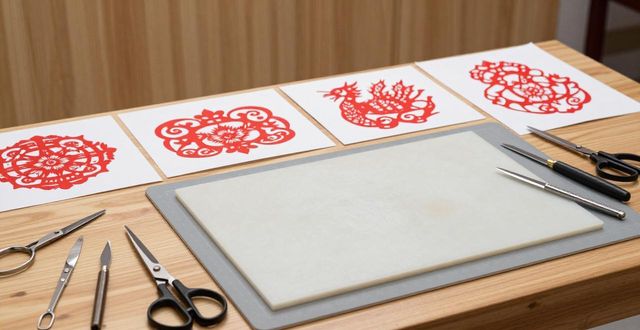
You cannot do serious paper cutting directly on a wooden desk or glass table. A soft, self-healing cutting mat provides the perfect surface because it protects your knife blades and prevents the paper from sliding. Standard green cutting mats from brands like Fiskars or Olfa work well, but traditional Chinese artists often use a wax board made of beeswax and vegetable oil mixed with wood ash. This wax board has a slightly sticky surface that holds the paper in place without tape, and the knife cuts into the wax, leaving the blade unharmed. You can make your own wax board by melting beeswax and mixing it with fine sawdust.
A good cutting surface also improves cutting accuracy and safety. When the paper is firmly supported, you can apply steady pressure without the material tearing or shifting. For beginners, I recommend starting with a standard A3-sized self-healing mat because it is affordable and widely available. If you plan to do very detailed work with a knife, consider getting a small wax board or a piece of soft pine wood. Never cut directly on a hard surface like metal or stone—this will instantly ruin your knife’s edge and make clean cuts impossible. Replace your cutting mat every year or two as the surface becomes too scarred.
How to maintain your paper cutting tools for longevity
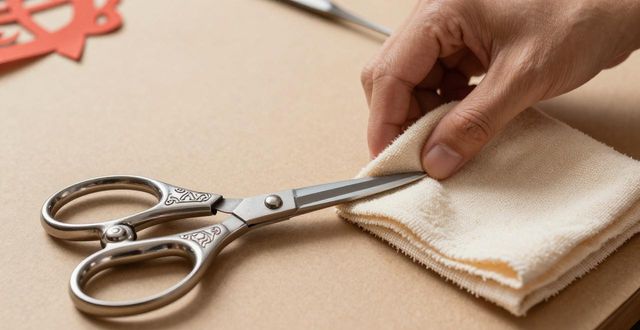
Proper maintenance is the secret to enjoying your Chinese paper cutting tools for many years. After each session, wipe the blades of your scissors and knives with a soft, dry cloth to remove paper dust and moisture. If you live in a humid area, apply a tiny drop of sewing machine oil or mineral oil to the pivot point of your scissors to prevent rust. Store your tools in a dry place, preferably in a fabric roll or a padded box where the blades do not touch each other. For knives, always replace the blade when you feel any resistance while cutting—a dull blade is more dangerous than a sharp one because it requires more force and can slip.
Sharpening scissors is a skill worth learning. Use a fine-grit sharpening stone (1000 to 3000 grit) and hold the blade at a 20-degree angle. Pull the blade across the stone from the pivot to the tip, about ten times per blade. For straight knives, use a leather strop loaded with polishing compound to realign the edge between full sharpenings. Avoid using electric sharpeners or pulling the blades through a carbide sharpener—these methods remove too much metal and ruin the precision geometry. With regular care, a good pair of Chinese paper cutting scissors can last a lifetime and even be passed down as a family treasure.
Now that you know exactly what tools you need and how to maintain them, you are ready to start creating your own beautiful paper cuttings. Remember that the best tool is the one that feels comfortable in your hand, so do not be afraid to try different scissors or knives until you find your perfect match. Have you already tried Chinese paper cutting, and if so, which tool do you find most indispensable for your work? Share your experience and favorite tips in the comments below, and do not forget to like and share this guide with fellow craft lovers.