

China is home to 55 officially recognized ethnic groups, each with its own language, traditional dress, and festivals. For travelers, diving into ethnic minority China tourism means stepping into villages where bronze drums still echo and where the food smells like nothing back home. This is a quick guide to where and how to experience it.
which ethnic minority China tourism spots to visit
The Miao villages around Xiangxi Prefecture in Hunan are the natural starting point. Wooden stilt houses climb the hillsides, and the Miao New Year celebration in January draws thousands of women in layered silver headdresses. Head to Zhujiajc if you want to walk through the “thousand-year stilt houses” that are still lived in, not just photographed.

Further west, in Guizhou, the Dong people of Zhengdu County built drum towers that double as village parliament halls. Their five-part polyphonic singing is a UNESCO intangible heritage listing, and you can hear it live at any village evening if you stay past the tourists. The Naxi people near Lijiang still use the last living pictographic script on Earth, and you can watch scribes painting it by hand in a quiet courtyard workshop.
what makes ethnic minority China tourism different
This is not a theme park. The Tujia women you meet at a market in Shaxi will argue with you over the price of dried fish with the same bluntness as any village anywhere. You sit cross-legged in their kitchens, eat rice from a shared bowl, and get told which leaf to wrap the wedding feast rice in.

Dress codes here are living practice, not costume. A Yao grandmother in Guangxi will show you how she dyes indigo cloth in the backyard using the exact same wooden vats her grandmother built. You are not watching a show; you are borrowing a seat at her bench while the smoke stings your eyes.
how to plan ethnic minority China tourism trip
Most of these villages sit within a two-hour drive of a rail hub. Kaili, Duyun, or Xiangxi Railway Station all connect to high-speed lines out of Changsha or Guiyang. Rent a car or grab a local minibus; the last leg into the hills is unpaved but entirely worth the bump.
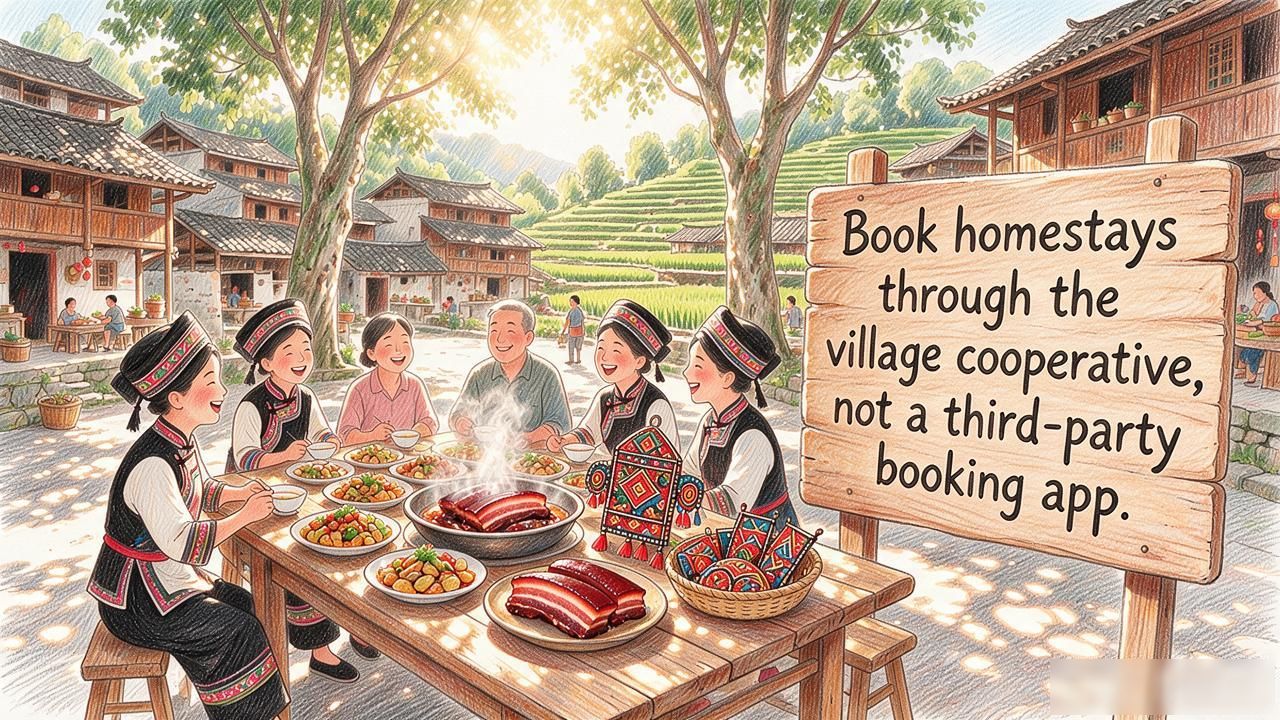
Book homestays through the village cooperative, not a third-party booking app. You pay a little less, the host keeps more of the money,and you get the full cooking-and-story evening that no packaged tour can script.
Pack light, bring a stack of small bills (some village shops still skip mobile payment), and leave your phone in the car for at least an hour. The smell of wood smoke and the deep thump of a bronze drum will do the rest.