
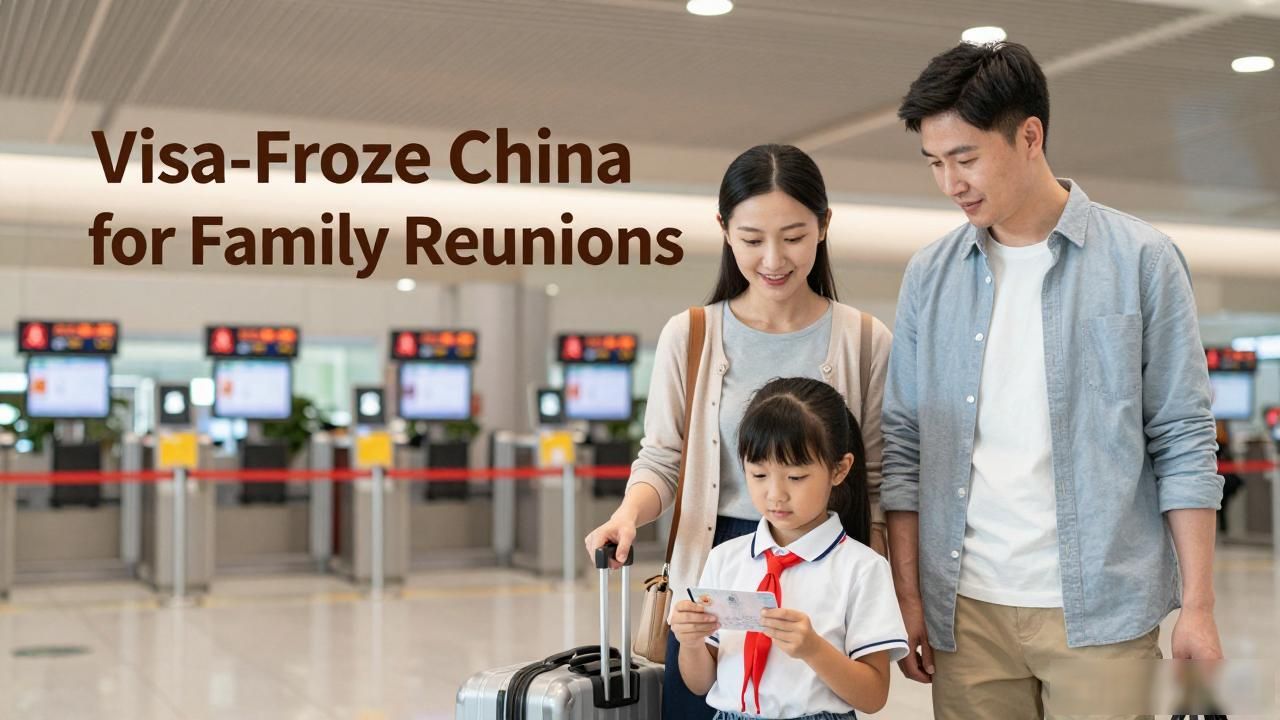
For years, visiting loved ones in China meant weeks of embassy queues, endless form filling, and the low-grade anxiety of a possible rejection letter. That reality is shifting fast. China’s visa-free entry for family reunions has quietly rewritten the rules, and thousands of expat families across Asia and Europe are already feeling the difference. What actually changed, who it covers, and how long you can now stay—all of it below.
Who Can Use China Visa Free for Family Reunions

The pilot policy targets spouses, parents, and children of Chinese citizens or permanent residents holding a valid hukou or residence permit. If your family member on Chinese soil carries a standard ID card, you qualify. No prior visa history is required. The whole process happens at the port of entry: you simply present a passport with three months’ validity plus a printed family registration proof or a short invitation letter. Airline staff at origin still check your documents at the gate, so carry everything legible.
I watched a British passenger at Guangzhou Baiyun complete the declaration in under two minutes last month. No fee, no counter queue. The officer scanned her passport, noted the family link on screen, and stamped entry. She told me she used to spend three hundred dollars and two weeks on a Q-family visa for the same trip. The contrast hit hard.

## How Long Can You Stay China Visa Free for Family Reunions
The permitted stay runs up to thirty days for most pilot-program nationalities, extendable once at the local public security station if genuine circumstances demand it. Spouses of Chinese nationals may request sixty days with extra supporting papers. Each pilot city—Beijing, Shanghai, Chengdu, Xiamen, and a dozen others—implements slightly different caps, so the stamp you receive at arrival is the one that counts. Do not assume the entry stamp automatically covers a longer stay.

The practical upside is real. A school performance, a grandparent’s birthday, a quick pre-op medical check—none of these used to justify a visa application. Now they fit inside the thirty-day window with zero paperwork beyond the family proof. For anyone planning a six-week stay,though, the traditional visa route still applies. Check the extension deadline at the local station well before day twenty-five.
Airline check-in staff in Melbourne and Sydney still occasionally ask for “the visa document” out of habit, but the stamp in your passport now reads visa-free, family visit. And the immigration line at any major Chinese airport is noticeably shorter than it was eighteen months ago. For families split by a strait or a whole continent, that shorter line changes more than the minutes in a queue.