
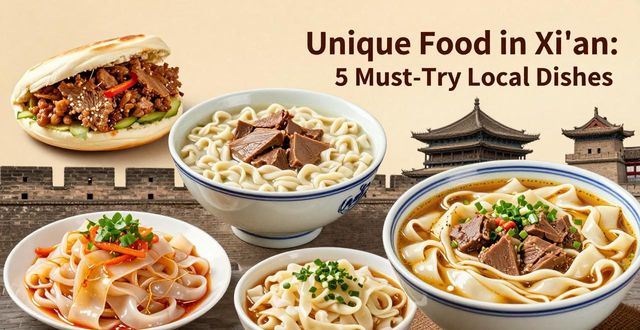
When people think of Xi’an, the Terracotta Warriors often come to mind first. But this ancient capital is also a paradise for food lovers, boasting a culinary heritage that spans over a thousand years. From street stalls to family-run eateries, Xi’an offers unique flavors you won’t easily find elsewhere. Here are five local dishes that define the city’s eating culture.
What is the most famous unique food in Xi’an

The undisputed king is Roujiamo (肉夹馍), often called the “Chinese hamburger”. It consists of slow-braised pork, beef, or lamb stuffed inside a crispy, flaky flatbread called baijimo. The meat is cooked for hours with over a dozen spices like star anise, cinnamon, and clove, making it incredibly tender and flavorful. Unlike a Western burger, the bread here is slightly chewy and absorbs the meat juice perfectly. Locals eat it for breakfast, lunch, or a late-night snack. You can find Roujiamo stalls everywhere, but the best ones have a constant line of customers waiting.
Where to find authentic yangrou paomo in Xi’an
Yangrou Paomo (羊肉泡馍) is a hearty lamb soup with shredded flatbread that requires your participation. The ritual is simple but crucial: you tear the mo (a dense, unleavened bread) into tiny, pea-sized pieces by hand. Then the kitchen pours hot, aromatic lamb broth over them and adds tender lamb slices, vermicelli, and sometimes pickled garlic. The result is a thick, filling stew that warms you from the inside. For the real deal,head to Tong Sheng Xiang or Lao Sun Jia, both century-old establishments. Avoid tourist traps near the Bell Tower; instead, walk into narrow alleys where elderly locals gather for lunch. Pro tip: add a spoonful of chili oil and dip the garlic in vinegar for an extra kick.
What makes biangbiang noodles so special
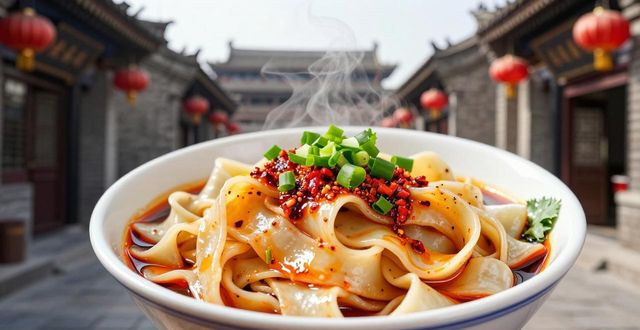
Biangbiang Noodles (油泼面) are named after the sound the chef makes when slapping the wide, thick noodle dough against the counter. Each noodle is about two fingers wide, chewy and elastic, served with a spicy blend of chili flakes, minced garlic, scallions, and a splash of black vinegar. The highlight comes when the chef pours a ladle of sizzling hot oil over the chili – it crackles and releases an irresistible smoky aroma. Unlike smooth Italian pasta, biangbiang noodles have an uneven texture that holds onto the sauce beautifully. You’ll see locals slurping them loudly, often with a side of raw garlic. For the spiciest version, ask for you po lazi (oil-splashed chili).
Is Xi’an street food safe for tourists
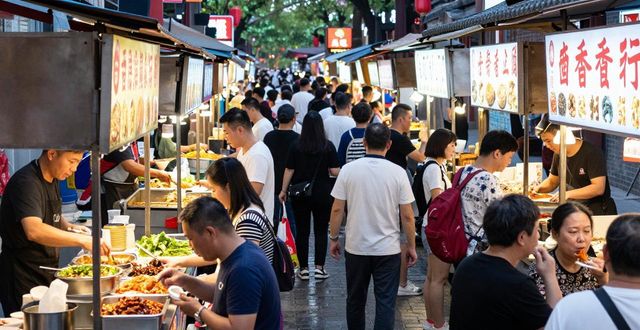
Yes, but with common sense. Stick to busy stalls with high turnover – the food is fresher and safer. Avoid anything that has been sitting out for hours, especially cold dishes in summer. Watch how locals order: if they point and eat without hesitation, follow their lead. Muslim Quarter (Huimin Street) is the most popular area, but don’t limit yourself there. Venture to Sajinqiao market or Dongxin Street for less crowded options. Always look for stalls that prepare food right in front of you, like liangpi (cold rice noodles) mixed on the spot. Carry hand sanitizer, and remember that spicy food can mask spoilage – trust your nose first. If a place smells off, skip it.
Now I’d love to hear from you – which of these Xi’an dishes would you try first, and do you have any unique local food in your hometown that compares? Share your thoughts below, and don’t forget to like and share this guide with fellow food travelers!