

If you think Chinese food means endless plates of pork and beef, you are missing out on one of the world’s most sophisticated meat-free culinary traditions. For travelers and food enthusiasts alike, navigating a menu full of unfamiliar characters can be daunting. However, understanding the core principles behind plant-based Chinese cooking unlocks a universe of flavor that is both healthy and deeply satisfying. This guide breaks down what you need to know to order with confidence and enjoy every bite.
What makes vegetarian Chinese food authentic?

Many Westerners assume that “vegetarian” in China simply means removing meat from a standard dish. In reality, traditional Chinese vegetarianism is rooted in Buddhist practices and has evolved into its own distinct category. Chefs use soy products like tofu,seitan, and yuba (tofu skin) to mimic the texture of meat without using it. These ingredients absorb sauces beautifully, creating complex flavors that stand on their own. You will often find dishes that look exactly like braised pork belly but are made entirely from gluten or mushrooms.
Another key aspect is the avoidance of strong-smelling alliums. Many strict vegetarians, particularly those following Buddhist precepts, avoid garlic, scallions, and chives because they believe these ingredients stir up desire and anger. Instead, cooks rely on ginger, star anise, Sichuan peppercorns, and fermented bean pastes to build depth. This creates a unique profile that is aromatic and spicy without being heavy. When you see a dish labeled “Su” (meaning vegetarian or plain), it usually adheres to these stricter standards.
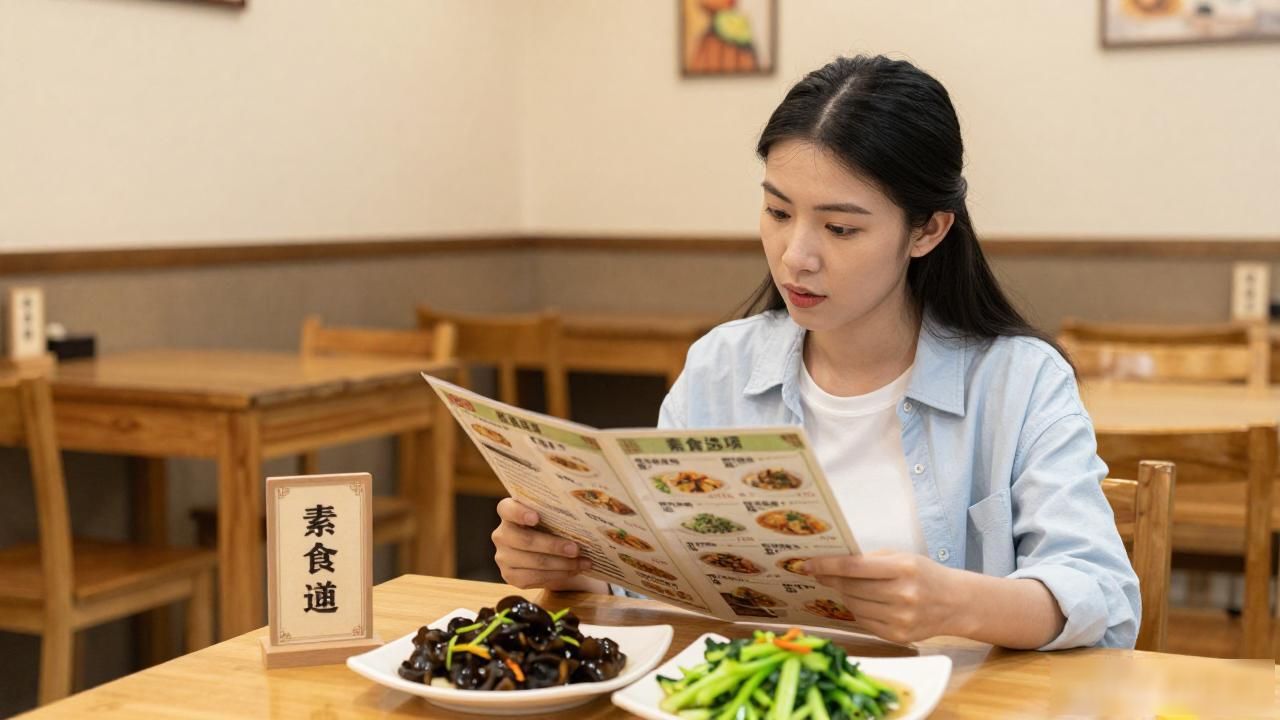
How to order safe vegetarian dishes abroad?
Language barriers are the biggest challenge when dining out. Even if a restaurant claims to be vegetarian, cross-contamination with chicken stock or fish sauce is common in many Asian kitchens. Always ask specifically if the broth contains animal products. Clear soups are generally safer than rich, creamy, or dark broths unless you are certain of their ingredients. It helps to carry a translation card that lists exactly what you cannot eat, including hidden ingredients like oyster sauce or lard.
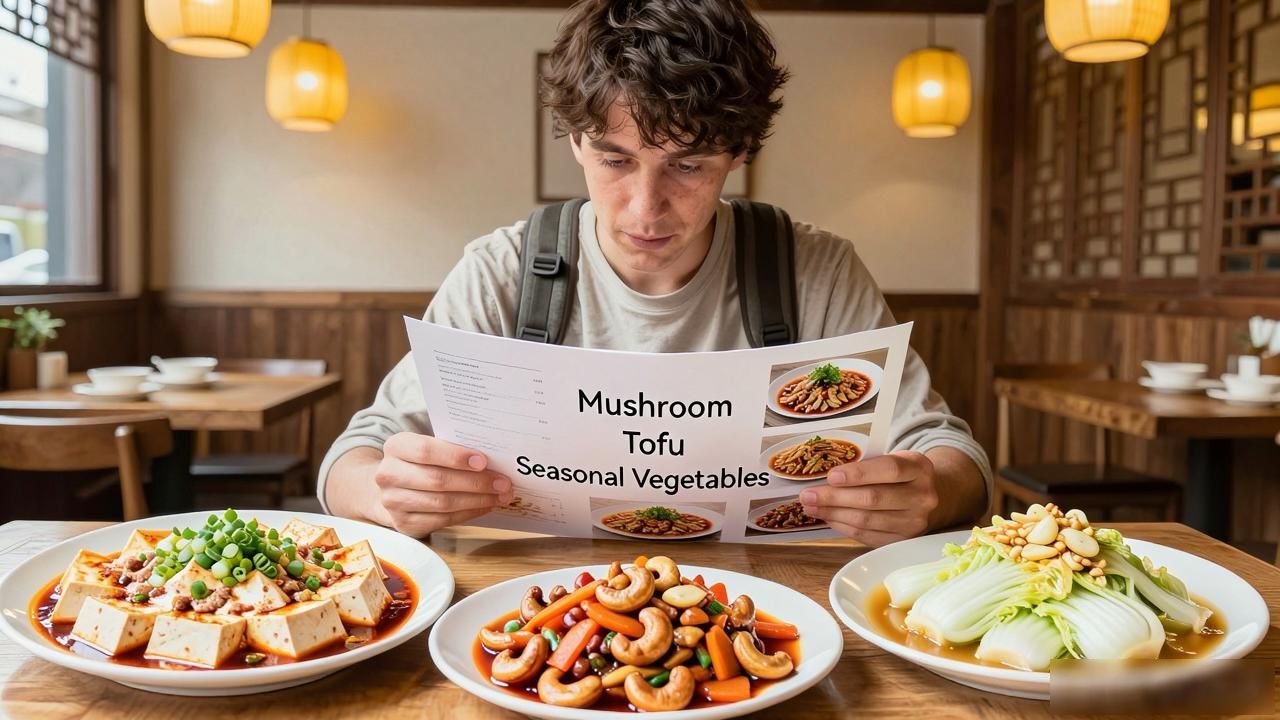
When scanning the menu, look for keywords like “Mushroom,” “Tofu,” or “Seasonal Vegetables.” Dishes such as Mapo Tofu (ask for no minced meat), Kung Pao Vegetables, and Stir-fried Bok Choy with Garlic are staples. Be cautious with fried items, as they might be cooked in shared oil with meat. Opting for steamed or stir-fried vegetables ensures you stay true to your dietary choices while enjoying the vibrant crunch and fresh taste that define this cuisine. Trust your instincts and communicate clearly with your server.