
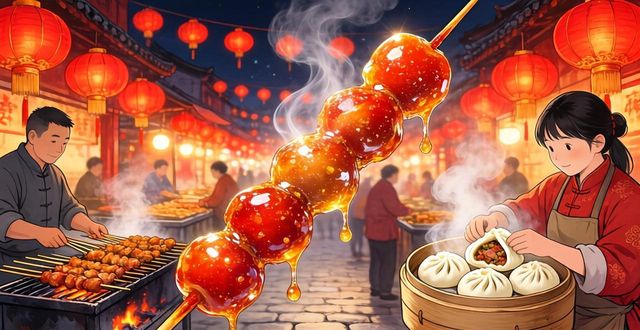
If you think Chinese food is all about Peking duck and hot pot, you’re missing out on a whole universe of flavors found on the streets. Street food in China is not just fast and cheap—it’s incredibly diverse, bold, and often the heart of local food culture. From sizzling skewers to crispy pancakes, every alley and night market offers a new taste adventure. This guide will help you navigate the bustling world of Chinese street food, so you can eat like a local and avoid common tourist traps.
What makes Chinese street food so tasty?
The secret lies in the bold seasoning and cooking techniques. Street vendors master the art of balancing salty, sweet, sour, spicy, and umami in one bite. Soy sauce, vinegar, chili oil, garlic, and Sichuan peppercorns create layers of flavor that hit your taste buds instantly. Many dishes are cooked fresh on the spot over high heat, giving them a smoky “wok hei” (breath of the wok) that’s hard to replicate at home. Also, vendors often use family recipes passed down for generations, so each stall has its own unique twist.

Texture is just as important. A good noodle dish might have chewy hand-pulled noodles, crunchy bean sprouts, and tender slices of meat or tofu. Jianbing (a savory crepe) offers crispy fried dough wrapped inside a soft egg pancake. And don’t forget the dipping sauces—sweet bean paste, sesame sauce, or tangy vinegar dips can transform simple ingredients into something addictive. These contrasting textures and powerful aromas are why you’ll often see locals waiting in long lines, even at midnight.
Which street foods should you try first?
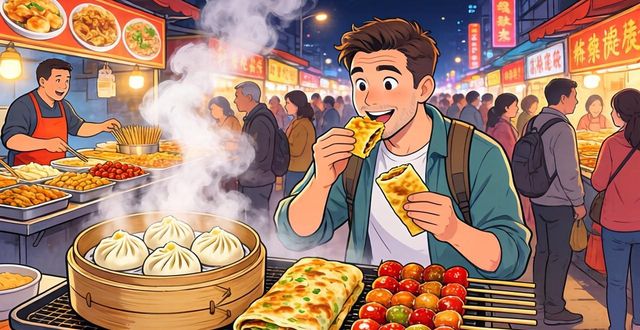
Start with jianbing, a popular breakfast crepe made from mung bean and wheat flour. The vendor spreads the batter on a hot griddle, cracks an egg on top, then adds crispy wonton crackers, cilantro, scallions, chili sauce, and hoisin sauce. It’s rolled up like a burrito and cut in half. One bite gives you a crunchy, soft, savory, and slightly spicy explosion. It costs only 5–10 RMB ($0.70–$1.40) and is sold everywhere from Beijing to Shanghai.
Next, look for yangrou chuan’r (lamb skewers). These cumin-spiced skewers are grilled over charcoal, producing a smoky aroma that carries for blocks. The fat renders and crisps up while the meat stays juicy inside. Vendors will ask how spicy you want it—start with “wei la” (mild). Also try chou doufu (stinky tofu). Despite the strong smell, the fermented tofu is deep-fried until golden and served with pickled vegetables and spicy sauce. The outside is crackling, the inside melts like custard. It’s an acquired taste, but many foreigners end up loving it.
Where can you find authentic street food in China?
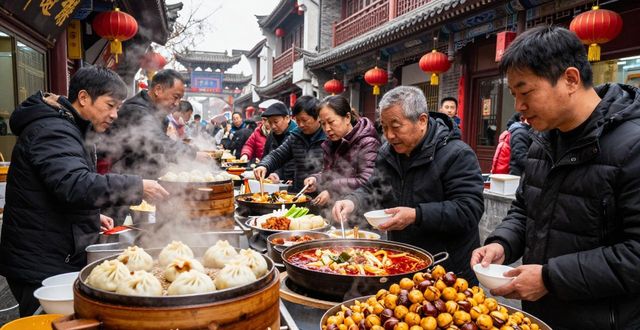
Avoid tourist-oriented food streets like Shanghai’s Chenghuang Miao or Beijing’s Wangfujing snack street—they’re overpriced and toned down for Western palates. Instead, head to residential neighborhoods,near universities, or local wet markets. After 7 PM, many city sidewalks transform into night markets. Chengdu’s Yulin neighborhood, Xi’an’s Muslim Quarter (away from the main drag), and Guangzhou’s Beijing Road side alleys are excellent. Ask young locals on Xiaohongshu (RedNote) or Baidu Tieba for their favorite stalls.
Also, look for stalls with long queues of Chinese office workers or students. That’s the best endorsement. Watch how the food is prepared: fresh ingredients, clean cooking surfaces, and vendors who handle raw and cooked foods separately. Many cities have “food streets” run by the local government that enforce health inspections—look for a green health grade certificate posted at the stall. And don’t be shy to point at what others are eating if you can’t read the menu. A smile and a “zhe ge” (this one) work wonders.
Is Chinese street food safe for foreigners?
Safety concerns are common, but with common sense, you can enjoy street food without getting sick. First, eat only from stalls with high turnover—food that sits out for hours is risky. Watch for busy lines, and avoid places where meat is left raw in the sun. Second, make sure everything is cooked hot and fresh. Stick to fried, grilled, or boiled items; raw salads or cold dishes are more likely to cause issues. Third, use your nose: if something smells sour or off, walk away.
Bring your own wet wipes or hand sanitizer, as not every stall has a handwashing sink. Also, be cautious with chili oil if you have a sensitive stomach—it can be extremely hot, and street vendors often reuse oil for deep-frying. That said, millions of Chinese people eat street food daily without problems. Start with small portions, avoid tap water (drink bottled), and try foods that are cooked right in front of you. Most importantly, trust your gut—if a stall looks dirty or the vendor seems careless, just move to the next one.
Now, here’s a question for you: Which Chinese street food are you most excited to try, or do you have a favorite that I didn’t mention? Drop your thoughts in the comments, and if this guide helped, give it a like and share it with fellow food lovers.