

Pandas are far more than just adorable black-and-white bears munching on bamboo. For thousands of years, these gentle giants have carried deep cultural meanings in China, representing peace, harmony, and national identity. Understanding panda cultural symbols helps foreigners appreciate why this animal appears on everything from government gifts to cartoon films. In this article, I’ll explain the hidden layers behind the panda’s image, from ancient philosophy to modern global politics.
What Does the Panda Symbolize in Chinese Culture
In traditional Chinese thought, the panda’s black-and-white coat reflects the yin-yang philosophy – the balance of opposite forces that create harmony in the universe. White represents heaven, purity, and yang energy, while black stands for earth, mystery, and yin energy. Unlike predators or prey that lean toward one extreme, pandas live peacefully between these poles, eating bamboo and avoiding conflict. This makes them a living metaphor for moderation, a value highly respected in Confucian and Taoist teachings. Many Chinese paintings and poems from the Tang dynasty onward use pandas to suggest a life of quiet balance.

Beyond philosophy, pandas also symbolize strength wrapped in gentleness. Though they belong to the bear family and can defend themselves, they rarely attack unless threatened. This mirrors the Chinese ideal of a cultivated person – powerful yet restrained, capable yet humble. For centuries, rural communities in Sichuan and Shaanxi considered pandas protectors of forests, believing that harming one would bring bad luck. Some local legends even describe pandas as “white bears” that once helped farmers chase away wild animals. So when you see a panda today, remember it carries this ancient message: true power lies in peaceful coexistence.
How Pandas Became a Tool of Diplomacy
Panda diplomacy started over a thousand years ago, when Chinese empresses gave pandas to Japanese emperors as tokens of goodwill. But the modern practice began in the 1950s, when the People’s Republic of China sent pandas to zoos in the Soviet Union, North Korea, and later the United States. These furry ambassadors weren’t just animals – they were political signals. Giving a panda meant opening a door to friendship, while refusing or recalling one often signaled tension. The famous “panda gifts” to President Richard Nixon after his 1972 visit marked a turning point in US-China relations, softening public opinion on both sides.
Today, China no longer gives pandas away for free. Instead, it loans them to zoos worldwide under strict contracts, usually for ten years at a fee of around one million dollars per year per panda. The money funds conservation programs back in China, while the pandas themselves continue their diplomatic role. When a panda gives birth abroad, the cub belongs to China and must return by age four. This arrangement keeps the panda a permanent symbol of China’s soft power – a living reminder that cooperation with China comes with both rewards and responsibilities. Hundreds of millions of foreigners have seen pandas in local zoos, and that direct emotional connection shapes international views of China more effectively than any speech or advertisement.
The Hidden Connection Between Pandas and Yin-Yang
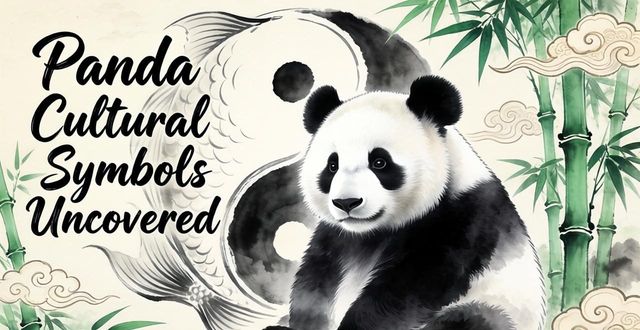
The yin-yang symbol, known as taijitu, consists of two interlocking teardrops – one black, one white – each containing a dot of the opposite color. Look closely at a panda’s face and body, and you’ll see the same pattern. The black eye patches and ears contrast with the white face, while the black shoulders and legs wrap around the white torso. Ancient Taoist artists noticed this resemblance hundreds of years ago, and some scholars believe pandas inspired the circular taijitu design. Whether coincidental or not, pandas have become a living embodiment of how opposites depend on each other – light and shadow, activity and rest, male and female.
This connection shapes how Chinese people view environmental protection, too. In Taoist thinking, humans are not separate from nature but part of its balancing act. Destroying panda habitat is like breaking one side of the yin-yang circle – the whole system falls apart. That’s why China’s panda reserves, now covering over 27,000 square kilometers, aren’t just about saving one species. They protect entire ecosystems: bamboo forests, rivers, and thousands of other plants and animals. When a foreigner sees a panda logo on a conservation program, they’re seeing an ancient Chinese worldview in action. The panda tells us that preserving balance – within ourselves and with nature – is the only path to lasting harmony.
Why Pandas Are a Global Conservation Icon

In the 1980s, fewer than 1,200 pandas remained in the wild, and experts predicted extinction by 2025. Today, thanks to decades of dedicated work, the population has grown to over 1,800, and the panda was downgraded from “endangered” to “vulnerable” in 2016. This success story turned the panda into a universal symbol of wildlife conservation. When the World Wildlife Fund (WWF) chose the panda as its logo in 1961, they wanted an animal that was both beloved and endangered, one that would grab attention and inspire action. That choice proved brilliant – the panda logo is now recognized by 90% of people in developed countries.
But the panda’s conservation role goes beyond logos and advertising. China has established 67 panda nature reserves, creating green corridors that allow pandas to move between fragmented forests. Scientists developed innovative breeding techniques, including artificial insemination and twin-raising methods,that have since been applied to other rare species like the red panda and clouded leopard. Local farmers were trained as rangers, turning potential poachers into protectors. For foreigners, supporting panda conservation often becomes their first deep engagement with China’s environmental efforts. So next time you see a panda documentary or buy a panda-themed souvenir, ask yourself: Is this just cute merchandise, or am I participating in a global movement that has actually brought one species back from the edge of extinction?
Would you share this article if it helped you see pandas in a new light? Let me know in the comments – and don’t forget to hit like if you believe cultural symbols matter more than we realize.