
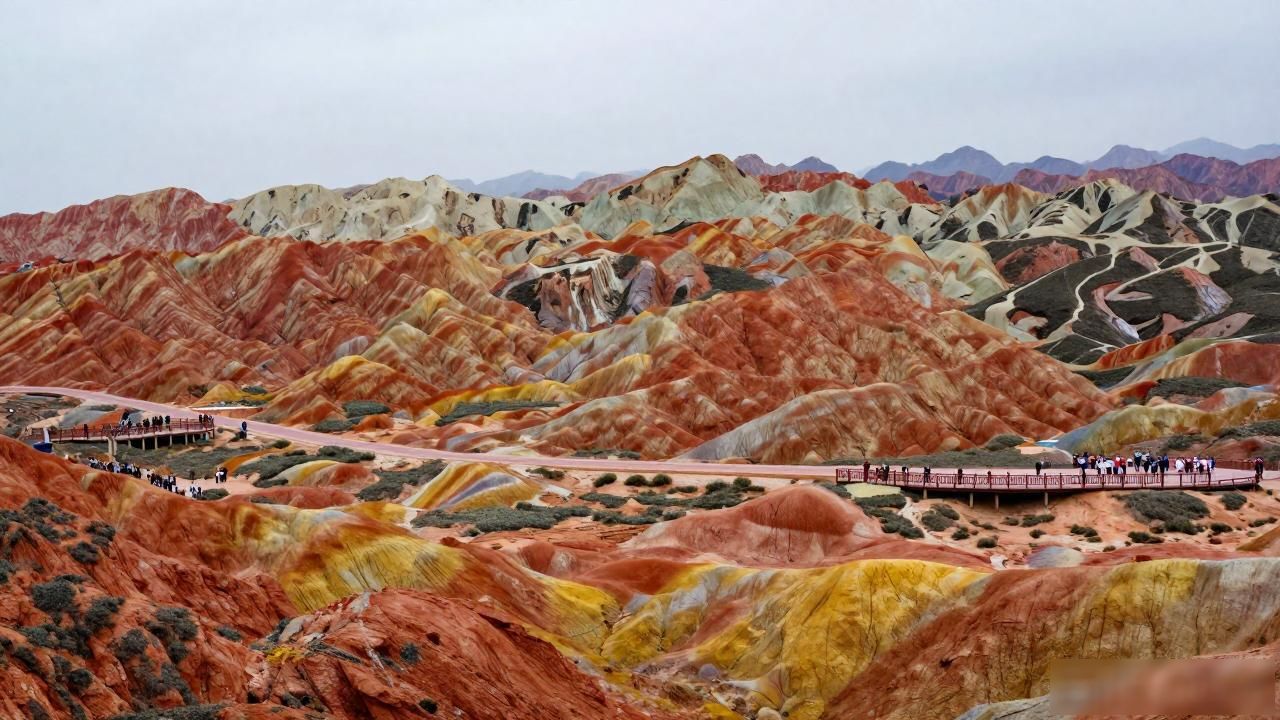
I first saw photographs of Zhangye Danxia and honestly thought they had been digitally altered. The vivid reds, oranges, yellows, and pinks stacked in undulating layers looked like something from another planet. Then I stood there myself, late afternoon sun hitting those colored strata, and my camera barely captured what my eyes were taking in. It is one of those places that makes you stop and just stare.
What Makes Zhangye Rainbow Mountains So Colorful
The colors come from sandstone and mineral deposits laid down over millions of years. Iron oxide gives the reds, sulfur creates the yellows, and pressure transformed the layers into the dramatic hills we see today. The geological process alone took roughly 24 million years. You are looking at deep time made visible.

Zhangye National Geopark in Gansu Province covers over 510 square kilometers. Within it, the Rainbow Mountains area spans about 325 square kilometers. Different viewing platforms offer different perspectives, and each reveals something slightly different about the formation. The landscape shifts continuously as you walk along the boardwalks.
What surprised me most was how the colors change throughout the day. Morning light brings out the softer pastels, while late afternoon fire makes the reds and oranges almost glow. Cloudy days mute everything considerably, which is why timing your visit matters so much. The locals know this instinctively.
Best Time and Practical Tips for Your Visit
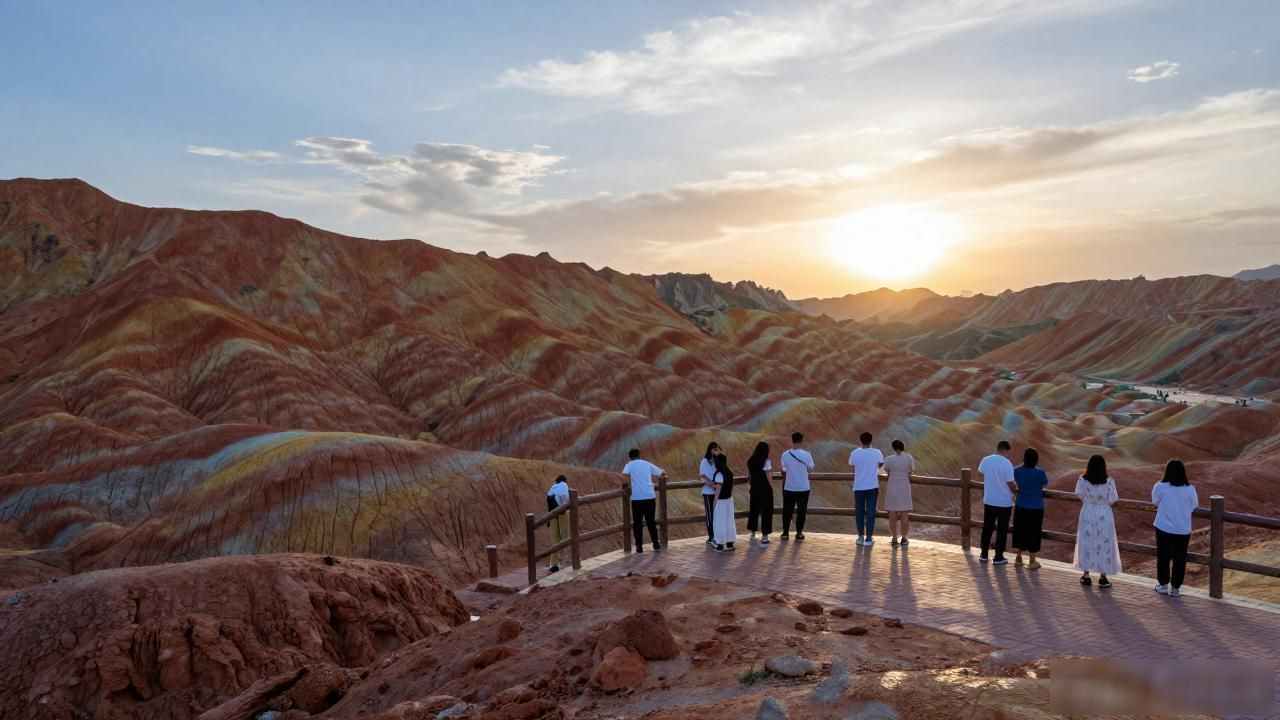
Summer between June and August remains the peak season, but it also means crowds. If you can dodge the holiday periods, weekdays feel infinitely more peaceful. The park opens at eight in the morning, and arriving early lets you claim a good spot at the main viewing platform before the tour buses roll in.
Entrance fees run approximately 74 dollars for foreign visitors, which includes the shuttle bus connecting all the viewing areas. Walking between platforms takes about twenty minutes each way, so comfortable shoes are non-negotiable. The elevation sits around 2000 meters, and altitude affects some travelers more than others.
Photography tips that actually matter: bring polarizing filters to cut through the atmospheric haze, and use bracketed exposures since the contrast between bright-colored rocks and shadowed areas can trick your camera meter. The main viewing platform at noon is actually acceptable if the weather is clear, but the golden hour between four and six in the afternoon transforms the whole scene into something almost unreal. The local guides there are generally helpful too, and they know exactly which angles produce the most striking shots.
Beyond the Main Rainbow Mountains
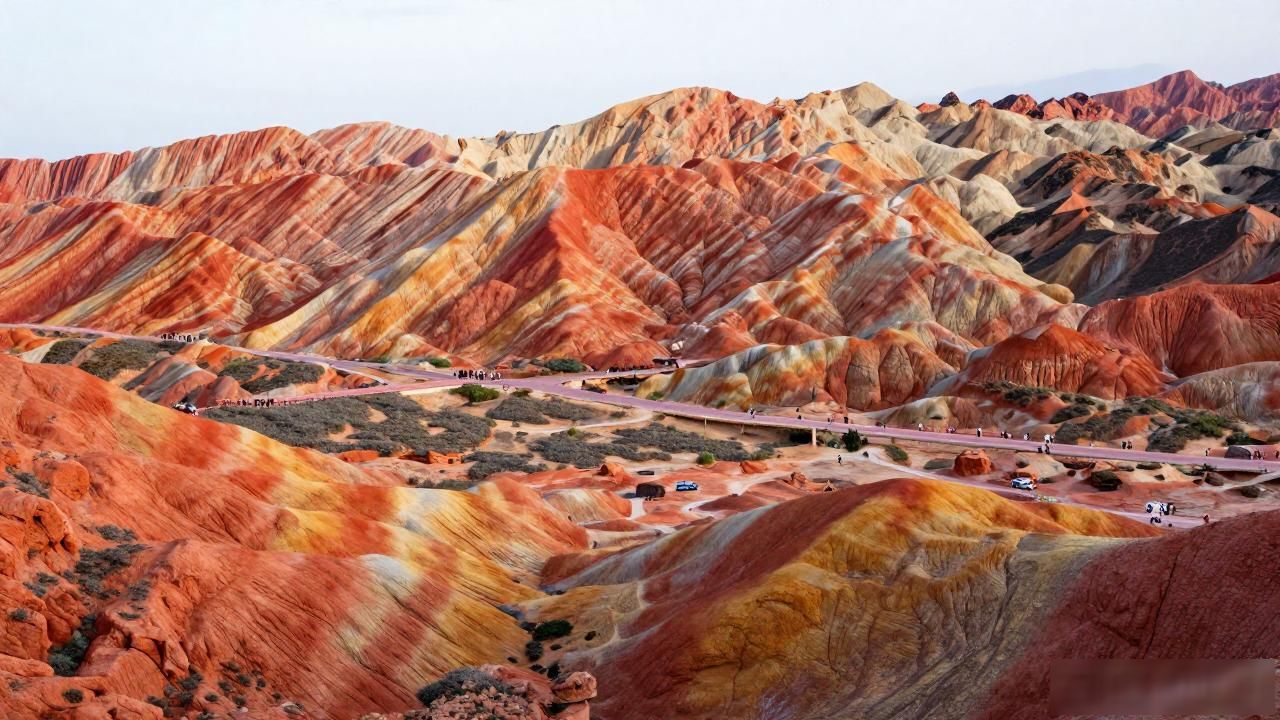
The geopark contains several other remarkable formations worth exploring. The Flying Dragon Ridge looks like a mythical creature carved from stone,and the Immortal Canyon offers narrow passages between towering colored walls that feel almost claustrophobic in the best possible way. Taking the full day to explore everything gives you a much richer experience than rushing through just the main attraction.
Food in Zhangye city is genuinely underrated. Lamb skewers, hand-pulled noodles, and a local dairy product called suan Nai pair perfectly with the dry desert climate. The city itself feels like a quiet gateway town rather than a tourist trap, which is refreshing.
I kept returning to those colored slopes throughout my three-day stay there. Each visit revealed new textures and patterns I had missed before. Nature builds its artistry slowly, and Zhangye is proof that patience pays off in ways no digital effect ever could.