
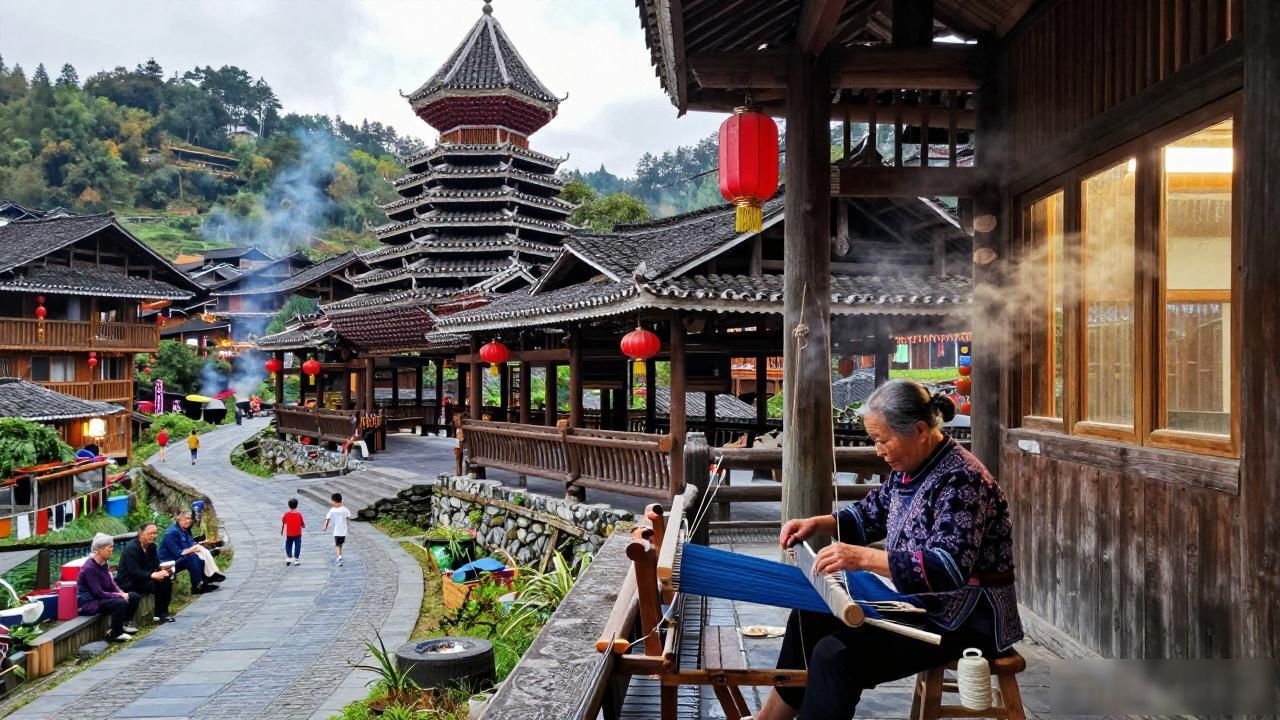
The Dong ethnic minority has shaped the southern hills of China for over a thousand years, raising towering wooden stilt houses and weaving intricate indigo textiles in scattered villages across Guizhou and Guangxi. After two weeks walking through these places, here is what genuinely stands out once you step off the paved road and into the dirt paths.
Which Dong villages China are most worth visiting

Shiqiao in Guizhou is the one that stays with me longest. The Dong Grand Corridor stretches forty-one meters past a six-story drum tower, and you can watch grandmothers threading indigo-dyed silk on wooden looms while the sharp smell of fermented rice wine drifts from open windows. The village hums with real, unscripted life, not a staged set dressed up for tour buses.
Chengyang in Guangxi sits quieter, tucked along a slow river bend. Far fewer buses, far fewer selfie sticks. The stone arch bridge over the water predates most of the buildings around it, and the elders still gather there at dusk to play a wooden tile game I never fully figured out.

What makes Dong villages China unique
It’s the sheer scale of communal carpentry that sets these places apart. A single village can hold a drum tower,a covered corridor bridge, an ancestral hall, and several hundred stilt houses carved from local hardwood by generations of village craftsmen. No stone. No mortar. Just interlocking joints that have weathered earthquakes, typhoons, and centuries of flood seasons.
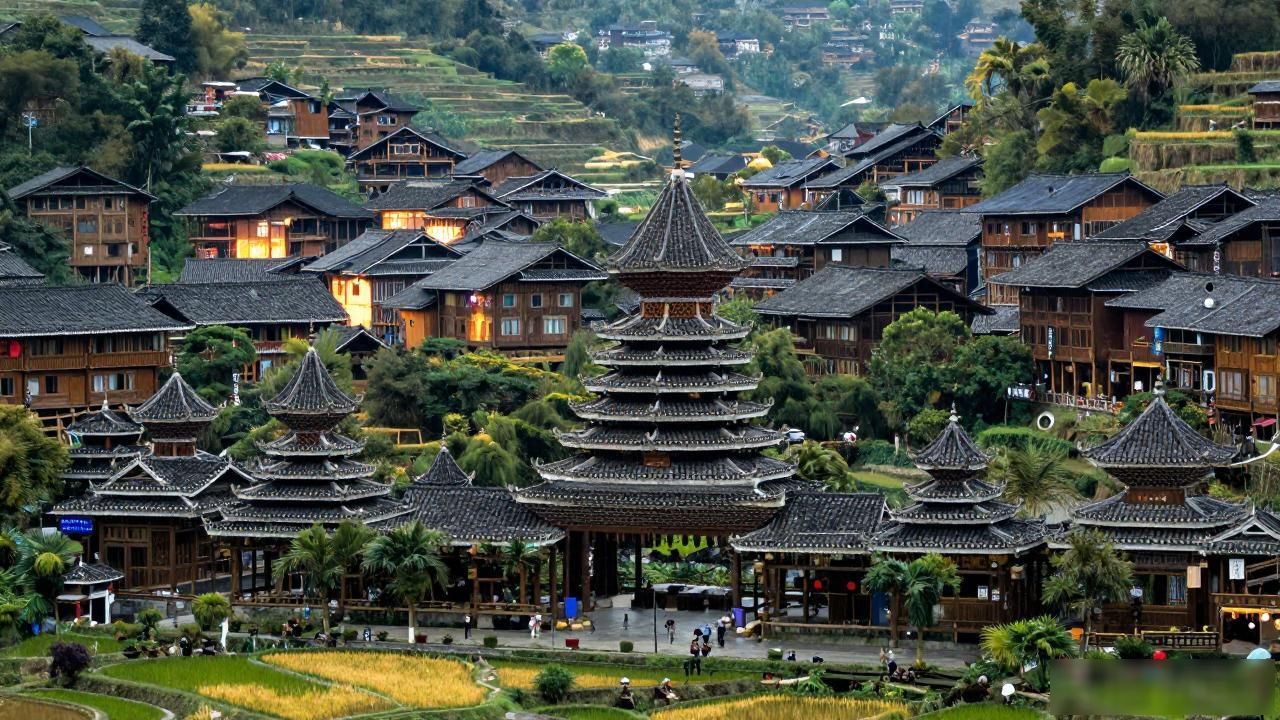
None of it is purely decorative. Every overhanging eave channels monsoon rainwater into the rice paddies below. Every window is angled to block brutal summer heat from the west while catching low winter sun from the south. The architecture works the way the village works, as one system.
You don’t need a guidebook to understand why these places endured. Stand in the corridor at noon, watch light shift across carved beams, and listen to the steady clack of looms that haven’t changed in four hundred years.