
Chongqing sits where the Yangtze and Jialing rivers converge, with steep mountain ridges pushing neighborhoods upward and sideways. The whole city is a three-dimensional puzzle, and its transportation network reflects that in ways that trip up visitors from flat coastal cities. Getting around here rewards people who understand the geography before they start tapping cards at turnstiles.
How Chongqing travel transportation works

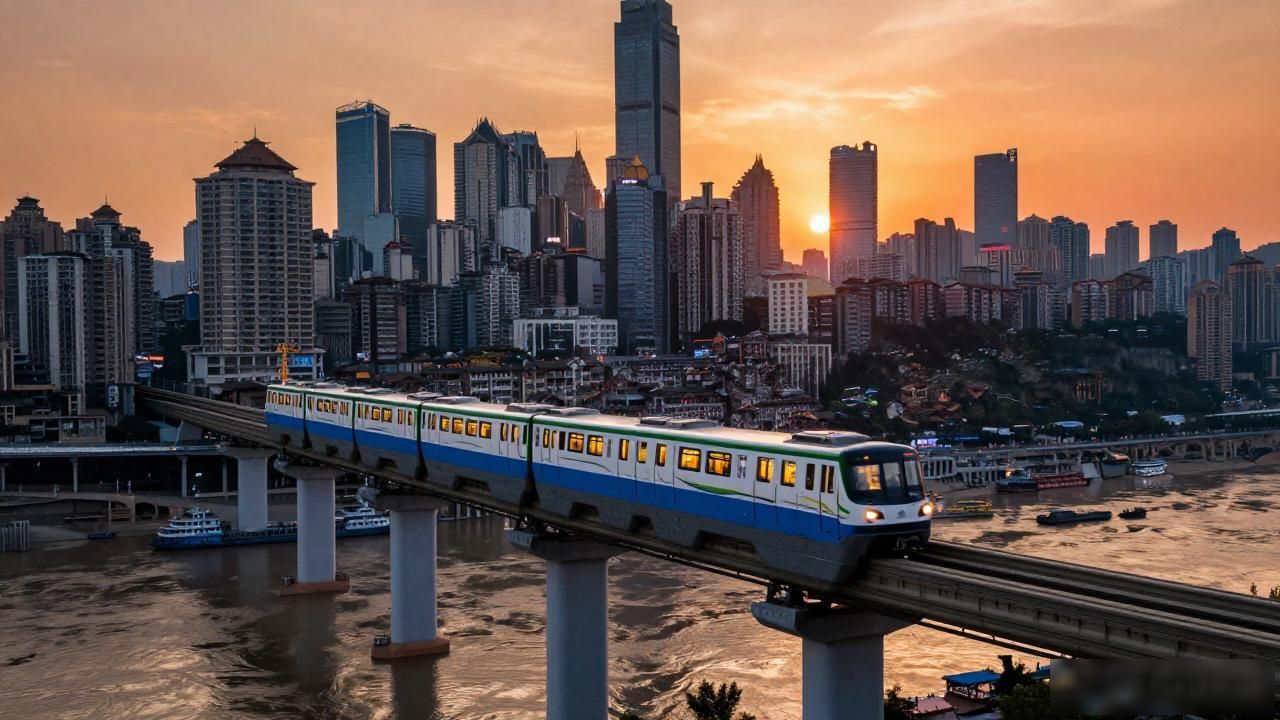
The metro system now stretches past 130 kilometers on nine active lines, threading between Jiangbei CBD,old-town Yuzhong, and the quieter Nan’an district. Line 1 and Line 3 both cross the Yangtze on elevated viaducts, so for two or three stops you are literally gliding above the river at sunset. Fares run 2 to 7 yuan by distance, and you can tap any NFC-enabled phone or scan a QR code pulled up in the Chongqing Transit app. No paper tickets, no token machines — just tap and go.
City buses and the older BRT corridors still reach pockets the metro skips, especially in the outer districts of Beibei and Jinyun. Fares stay flat at 1 or 2 yuan. What makes them tricky: during rush hour the Jialing River bridge routes turn into standing-room-only situations, and you need to hold a pole, not just find a seat. For anything under five kilometers, a Didi or yellow cab ride costs 12 to 30 yuan, and local drivers know one-way shortcuts through the two-river loop that GPS will never suggest.
What to know about Chongqing travel transportation
The single most disorienting thing is verticality. A restaurant advertising “first floor” on its sign might be on the building’s actual fourth level, because the street slopes away behind it. Your friend texts “it’s two floors down” and you end up in a parking garage instead. Always double-check which street entrance you need, and ask for the specific cross-street, not just a landmark.
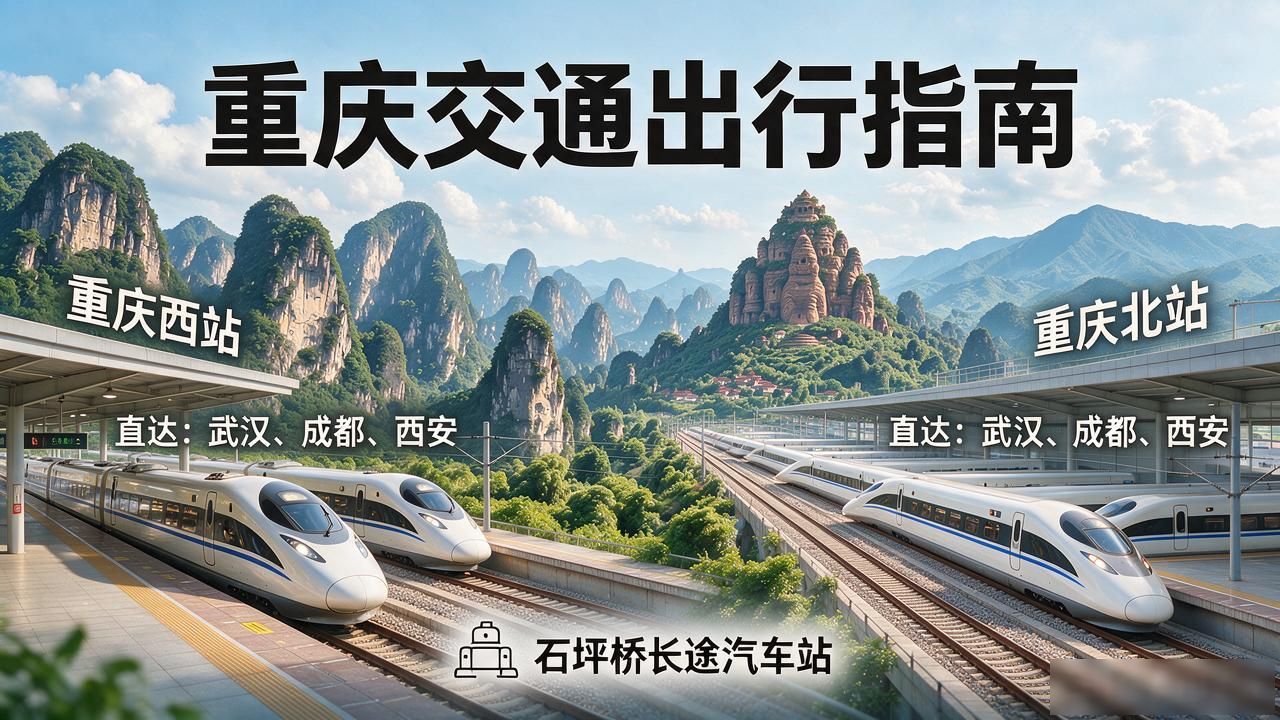
Heading beyond the metro zone, Chongqing West and Chongqing North intercity rail stations connect you to Wuhan, Chengdu, and Xi’an in under three and a half hours. The Shijiapao long-distance bus terminal covers rural routes the trains skip. If Wulong Karst or Jinfo Mountain is on your list, a daily tourist shuttle departs from Jiefangbei Square around 7:30 am, saving you from three separate transfers at random stops. It runs back at 4 pm, so build your day around that cutoff.
Grab a small wad of cash for the rural minivan routes that still reject digital payments, and load both the Chongqing Transit and Didi apps while you are still in the hotel lobby.