
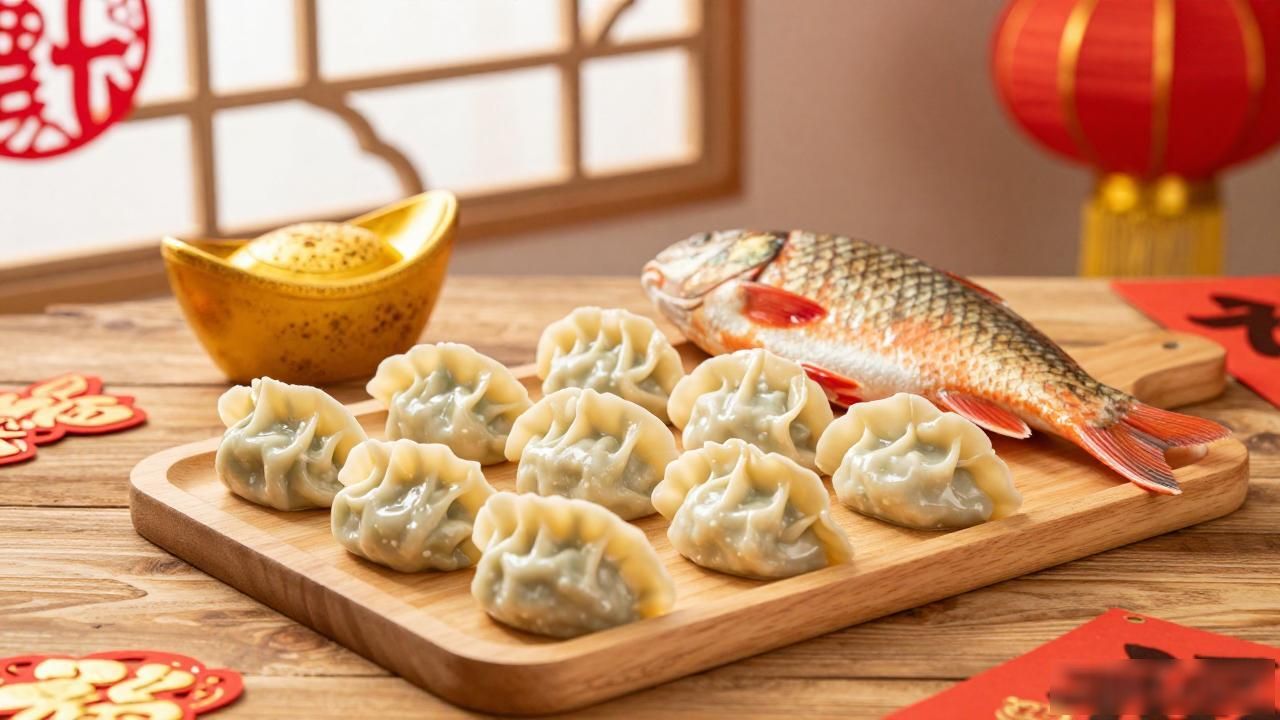
Chinese New Year food is more than just a meal on the calendar. It’s a dense layer of tradition, luck-chasing, and family bonding packed into one enormous dinner that opens the lunar new year. For most Chinese households, the spread you lay out on New Year’s Eve, the Reunion Dinner, carries as much emotional weight as the fireworks rattling the sky outside.
What Is Chinese New Year Food

The centerpiece of the table is almost always dumplings (jiaozi), pleated and shaped like the gold ingots ancient merchants used, symbolizing wealth sliding into your pocket. Fish is the other non-negotiable, because the Mandarin word for fish (yú) is a near-homophone of the word for surplus, so serving a whole one is literally a wish for “leftover abundance” every single year. In some families, the dumpling filling is deliberately mixed with a coin, a wrapped candy, or a strip of dried tangerine peel, and whoever bites into the surprise gets a special blessing for the coming year.
Beyond those two, the table fills up with spring rolls (crisp, golden, rolled like little money bundles), tangyuan (glutinous rice balls in sweet syrup, standing for family togetherness), and a steaming pot of hotpot that keeps the whole family huddled around the stove for hours. The exact menu shifts hard by region: northern tables go all-in on hand-made jiaozi, while southern families lean on niangao (pounded rice cakes) and slow-roasted duck.
Why Eat Chinese New Year Food
Nearly every dish on that table is a wordplay you can eat. Tossing tangerines around the living room is called “cai shi,” luck-searching, because the word for the fruit rhymes with fortune. Children are told to hold the tangerine up to the light and whisper a little wish before peeling it, turning a snack into a tiny ceremony. Picking up a fish with your chopsticks and never flipping it over means you are not “flipping” away your luck.
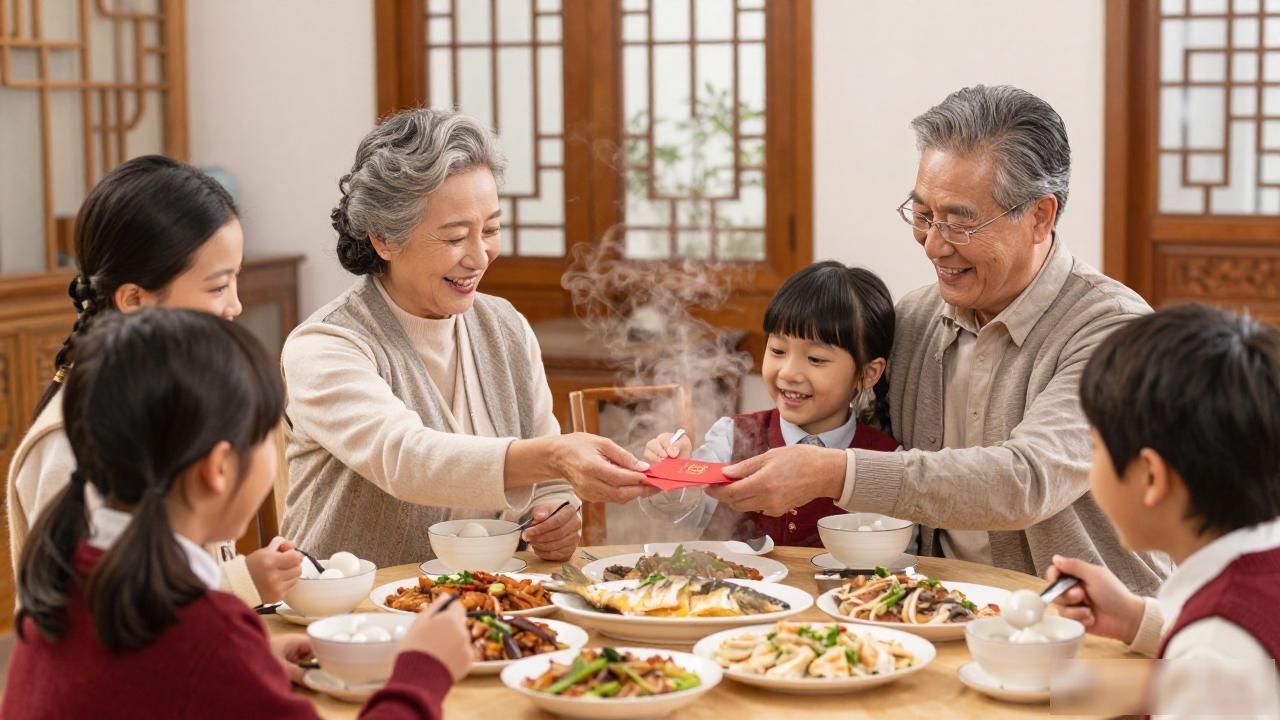
The act of sharing these specific foods is the real point. Grandparents slip red envelopes under plates,kids fight over the last sweet rice ball, and nobody stands up until the fish bones are ceremonially “saved” for next year. It binds three or four generations to the same table through taste, ritual, and a stubborn refusal to let the old names of the food fade.
The whole spread is loud, colorful, and stuffed with symbolism most outsiders have never decoded. Pick up a spring roll, take a bite of sticky tangyuan, and you are doing exactly what Chinese families have done for well over two thousand years.