
Here is an overview of Chinese martial arts, with a specific focus on the distinction and connection between Chinese Kung Fu (Wushu) and Tai Chi (Tai Chi Chuan).
Chinese Kung Fu (Wushu): The Umbrella of Martial Arts
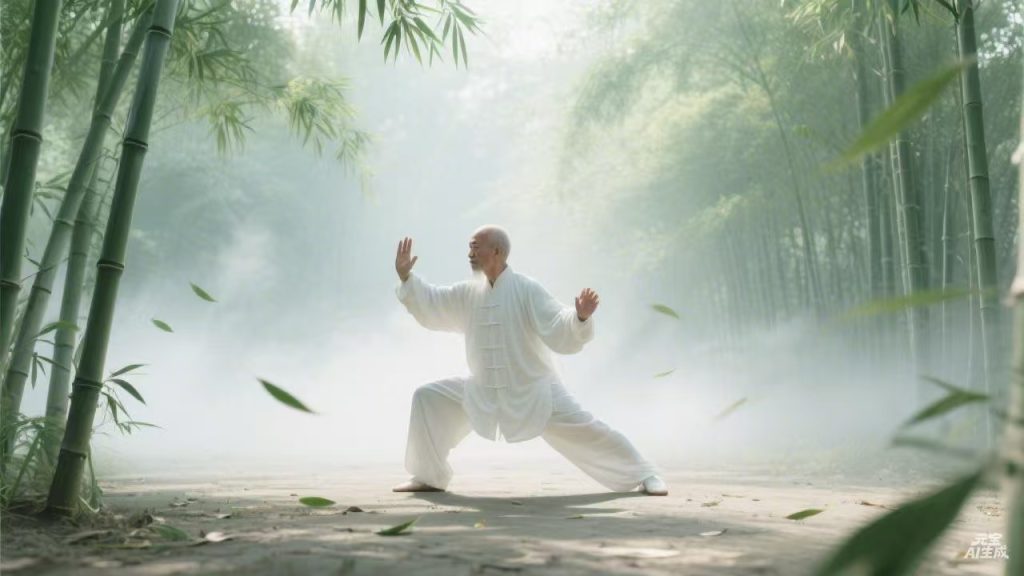
Kung Fu (Gongfu) is a popular term in the West, but in China, the more formal and comprehensive term is Wushu (武術), which literally means “martial art.” It represents a vast system of fighting styles, philosophies, and physical cultures developed in China over millennia.
- Historical Roots: Its origins are ancient, traced back to primitive hunting and self-defense techniques, evolving through military training, folk traditions, and philosophical/religious influences. Legendary figures like Bodhidharma at the Shaolin Temple in the 5th-6th centuries are part of its mythos, linking it with Zen Buddhism. Over centuries, hundreds of distinct styles emerged, often categorized by geography (e.g., Northern vs. Southern), technique (external vs. internal), or imitative styles (like Praying Mantis or Monkey style).
- Core Philosophy: While practical combat is a foundation, traditional Kung Fu is deeply intertwined with Chinese philosophy. It emphasizes the cultivation of “Jing, Qi, Shen” (Essence, Vital Energy, Spirit), the balance of Yin and Yang, and harmony with natural principles. Training is as much about moral character (Wude – martial virtue), discipline, and self-perfection as it is about fighting skill.
- Modern Evolution: Today, Wushu exists in two main forms:
- Traditional Wushu: Preserved in families and schools, focusing on original forms, applications, and cultural heritage.
- Contemporary Wushu: A modern, standardized sport developed in the 20th century. It emphasizes aesthetic performance, athleticism, and difficulty, with two main disciplines: Taolu (form routines) with or without weapons, and Sanshou (full-contact sparring).
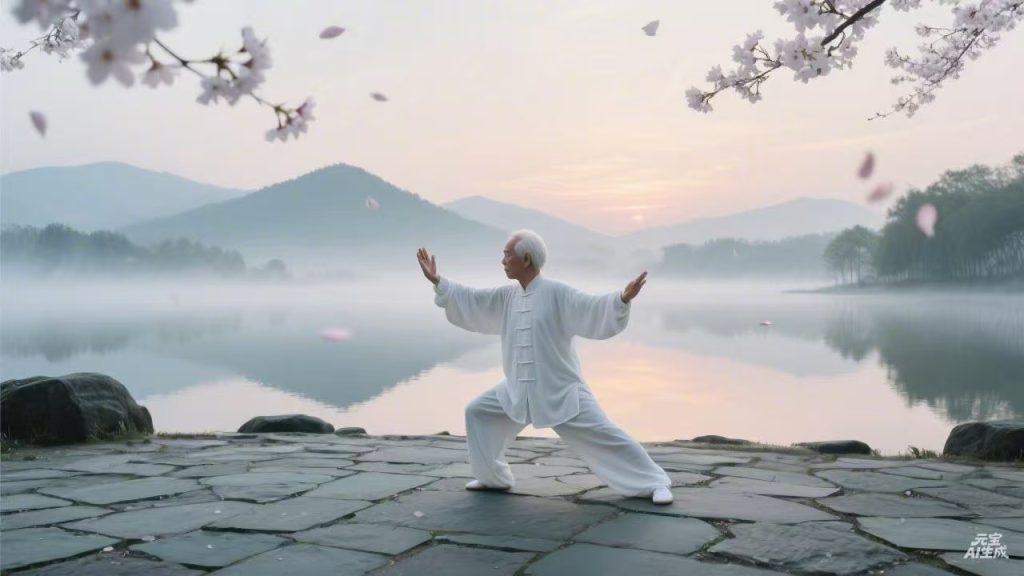
Tai Chi (Tai Chi Chuan): The Internal Martial Art
Tai Chi, or more completely Tai Chi Chuan (太極拳), is one of the most famous and practiced sub-disciplines within the broader Chinese martial arts system. It is classified as an “Internal” or “Soft” style, contrasting with the more forceful, muscle-driven “External” styles.
- Philosophical Foundation: Its core principle is the concept of “Tai Chi” (The Supreme Ultimate), represented by the Yin-Yang symbol. The practice embodies this philosophy through the interplay of soft and hard, yielding and overcoming, and circular, flowing movements. The ultimate goal is to use softness and yielding to neutralize and overcome brute force (“four ounces deflects a thousand pounds”).
- Practice and Characteristics: Tai Chi is best known for its slow, deliberate, and graceful solo forms, performed as a continuous sequence of movements. These forms are designed to cultivate internal energy (Qi), body alignment, balance, and deep mental focus. It also includes partner exercises like Push Hands (Tui Shou) for developing sensitivity, rooting, and martial application.
- Health and Wellness: While a complete martial art, Tai Chi is globally renowned today primarily for its profound health benefits. Extensive research validates its positive effects on balance, flexibility, cardiovascular health, stress reduction, and management of chronic conditions like arthritis and hypertension. It is often described as “meditation in motion.”
Kung Fu vs. Tai Chi: Connection and Contrast
- Relationship: Think of Chinese martial arts (Wushu/Kung Fu) as a great tree. Tai Chi is one of its major, deeply rooted branches. All Tai Chi is Kung Fu, but not all Kung Fu is Tai Chi.
- Primary Focus: ◦ Traditional Kung Fu often, but not always, has a more explicit external and combat-oriented focus. Training includes powerful strikes, kicks, acrobatics, and hard conditioning. ◦ Tai Chi emphasizes internal energy cultivation, relaxation, and philosophical principles as the path to martial effectiveness and health. Its power is generated from mindful movement and integrated body mechanics rather than muscular tension.
- Movement & Practice: External Kung Fu forms can be fast, powerful, and athletic. Tai Chi forms are typically slow, fluid, and steady, focusing on internal awareness.
Global Impact and Legacy
Both have left an indelible mark on world culture. Kung Fu was popularized globally by Hong Kong cinema and stars like Bruce Lee, who founded Jeet Kune Do. Modern Wushu is a staple in international sports competitions. Tai Chi, practiced by hundreds of millions daily in parks worldwide, has become a global symbol of holistic health, tranquility, and wisdom.
In summary, Chinese Kung Fu (Wushu) is the overarching tradition of martial arts, rich in diversity and history. Tai Chi is its most famous internal expression—a martial art disguised as a gentle exercise, where the cultivation of life force and harmony is the true source of power. Together, they represent the dynamic spectrum of Chinese physical culture, from the formidable to the serene.
The part about wushu being the proper term while “kung fu” is just the Western label finally cleared up years of confusion for me. I took up tai chi last spring mainly for balance, and the whole four-ounces-deflecting-a-thousand-pounds idea only made sense once we started push hands practice. Since our group trains in a busy public park, I usually photograph my form afterward and use a free photo background changer to swap the messy background for a plain one, so my instructor can actually see my posture lines without people and bicycles distracting from the silhouette.