
Getting a handle on China visa requirements used to mean drowning in embassy websites and outdated travel forums. Today, the landscape has shifted considerably. As someone who has guided hundreds of foreign nationals through this process over the years, I can tell you the rules are clearer now, but they still catch people off guard. Here is what actually matters for your trip.
what are the china visa requirements

The baseline for most visitors is the L (tourist) or M (business) visa. You need a valid passport with at least six months remaining, a completed application form, one passport photo, and proof of your itinerary. Flight tickets and hotel bookings serve as the standard evidence. The application must be submitted in person at the Chinese embassy or consulate in your home country, unless you have an approved visa agent handling it for you.
Processing typically takes four working days, though rush service is available for an extra fee. The visa fee varies by nationality, so check the specific embassy website relevant to your passport. Some regions also require proof of sufficient funds or a sponsor letter on top of the standard documents.
who is exempt from china visa requirements
Here is where things get interesting. Citizens of 54 countries can enter mainland China visa-free for short stays, typically up to 30 days for tourism. The exemption list has expanded noticeably over the past two years. If you hold a valid visa for the Schengen Area, the US,UK, Japan, or Australia, you may also qualify for a transit visa exemption under specific conditions.
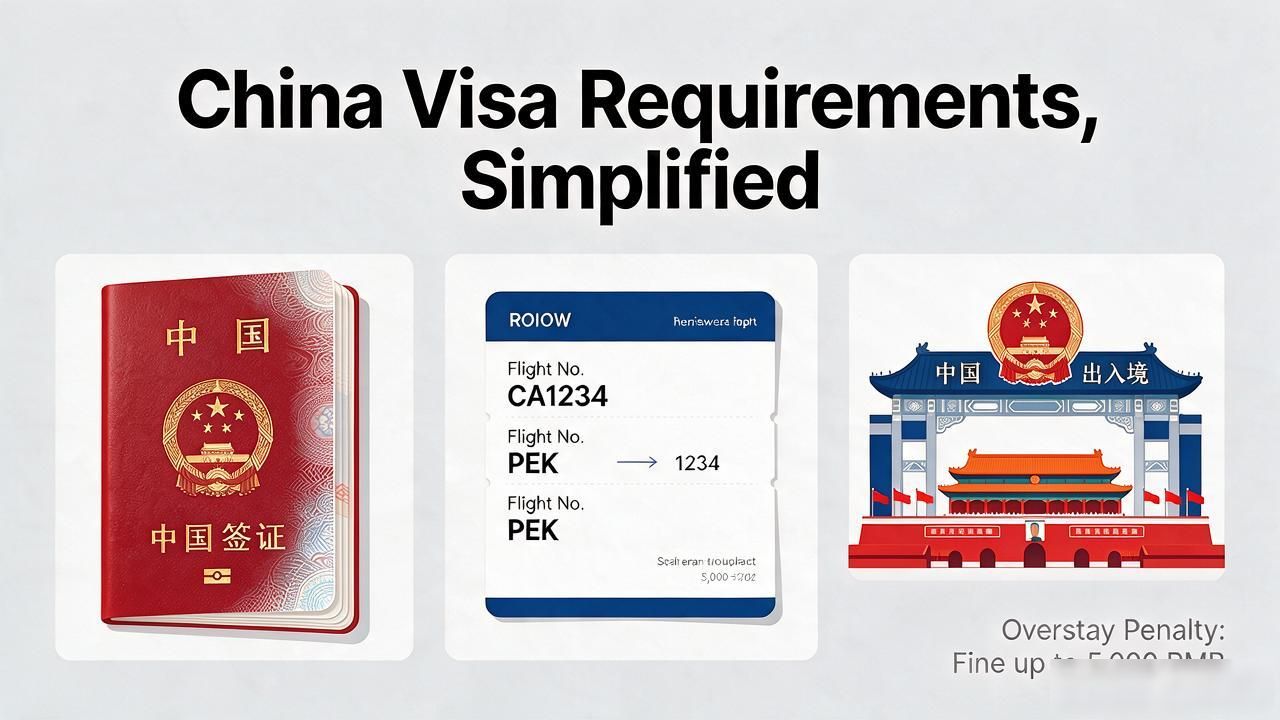
That said, exempt does not mean zero rules. You still need a confirmed onward ticket, a valid passport, and you must enter and exit through designated ports only. Overshooting your permitted stay by even one day can trigger fines, deportation, or a future entry ban. Always double-check the exact duration allowed for your nationality before you book anything.
The single best move before applying is to visit the official Chinese embassy or consulate website for your country. Third-party visa agents are convenient, but the source of truth is always the government portal. Rules update with little notice, so check within two weeks of your travel date. A few minutes of research will save you a world of stress at the airport.