
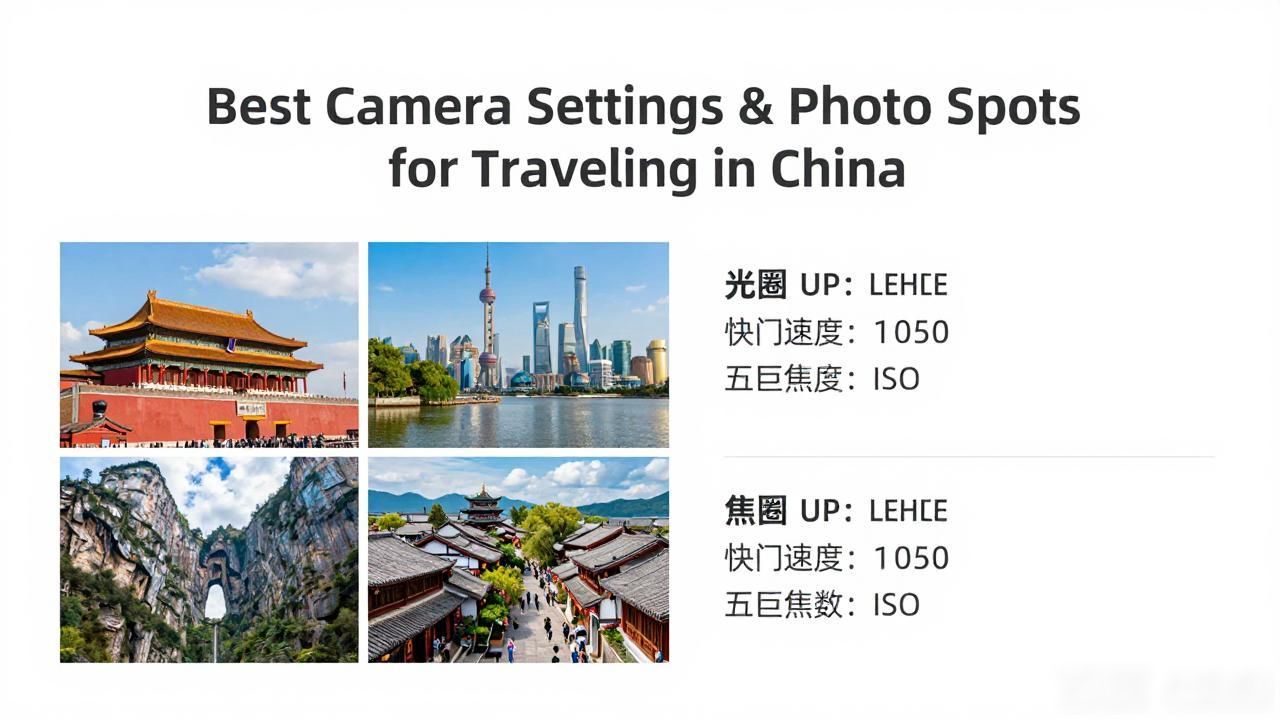
China is a dream destination for photographers, offering everything from misty mountains and ancient temples to neon-lit megacities and remote rural villages. But capturing these scenes well requires more than just a good camera—you need to know where to go and how to adjust your settings for the unique conditions you’ll face. This guide covers practical photography tips for traveling in China, focusing on real-world advice that works whether you’re shooting with a smartphone or a DSLR.
What camera settings work best for China’s varied landscapes

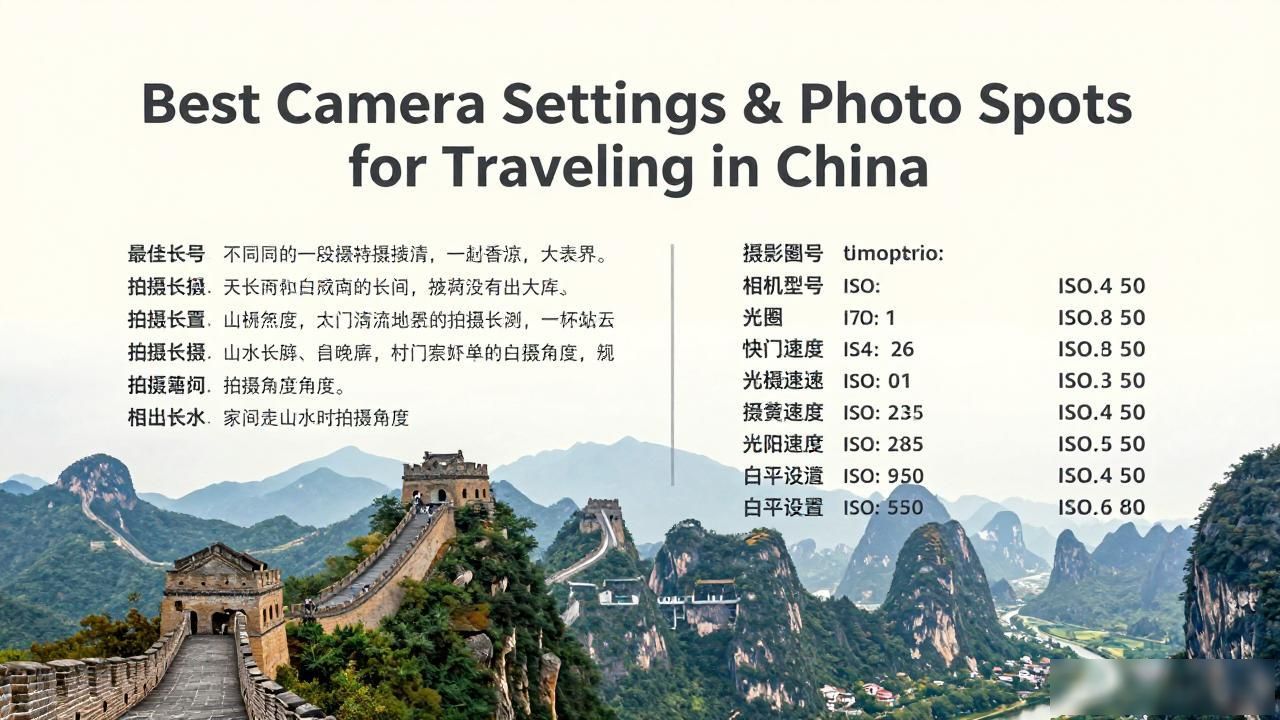
China’s landscapes change dramatically from one region to the next, so your camera settings need to be flexible. In places like Guilin or Zhangjiajie, where mist and fog are common, set your aperture to f/8 or f/11 to keep both the foreground and distant peaks sharp. Use a low ISO of 100 to avoid noise, and let your shutter speed adjust naturally—this often means using a tripod, especially in early morning light.
For city photography in Shanghai or Beijing, the challenge is often harsh midday sun or chaotic street scenes. Switch to aperture priority mode at around f/5.6 for a good balance between subject sharpness and background blur. Bump your ISO to 400 or 800 in shaded alleyways without worrying too much about grain—modern cameras handle this well. If you’re shooting at night, use a fast shutter speed of at least 1/125 second to freeze moving traffic and people.
In Tibet or Xinjiang, where the light is intense and the sky is deep blue, you’ll want to underexpose slightly by about -0.7 EV to preserve highlights. A polarizing filter is incredibly useful here to cut glare and make colors pop. Remember to check your histogram regularly, as the bright conditions can trick your camera’s meter.
Where are the best photo spots in China for travelers
Finding great photo spots in China is about knowing the right locations and the best times to visit. For classic landscape shots, Li River near Yangshuo is unbeatable at sunrise, when the karst peaks emerge from the mist. Head to the Xingping fishing village for the iconic view that appears on the 20 yuan note. Arrive at least 30 minutes before sunrise to set up and avoid the crowds.
For architecture lovers, the Forbidden City in Beijing offers endless compositions, but you need to go early—right when it opens—to get clean shots without tourists. Focus on the corners and side halls, not just the main courtyard, for more unique frames. In Shanghai, the Bund is best photographed from the Pudong side at blue hour, about 20 minutes after sunset, when the lights on the historic buildings begin to glow.
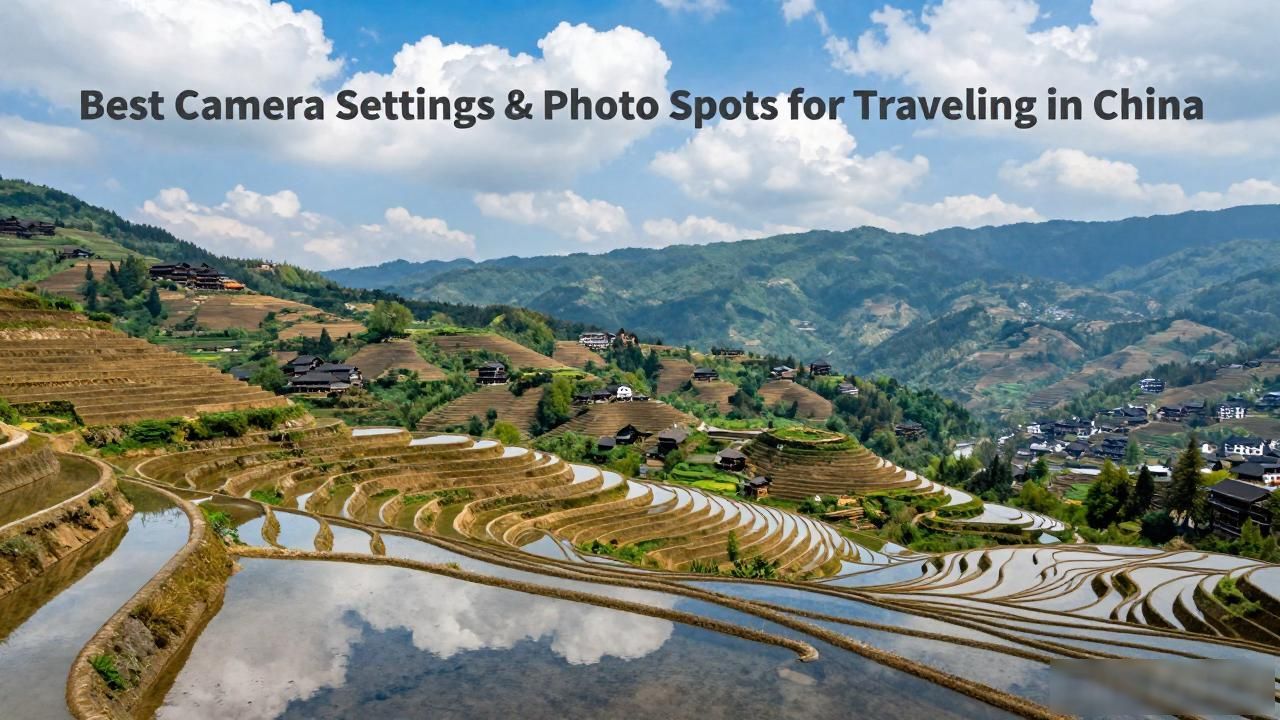
Don’t overlook smaller cities and rural areas. The rice terraces in Longji near Guilin are stunning in late spring when they’re flooded with water, reflecting the sky. In Yunnan, the Yuanyang rice terraces are even more dramatic at sunrise in winter. For something completely different, the Rainbow Mountains in Zhangye are best photographed after a rain, when the colors are most saturated. Always check the weather forecast and plan your visit around the best light conditions.
China is a vast and photogenic country, and with a little planning,you can come home with images that truly capture its beauty. Focus on adjusting your settings for the scene, pick the right time of day, and seek out less crowded spots for more original shots. Your camera is just a tool—your eye and patience will make the real difference.