
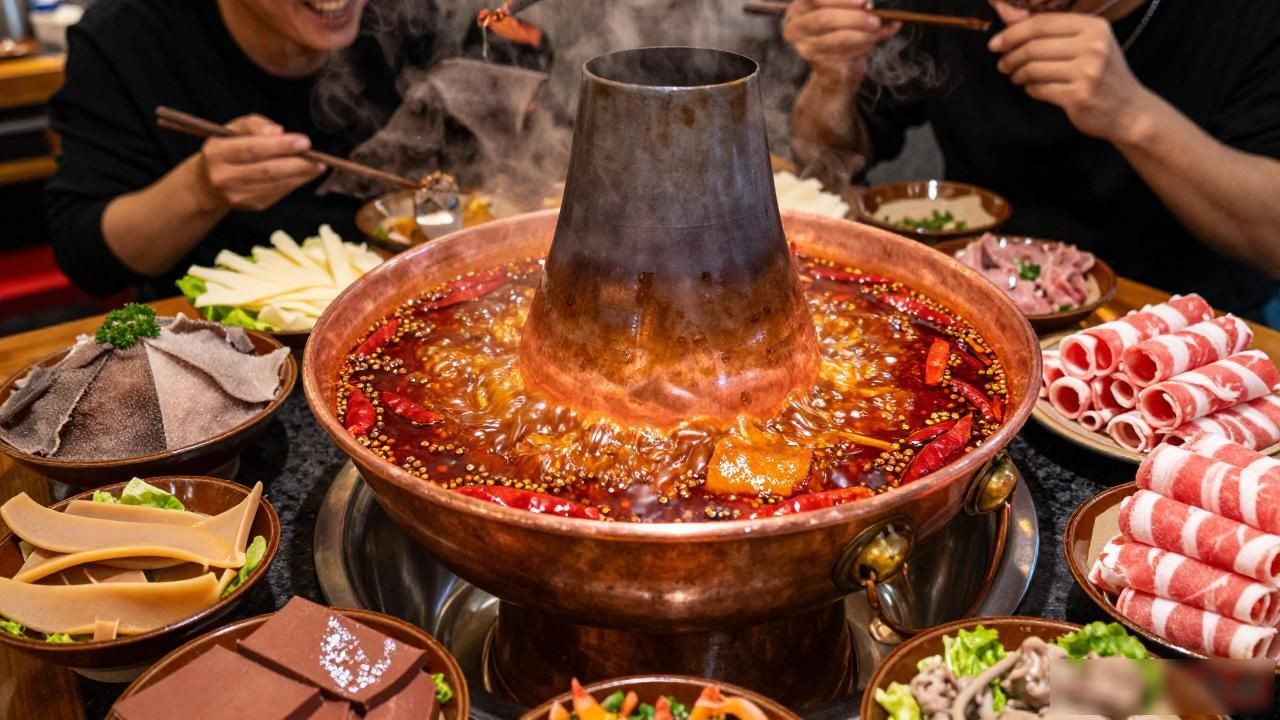
Hot pot isn’t just a meal in western China — it’s a whole way of life. If you’re standing in Chengdu or Chongqing with a steaming pot in front of you, you’re already part of the ritual. But here’s the thing: these two cities don’t agree on what makes the best hot pot. And honestly? That’s what makes the experience so exciting.
What Makes Chengdu Hot Pot Different From Chongqing Hot Pot
The key difference comes down to one word: ma — that intoxicating numbing sensation from Sichuan peppercorns. Chengdu-style hot pot leans heavily on it. Expect a complex layering of flavors: rich beef tallow, dried chilies, fermented bean paste, and enough Sichuan pepper to make your lips vibrate. It’s bold, deep, and slow-building.

Chongqing hot pot is fiercer, louder, and more aggressive. The broth hits you immediately with pure chili heat before the numbness even registers. Locals swear by the old-school style — chunks of pork fat rendered into the broth, massive amounts of dried chili, and a commitment to zero compromise on spice level. If you order it “not spicy” in Chongqing, you might still cry.
Both styles use the same basic setup: a divided pot with broth on one side and plain water on the other, raw ingredients swimming around until perfectly cooked. But the soul of each city lives in that first sip of broth.
Where to Eat the Best Hot Pot in Each City
In Chengdu, you won’t find fancy interiors at the top picks. Jianzhaohui Hot Pot in the Jinjiang district has been serving locals since 1998. The queue moves fast, the staff doesn’t speak English, and the beef tripe is still hand-cut in front of you. Order the nine-layer beef — it’s a ritual to watch. Nearby, Xiba Hot Pot has locations all over town, but the original in Wuhou Temple area stays truest to the classic profile.
Chongqing’s scene is even more unapologetic. Peijie Hot Pot near Hongyaide has been operating since 1996 with zero renovations to speak of. Plastic stools, loud music, and broth so red it looks like lava. The duck intestine and fish maw are local favorites. Meanwhile, Chongqing Yihao Hot Pot around the Jiefangbei district draws crowds past midnight — this is what a true夜火锅 (night hot pot) experience looks like.
Pro tip: look for restaurants packed with locals speaking loud Sichuan dialect. That’s your real filter.
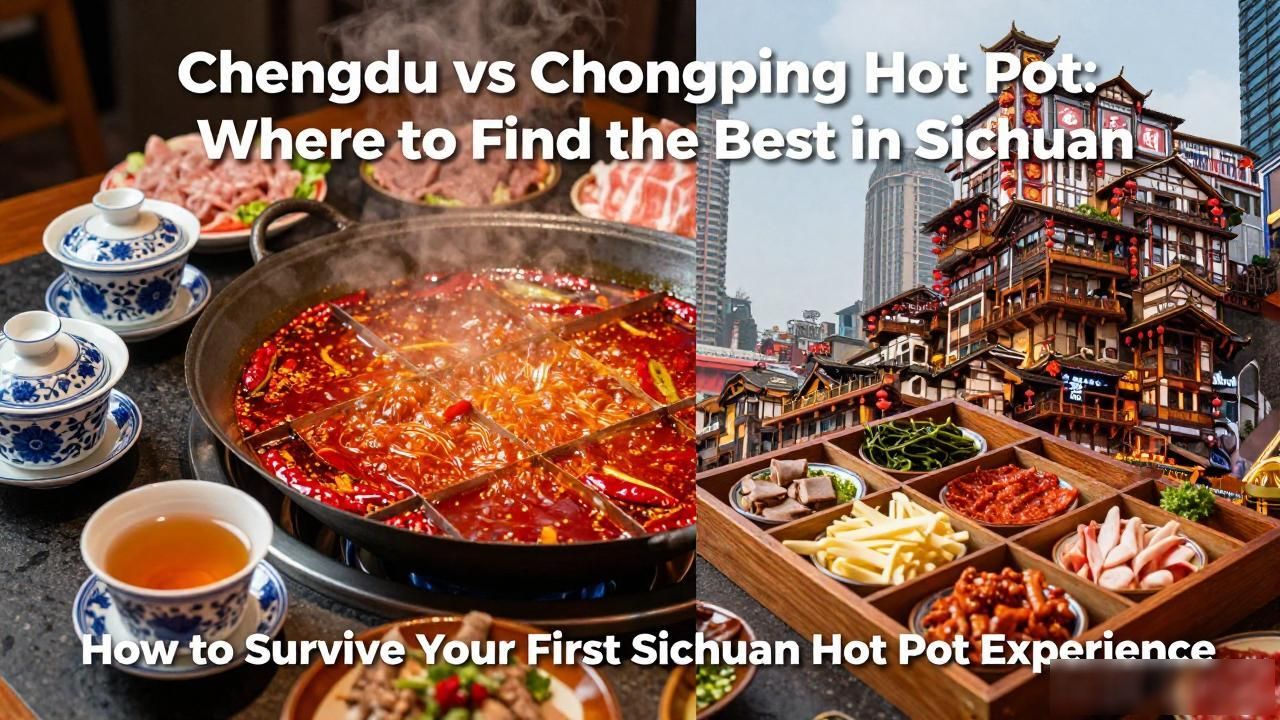
How to Survive Your First Sichuan Hot Pot Experience
Here’s what no guidebook tells you: bring wet tissues, not napkins. The oil gets everywhere. Drink soy milk or sour plum juice immediately if your mouth starts burning — water actually makes it worse by spreading the capsaicin around. Order raw duck blood, fresh haidai (kelp knots), and lotus root slices for something that won’t challenge your courage on day one.
Don’t skip the dipping sauce station. Mix sesame paste,minced garlic, and a splash of vinegar for a cooling contrast. And whatever you do, don’t rush. A proper hot pot meal in either city takes at least two hours. The food gets better as the broth concentrates, and the conversation gets louder.