
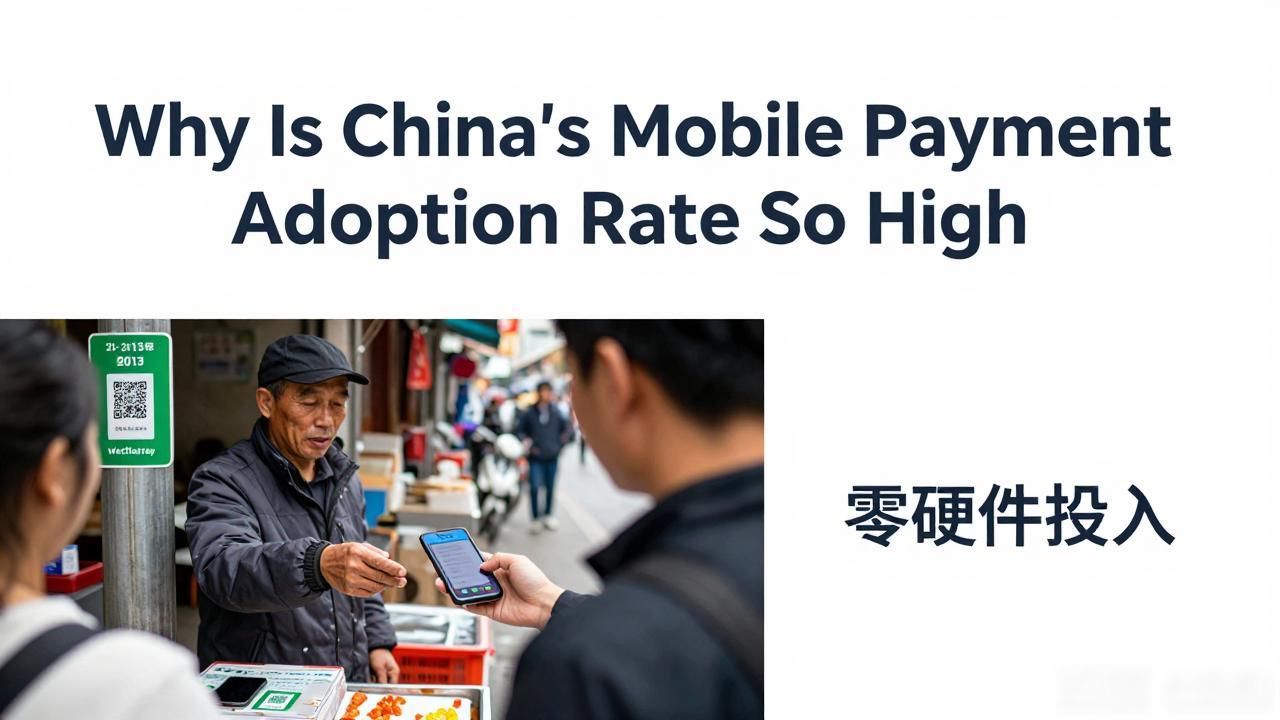
If you’ve ever tried to buy street food in Beijing or take a taxi in Shanghai without cash, you’ve experienced one of the most dramatic shifts in modern commerce. China‘s mobile payment adoption rate has skyrocketed past 80 percent of the adult population,making it the largest cashless society the world has ever seen. This isn’t just a trend — it’s a structural transformation of how an entire nation handles money.
How Did China Reach 80 Percent Mobile Payment Adoption

The story begins around 2013, when Alipay and WeChat Pay launched QR code payment systems that required zero hardware investment for merchants. A street vendor could stick a printed QR code on their stall and accept digital payments immediately. That simplicity changed everything. Within five years, the adoption curve went vertical.
By 2024, mobile payment transactions in China exceeded 400 trillion yuan annually, a figure that dwarfs the combined total of all other countries. The infrastructure was built not by banks but by technology companies who understood that convenience would drive adoption faster than regulation ever could.

The government played a supporting but crucial role. Policies encouraging a cashless economy, combined with massive 4G and smartphone penetration, created the perfect conditions. Even rural areas with limited banking access embraced mobile payments because they arrived on phones, not through branches.
What Does China’s Mobile Payment Adoption Rate Mean for the World
For foreign travelers and international businesses, understanding this rate is no longer optional. It shapes how products are priced, how services are designed, and how companies approach the Chinese market. A restaurant in Shenzhen that doesn’t accept Alipay is effectively invisible to the majority of its customers.
The ripple effects extend far beyond China’s borders. Companies like Apple, Starbucks, and Uber have adapted their Chinese operations to prioritize mobile payment integration. Global payment networks are now studying China’s model to understand how rapid adoption can be achieved in markets where card payments remain dominant.
China’s experience also raises important questions about financial inclusion, data privacy, and the concentration of payment power in the hands of a few tech giants. The adoption rate tells only part of the story — the implications run much deeper.
Thank you for the information that has been shared! This article is very useful and provides valuable insights for readers.