

I spent three days in Xi’an last month and the Terracotta Army stole every other landmark’s thunder. It’s not just a museum display or a photo op—it’s 8,000-plus life-sized figures buried for over two thousand years,and the sheer scale still hits you in a way brochures never prepare you for. Here’s what actually matters when you plan the trip.
How far is Terracotta Army from Xi’an

The site sits about 40 kilometers southeast of the city center, which translates to roughly an hour by regular bus or 45 minutes by taxi. I took the tourist shuttle from the subway station and it dropped you right at the gate—convenient but crowded by mid-morning. The taxi route is more flexible, especially if you’re coming from the eastern end of the city.
You’ll pass through farmland and small villages on the way out. The landscape is flat and unremarkable, which makes the moment you crest the hill and see the excavation pits feel almost surreal. No build-up, no signage screaming at you. Just a vast open yard with trenches full of warriors.

What time to visit Terracotta Army Xi’an
I strongly recommend arriving at the 8:30 AM opening, before the tour bus waves roll in. I got there at 9:15 and already felt the herd pushing through Pit 1. By 10:30 the central walkway was a wall of shoulders. The pits open at 8:30 sharp, and those first two hours give you genuine space to walk, photograph, and actually look at the individual faces.
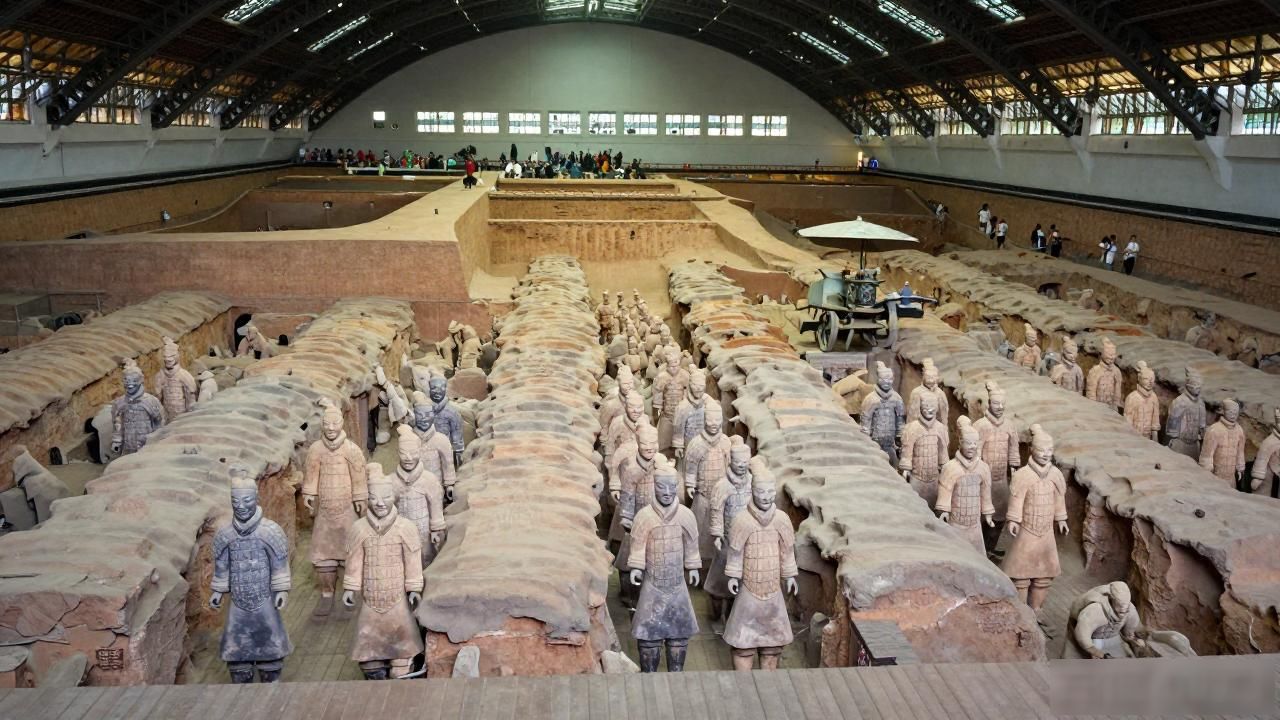
Pit 3 is the smallest and least crowded, but it holds the best-preserved officers and a rare bronze chariot. Most visitors rush past it to Pit 1. If you go in the reverse order, you’ll have Pit 3 almost to yourself. The on-site museum with the bronze chariots is also worth 20 minutes and connects directly to Pit 3.
Three days in Xi’an taught me that the Terracotta Army rewards early risers and patient walkers. Skip the audio guide, pick one face in Pit 1, stand in front of it for a full minute, and let two millennia sink in. That’s the moment the whole trip earns its keep.