
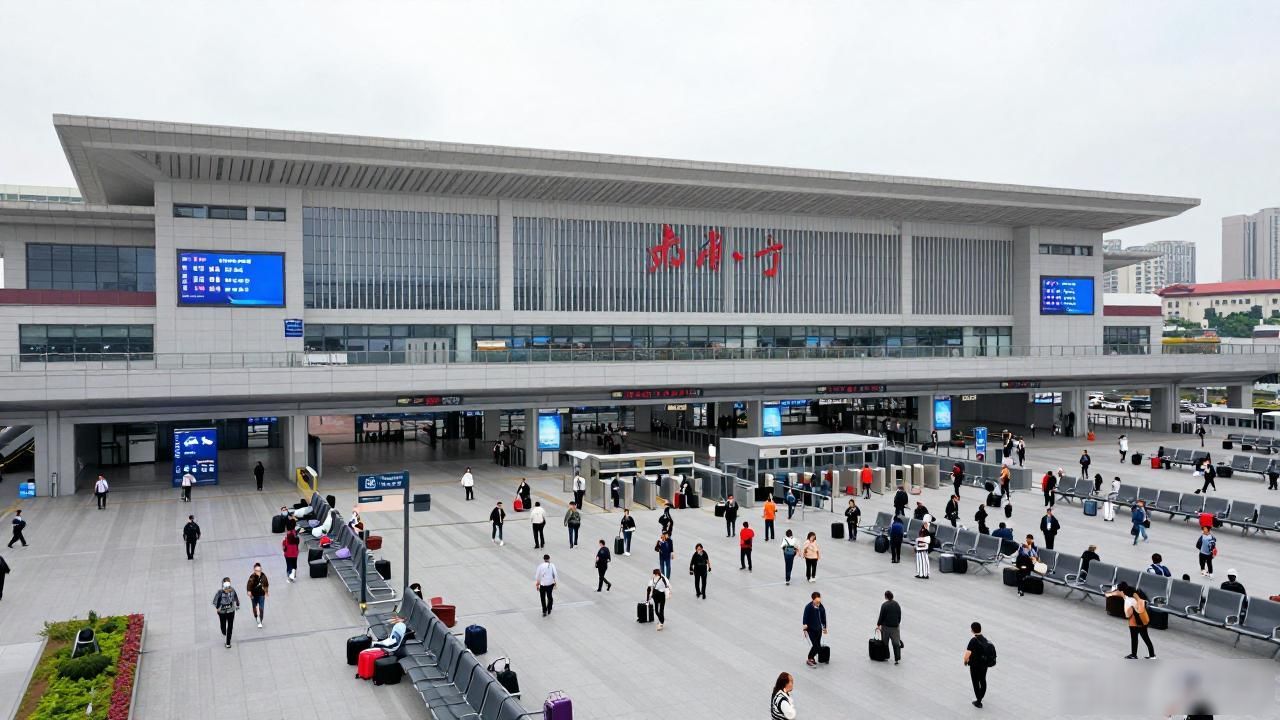
China’s high-speed rail network now stretches past 45,000 kilometres, the longest in the world, threading between cities that a decade ago needed an overnight bus to link. For a first-time visitor stepping into a terminal, the sheer scale can freeze you at the entrance. Based on six trips I’ve made between Beijing, Shanghai, and Guangzhou, here is what actually happens once you walk through those glass doors.
What to Expect at China High Speed Rail Stations

The entrance is not what most Western travellers picture. Forget the modest British station. Guangzhou South sprawls across an entire city block,with physically separate corridors for departures, arrivals, and transfer passengers. You queue at a security checkpoint that functions exactly like a small airport screen. Bag through the X-ray, the metal detector wand over your torso, and you are through in under ninety seconds. There is no secondary check, no random frisk, just a quick beep and you move on.
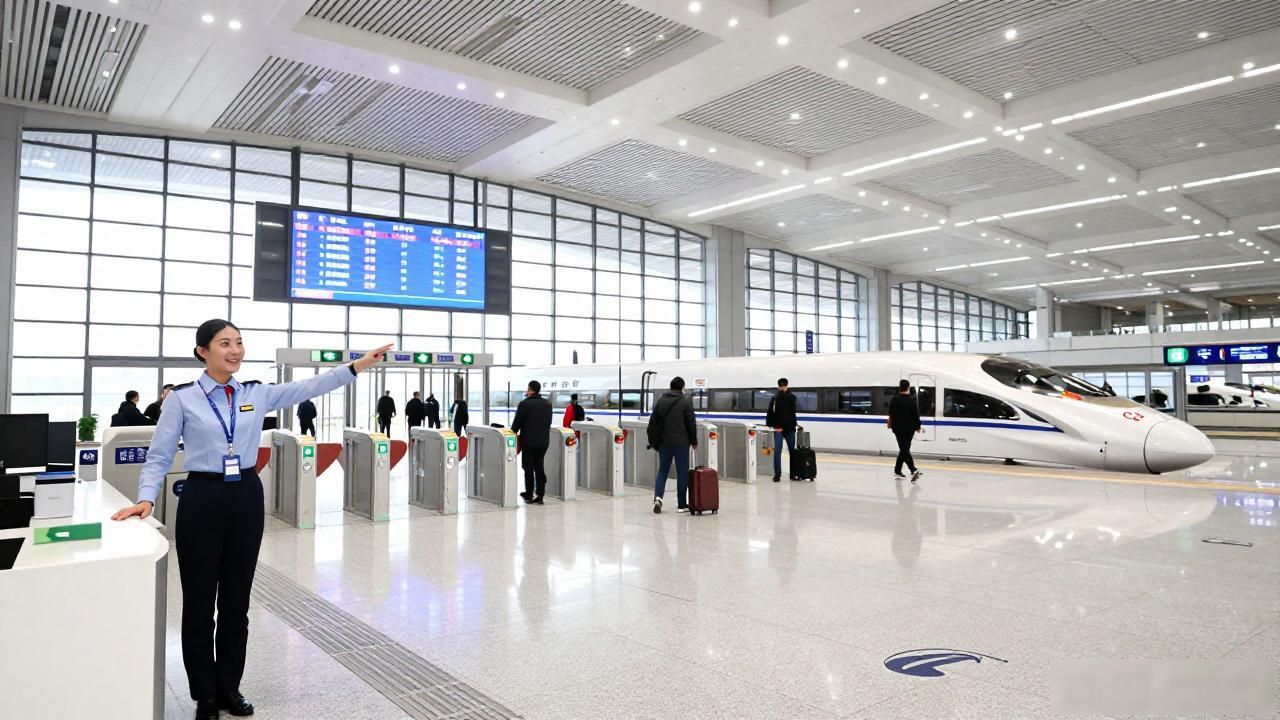
Past security, the concourse opens into a cavernous hall lined with digital departure boards in Chinese and English. I always scan for the row of automated turnstiles matching my train number. You cannot bypass the gate check here. Even with a QR e-ticket saved on your phone, you tap your passport or ID card at the scanner before stepping onto the platform. One touch, a green light, and you walk through into the departure lane.
How to Navigate China High Speed Rail Stations
At mega-stations like Shanghai Hongqiao the platforms sit deep underground, reached by escalators that feel they have no end. Follow the colour-coded directional signs: green arrows for your specific train, blue for through-passengers transferring. The train pulls in, the doors open onto a numbered section of platform. You walk to the correct car, step up, find your seat by the number printed on your ticket. No shuffling, no conductor calling out. Just the quiet hum of a modern vehicle releasing its brakes and pulling away with almost no lurch.
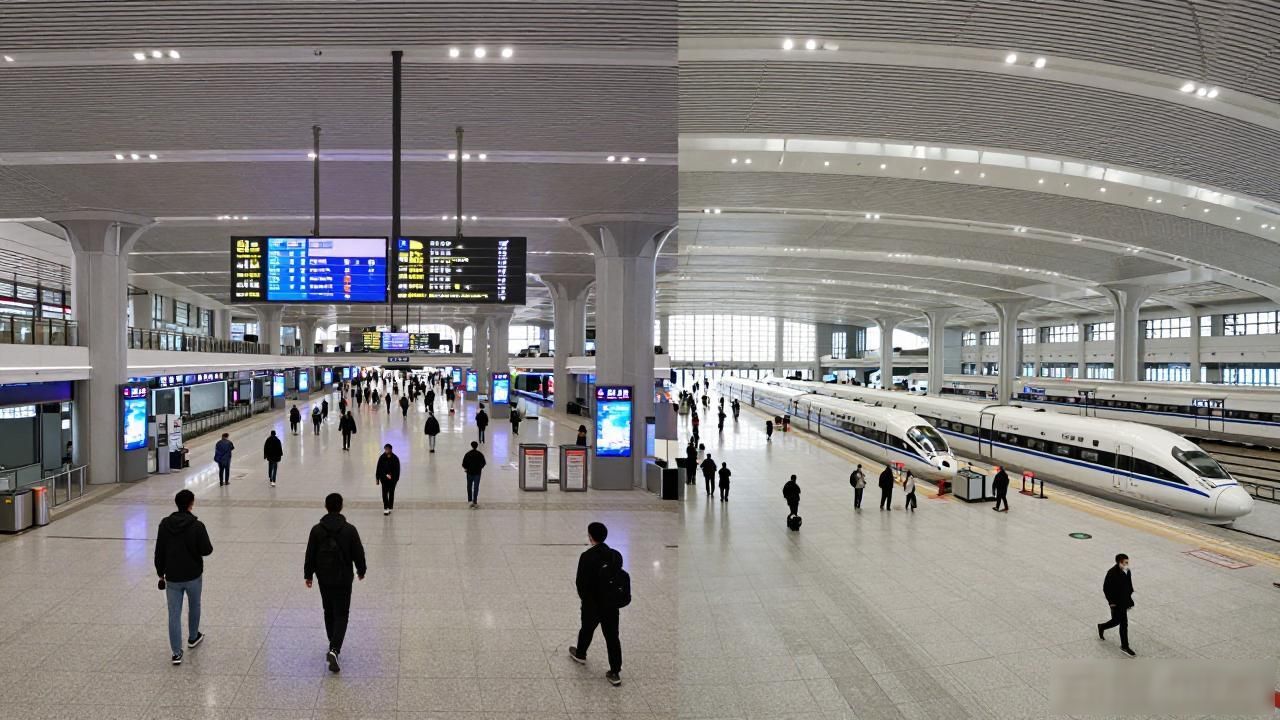
Smaller city stations compress the whole experience into a single long hall, almost intimate by comparison. The departure board is the size of a flat-screen television; the platform is a short walk away, no underground crawl. The contrast between these compact terminals and the Hongqiao colossus is genuinely striking, almost comical. Yet both move thousands of passengers every twenty minutes without the single delay I noticed across all six trips. I kept a mental tally and came up blank.
Six months after my first Beijing-to-Guangzhou run, the system still catches me off guard. Not just the 350-km/h speed on the coastal line. It is the fact that nobody is late, nobody is lost, and the next service is already boarding while you are still finishing your bottle of water.