
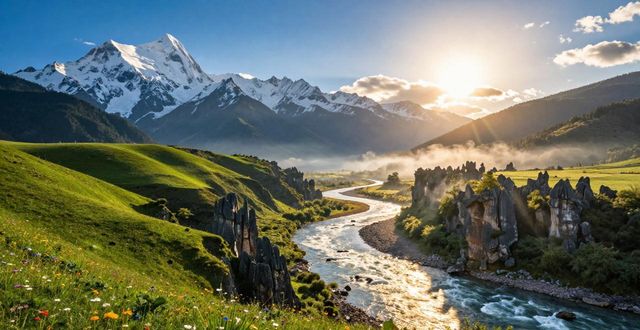
Yunnan province in southwestern China is a land of dramatic contrasts, from snow-capped mountains to tropical rainforests. Its natural scenery is among the most diverse on Earth, offering travelers experiences that range from trekking deep gorges to boating on crystal-clear plateau lakes. For anyone seeking unspoiled landscapes and authentic encounters with nature, Yunnan delivers far beyond expectations. This guide walks you through the region’s most stunning features, answering the top questions visitors have when planning their trip.
What makes Yunnan’s natural scenery so unique?
Yunnan’s geography is a masterpiece of tectonic forces and climate variation. The province sits at the eastern edge of the Tibetan Plateau, where the land rises from near sea level to over 6,700 meters at Kawagebo Peak. This dramatic elevation change creates multiple climate zones within a single day’s drive – you can start your morning in a subtropical valley and end it on a glacier. No other place in China packs such raw vertical diversity into such a compact area, making every bend in the road a new revelation.

For foreign travelers, this means you can witness snowy peaks, alpine meadows, deep river gorges, and limestone karst forests all in one trip. The famous Three Parallel Rivers region – where the Yangtze, Mekong, and Salween rivers run side by side through parallel mountain ranges – is a UNESCO World Heritage site precisely because of this geological rarity. Hiking here feels like walking through a living textbook of Earth’s history, with each layer of rock telling a story millions of years old.
Where to see the most spectacular mountains and lakes?
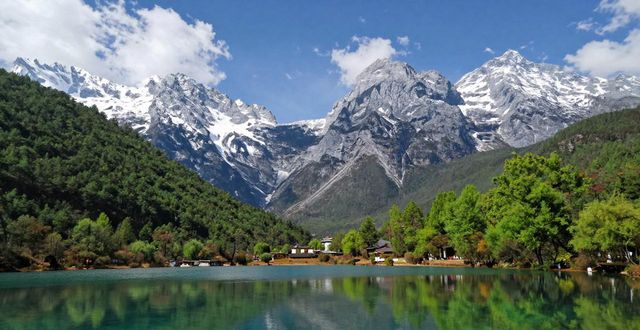
Jade Dragon Snow Mountain near Lijiang is your best starting point for alpine scenery. The mountain’s thirteen peaks stretch like a sleeping dragon, with Shanzidou reaching 5,596 meters. A cable car takes you up to 4,500 meters, where you can walk on wooden boardwalks through a glacier park. The views of the mountain’s sheer limestone faces reflecting in Blue Moon Valley’s turquoise pools are nothing short of surreal. Arrive early morning to catch the first light hitting the snow – local Naxi people believe this is when the mountain’s spirit awakens.
For lakes, Lugu Lake on the border with Sichuan province offers an unforgettable experience. The deep, cobalt-blue lake sits at 2,685 meters, surrounded by forested hills and traditional Mosuo villages. Unlike crowded tourist spots, you can rent a wooden dugout canoe and paddle silently across the water, with only the sound of oars dipping into the mirror-like surface. The lake is so clear that you can see down several meters to ancient submerged tree trunks. Staying overnight in a Mosuo family’s guesthouse lets you wake up to mist rising off the water at dawn – a moment of pure tranquility.
How to experience Yunnan’s biodiversity and national parks?
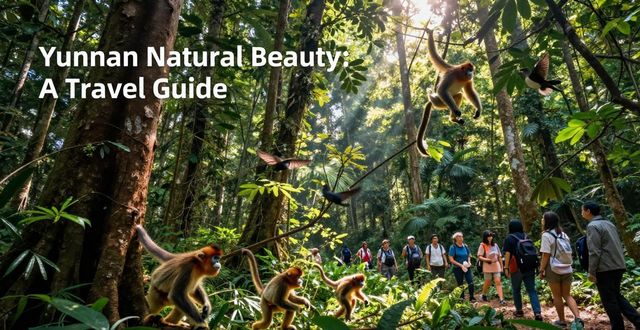
Pudacuo National Park in Shangri-La is China’s first national park designed according to international standards, and it delivers exactly what nature lovers hope for. The park protects over 1,300 square kilometers of highland wetlands, primeval forests, and glacial lakes. A well-maintained shuttle bus system takes you between three main scenic areas,but the real magic happens when you step onto the quiet wooden trails. Keep your eyes open for rare species like the black-necked crane, Yunnan snub-nosed monkey, and even the occasional Asiatic black bear in the distance.
Further south, Xishuangbanna Tropical Rainforest offers a completely different world. Here, the climate is hot and humid year-round, supporting the most biodiverse ecosystem in China. The Tropical Botanical Garden run by the Chinese Academy of Sciences is a must-visit – it contains over 13,000 plant species across 1,100 hectares. Walk through the “canopy walkway” suspended 40 meters above the forest floor to see orchids, ferns, and strangler figs up close. For a more rugged experience, hire a local guide to explore the Wild Elephant Valley, though sightings are never guaranteed, the jungle itself is the real star.
When is the best time to visit Yunnan for nature lovers?
Spring from March to May is arguably the ideal season for most of Yunnan’s natural scenery. Temperatures are mild, wildflowers explode across the highland meadows, and the snow on the mountains is still crisp without making trails dangerous. April is particularly magical in the Lijiang area, where peach and azalea blossoms color the lower slopes. The only downside is that spring also brings occasional dust from northern China, but Yunnan’s high rainfall usually keeps the air clear.
Autumn from September to November offers a different kind of beauty. The summer rains have ended, leaving the skies brilliantly blue and the rivers full but not flooded. This is the best time for trekking Tiger Leaping Gorge, as the trail is dry and the views of the 3,900-meter-deep canyon are unobstructed. The foliage turns golden and red in places like Shangri-La, creating a painterly contrast against the white mountain peaks. Winter (December to February) is perfect for escaping northern cold – the southern parts like Xishuangbanna stay warm at 20-25°C, while the north gets a quiet, snowy charm with far fewer tourists.
Now here’s a question for you: Have you ever experienced a landscape that completely changed your understanding of nature, and which Yunnan destination would you visit first to create that moment? Share your thoughts in the comments – and if you found this guide helpful, please give it a like and share it with fellow travel lovers who are dreaming of Yunnan’s wild beauty.