
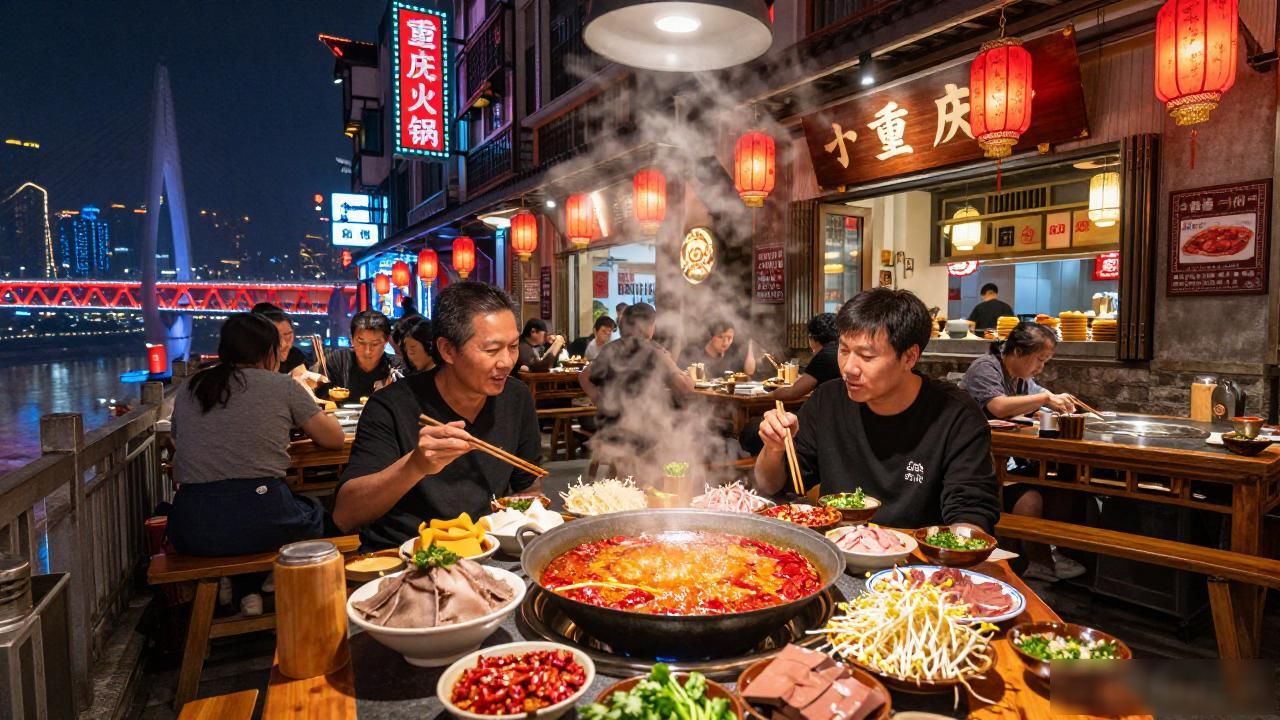
Why Chongqing Hot Pot Comes Alive After Dark
The moment the sun drops below the Jialing River, Chongqing transforms into a city of red oil and rising steam. I remember my first night walk through these alleys—every corner smelled different, some carrying garlic and fermented tofu, others drifting with that heavy Sichuan pepper numbing the air before you even crossed the threshold.
This is when the real city reveals itself, far removed from the tourist-heavy daytime spots. The locals don’t rush. They arrive around seven or eight, order their pots, and settle in for hours. The atmosphere feels intimate despite the crowds—everyone here understands the ritual.
What Makes Night Hot Pot Different

There’s a rhythm to evening dining that doesn’t exist anywhere else in China. I’ve watched elderly couples still holding hands decades later, young students celebrating exams, business people closing deals over spicy tripe. Each table tells a story written in chili peppers.
You learn quickly that this isn’t just dinner—it’s community. Strangers share tables during peak hours, and no one seems to mind. The noise level stays constant, a hum of conversation and clinking bowls that never quite dies down until late.
Best Neighborhoods for Late-Night Hot Pot
Yuzhong District remains the classic choice with riverside views and countless options, but I found something more authentic wandering into Danzishi and Jiulongpo. These are neighborhoods where locals go, where signs are all in Chinese and menus require patience to decode.
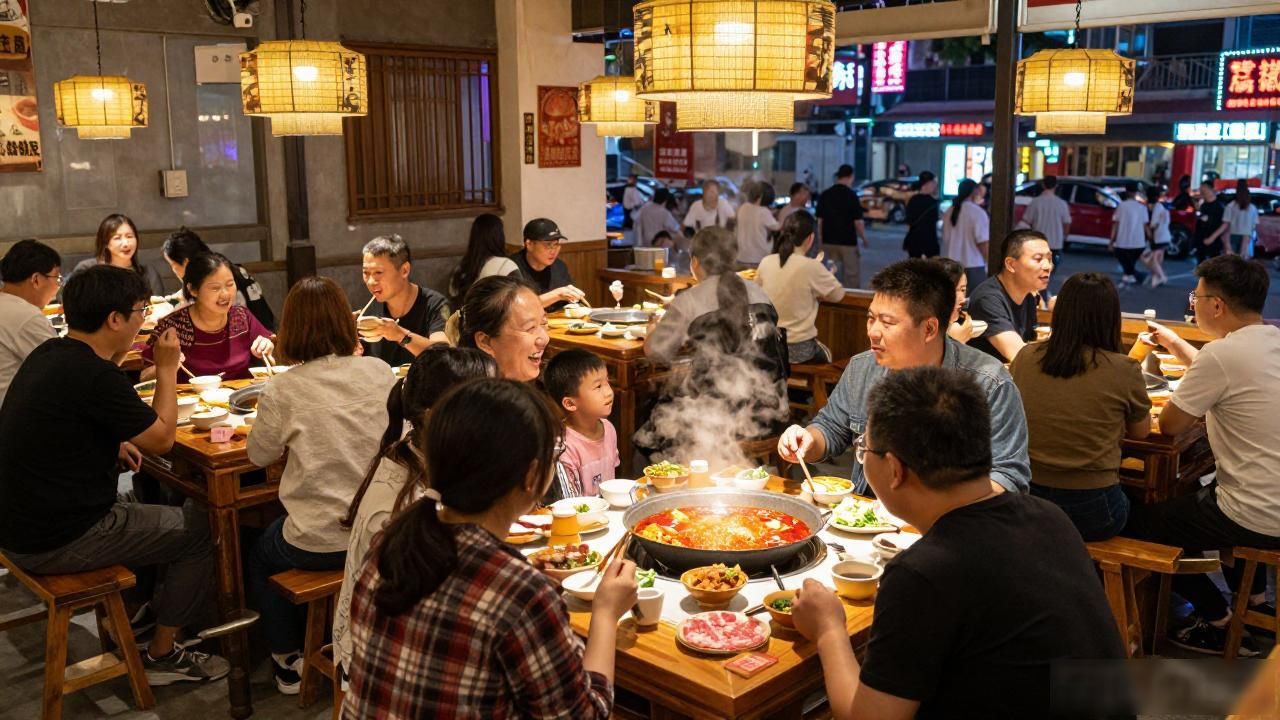
The difference matters. Places near the railway station can be good,but they also attract tourists who don’t return. The real test is watching whether local families fill the room—and they always do in the right spots.
How to Order Like a Local
Understanding heat levels took me weeks. Some restaurants offer a spectrum from mild to extremely spicy, but ordering “mild” often means the kitchen will ask you to choose again, because your request confused them. Start moderate. If it doesn’t burn enough, ask for more chili oil at the table.
Tripe and beef are essentials, but don’t overlook the vegetables. Tofu skin absorbs the broth in ways meat never does, and lotus root adds crunch that cuts through the richness. Mixing proteins and vegetables keeps each bite from tasting the same.
The Experience Beyond the Food
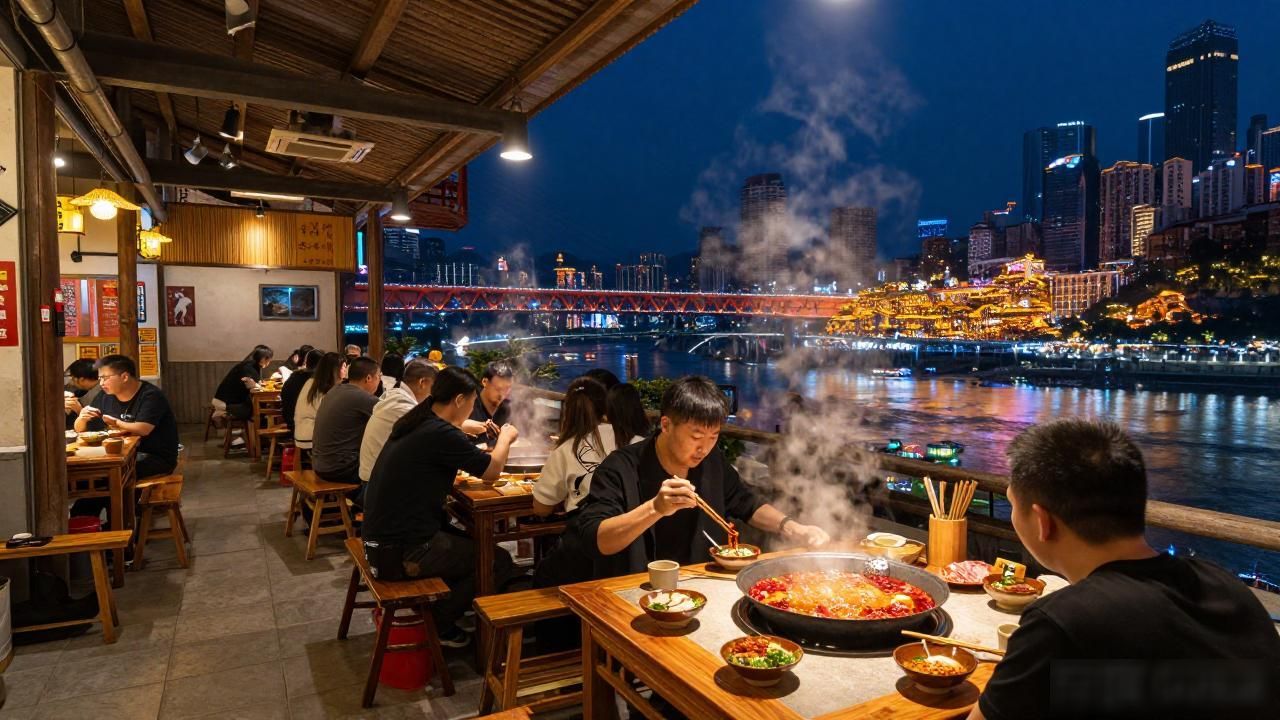
What makes Chongqing hot pot unforgettable has little to do with any single ingredient. It’s the steam rising toward the ceiling, the laughter echoing through the room, the sweat forming on your forehead despite the humid night air.
It’s about being present, participating in something older and deeper than any restaurant experience back home could replicate. This is why people come back. Not for the food alone, but for the feeling of belonging to a city that refuses to sleep.