
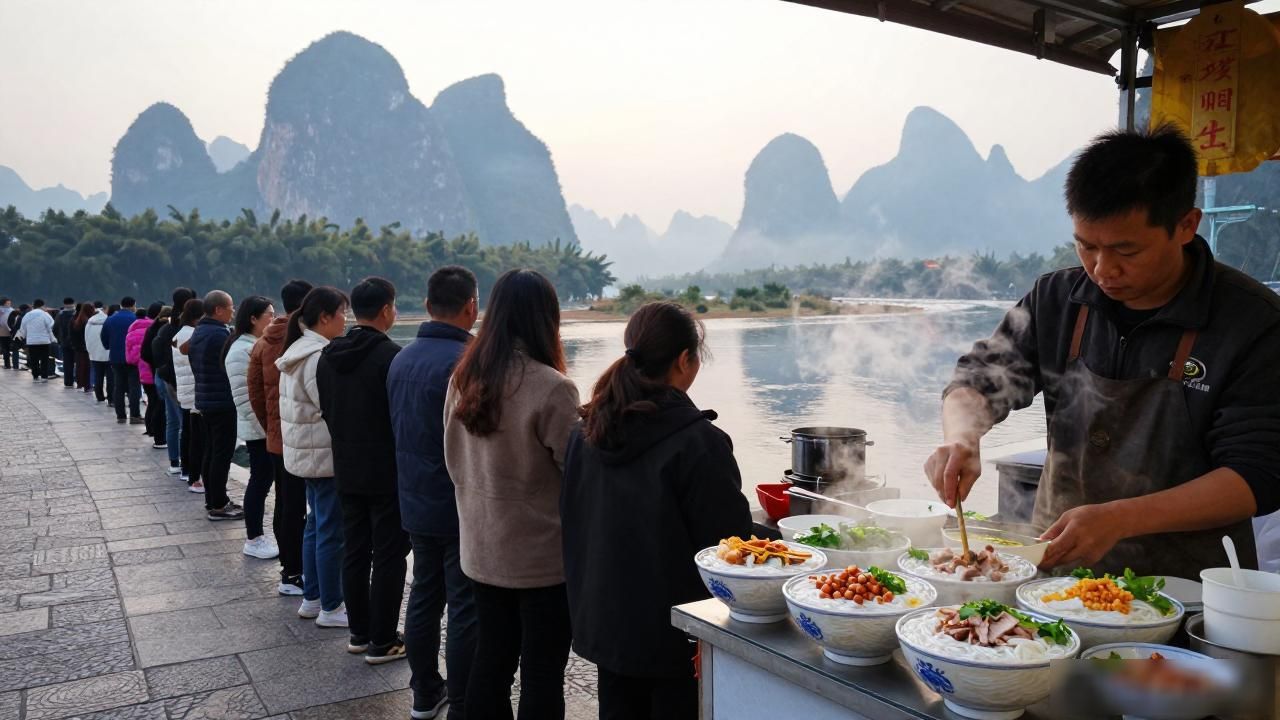
Guilin may be famous for its breathtaking karst landscapes, but it is the food that truly leaves visitors unforgettable. Guilin local cuisine sits somewhere between Sichuan heat and Cantonese delicacy, shaped by centuries of river trade and mountain farming. Walking through the night markets, catching the scent of star anise and garlic frying in woks, you quickly understand why this part of Guangxi province has earned its reputation as one of southern China’s most flavorful food destinations.
What Are the Most Famous Guilin Dishes You Should Try

Start with Guilin rice noodles, or mifen, the dish that puts this city on the map. Every morning, thousands of locals queue at small shops before sunrise. The broth is made from pork bones and a blend of spices, poured over thin rice noodles topped with sliced pork, peanuts, and fresh herbs. It is simple, yet layered. Most visitors agree that the breakfast bowl is the single most important meal of a Guilin trip.
Move on to beer fish, a Carpentry-era dish that surprises people who expect only spicy food from this region. The fish is pan-fried until crisp, then simmered in a sauce built from local rice beer, ginger, garlic, and chili. The result is sweet, savory, and slightly smoky. The sauce clings to the flaky white flesh in a way that makes you stop halfway through and go back for more.
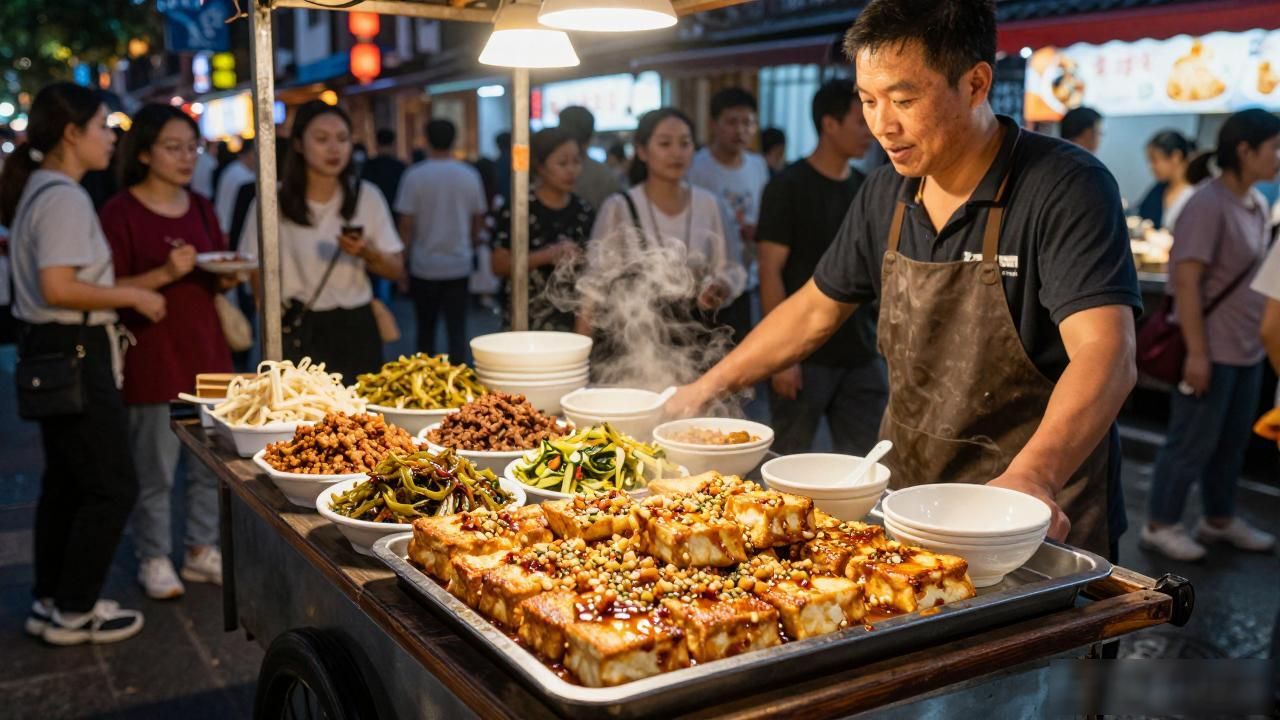
Garlic tofu rounds out the trio of must-try dishes. Tofu blocks are pressed, fried golden, and smothered in a thick garlicky sauce with minced pork and preserved vegetables. Street vendors near West Street serve it from rolling carts, and the aroma draws crowds even at midnight.
Where Locals Actually Eat in Guilin
Skip the tourist traps along the main strip near the Li River and head to Xiao-Dongmen Night Market instead. This is where Guilin residents go after work, and the stalls are priced accordingly. You will find grilled skewers, bamboo rice,and bowls of noodle soup that cost a fraction of what you pay in hotel restaurants.
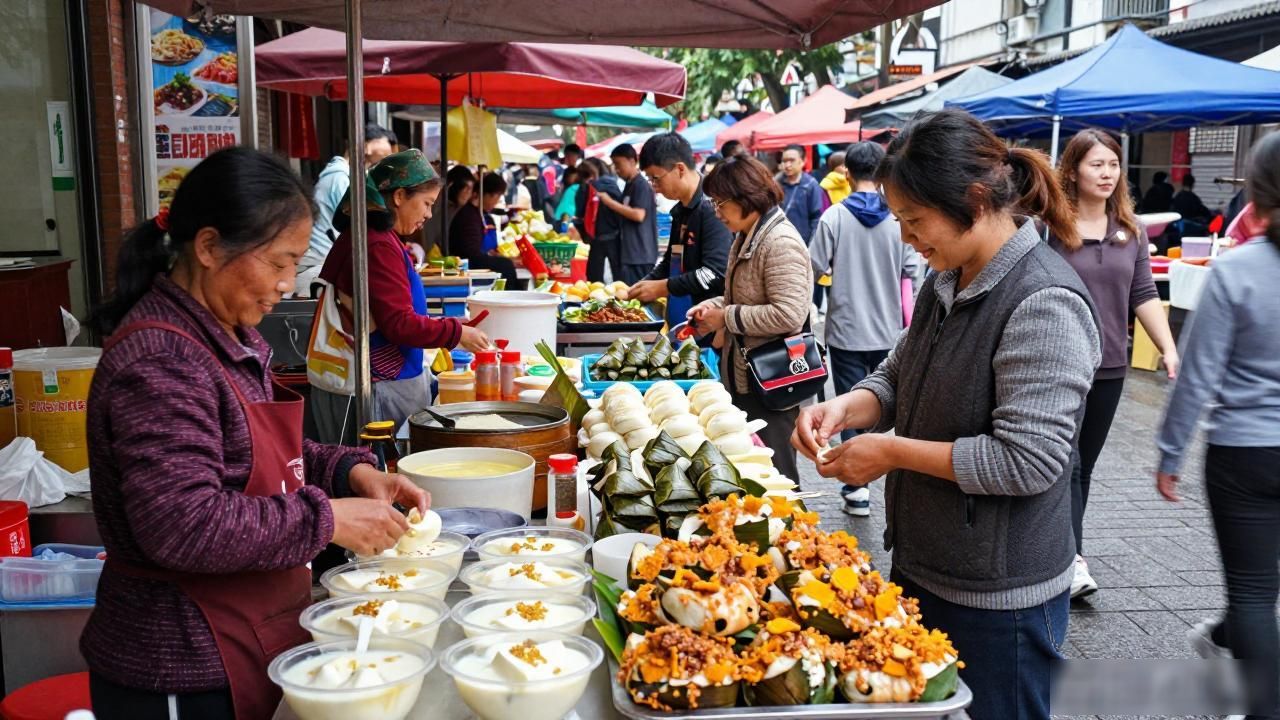
The morning market near Zhongshan Road offers something entirely different. Here vendors sell freshly made tofu pudding, sticky rice wrapped in banana leaves, and steamed buns filled with salted egg and pork floss. It is not a curated experience. There are no English menus, no photos on the wall, and no patience for hesitation. The trick is pointing, smiling, and trusting the person behind the counter.
For lunch, duck rice at a shop tucked into a residential alley beats any polished restaurant. The meat is braised in dark soy and five-spice until it falls apart, served over steamed rice with a side of pickled mustard greens. Five dollars, twenty minutes, and possibly the best meal of your week.