
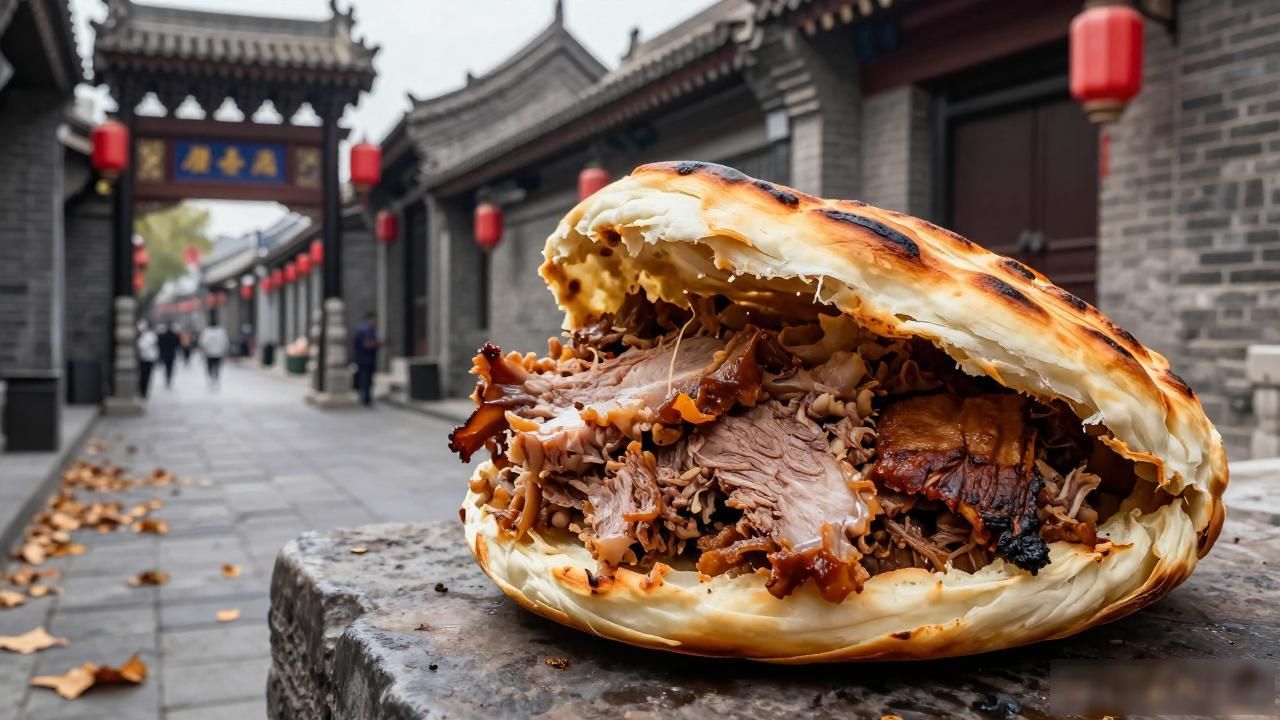
You step off the plane in Xi’an and within an hour you’re surrounded by something no guidebook can truly prepare you for — the overwhelming, intoxicating scent of sizzling cumin, fermented garlic, and charred lamb fat rising from open flames on every corner. I remember my first night wandering the Muslim Quarter at dusk, watching vendors shout orders in rapid-fire Shaanxi dialect, their hands moving with practiced speed as they assembled sandwiches from flatbreads still warm off the griddle. This city, older than Rome, has a food culture that doesn’t just feed you — it pulls you in by the nose and refuses to let go. Xi’an sits at the western terminus of the ancient Silk Road, and you can taste that history in every bite. Arab traders brought spices, wheat, and cooking techniques from the Middle East centuries ago, and local residents transformed those imports into something entirely their own. The result is a culinary landscape unlike anywhere else in China, defined by bold flavors, hand-pulled noodles, and meat-centric dishes that reward the brave eater.
What is Xi’an Famous Food for Foreign Tourists

Roujiamo might be the simplest dish in the world and simultaneously the most complicated to master. It consists of slow-cooked, fall-apart pork stuffed inside a round baked bun split open by hand. The bun must crackle when you bite it, and the meat inside should be so tender it requires no chewing at all. You’ll find this sandwich at almost every street corner, but some vendors have been doing it for thirty years and their version is dramatically better than the one next door. Locals will point you toward the right stall without hesitation, and you’ll thank them later when you finally taste the difference.
Biangbiang noodles are another dish worth traveling across the world to eat. These ribbons of hand-pulled dough are wide enough to resemble strips of fabric,and they arrive swimming in a broth of chili oil, vinegar, and minced pork. The name itself comes from the sound the dough makes when slapping against the cutting board during preparation. You’ll find small eateries tucked into residential alleys where grandmothers pull noodles at remarkable speed, and the patrons eating alongside you are mostly local office workers on their lunch break. This is not tourist food dressed up for visitors. This is the real thing.
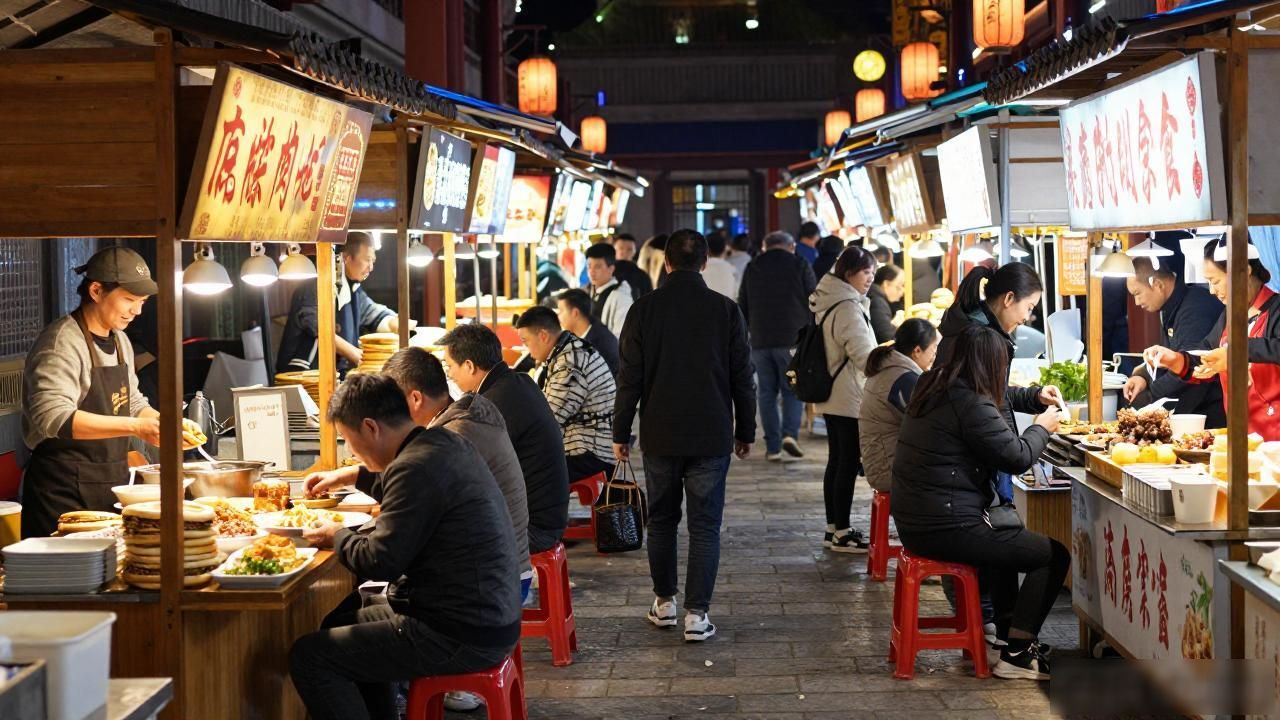
Where to Find Best Street Food in Xi’an Night Market
The Muslim Quarter transforms after sunset into what amounts to the largest outdoor dining room in Asia. Stalls line the sidewalks in overlapping rows, each one claiming to serve the best version of whatever they’re selling. Lamb skewers sizzle over open coals, emitting thick plumes of aromatic smoke. Bowls of malatang bubble with chilies and herbs at ferocious temperatures. Children weave between tables carrying plates of fried sweets that glisten with honey glaze. The sheer volume of food choices creates a kind of delicious paralysis — you could visit every single week and never sample everything.
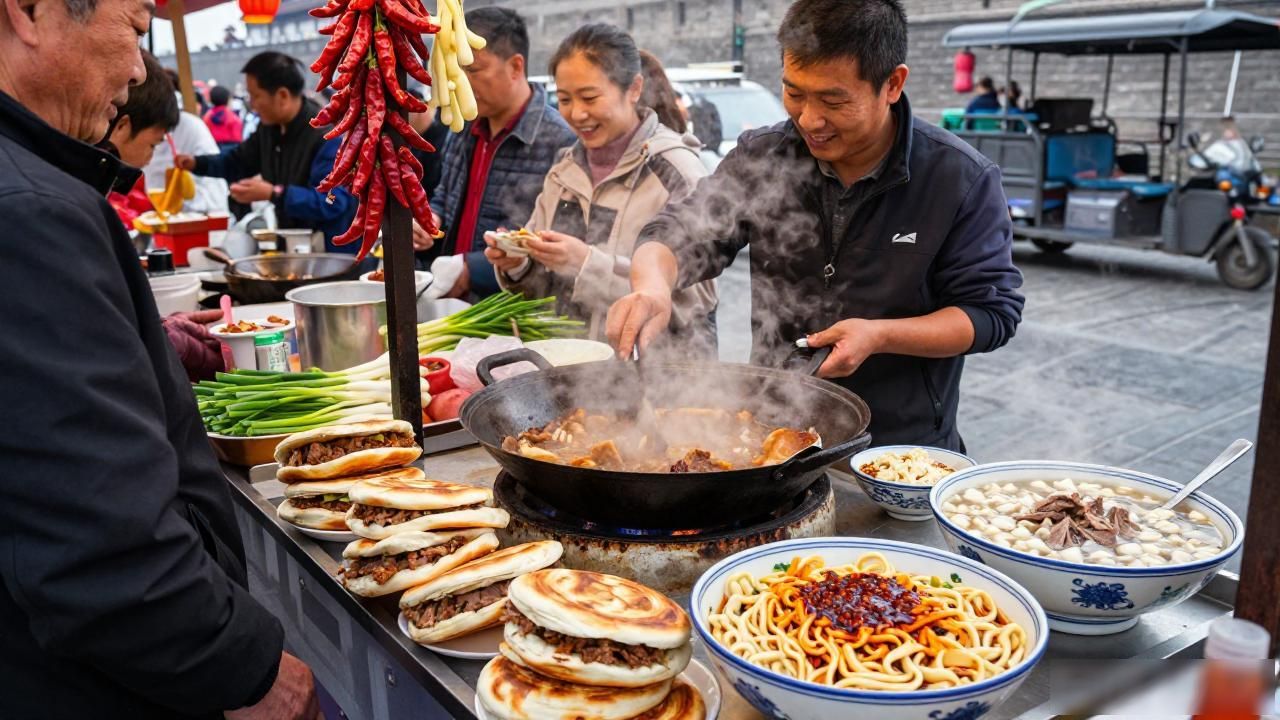
What makes this experience special is not just the food itself but how people eat together. Strangers squeeze onto tiny plastic stools beside you. A family of four shares a steaming pot of soup between them, passing bowls down the line. Someone nearby offers you a taste of their skewer because apparently that’s what you do when someone looks lost holding a map. The boundaries between stranger and neighbor dissolve almost immediately around these food stalls, and you begin to understand why locals treat mealtime as the most important social ritual of the day.
Walking out of the Muslim Quarter at midnight with sesame oil still clinging to your fingertips and a satisfied heaviness in your stomach, you carry home something far more valuable than any souvenir. You carry memories of heat and noise and generosity packed into the small, imperfect wooden tables and the endless lines of steam rising into cold autumn air. Xi’an’s food culture is not about perfection. It is about survival, celebration, and the stubborn refusal to let ancient flavors fade into modern forgetfulness.