
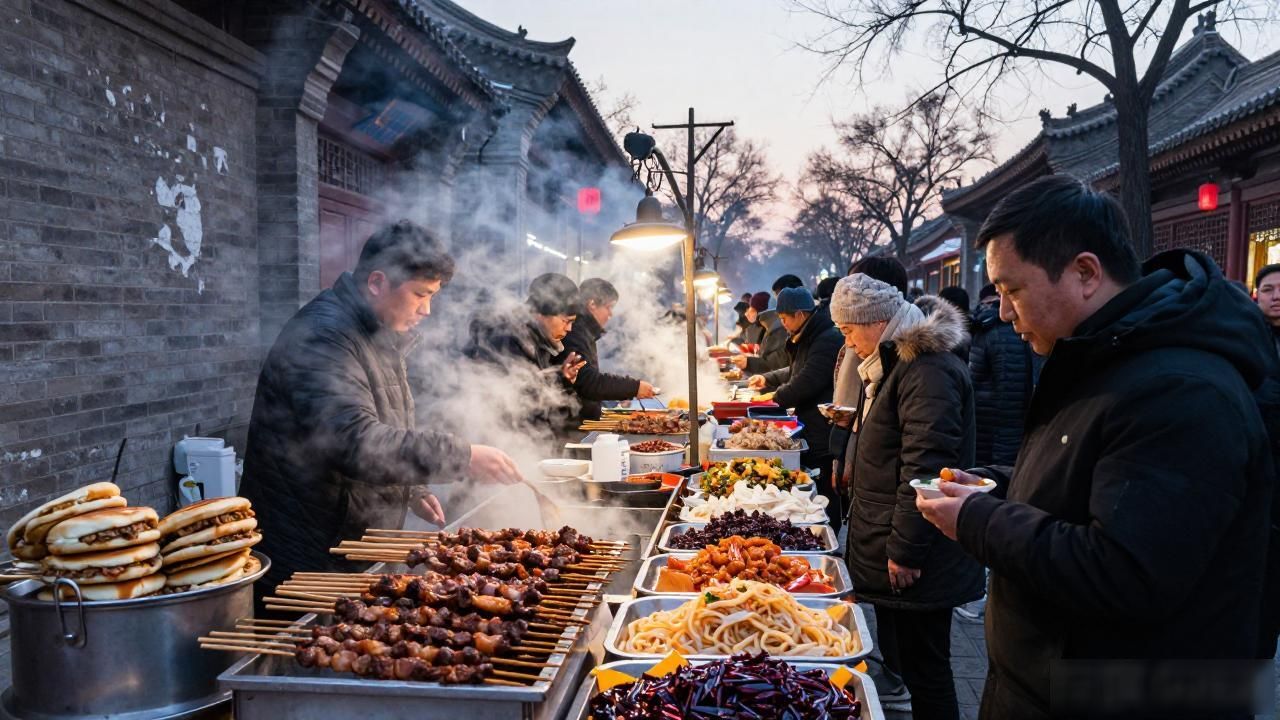
Xi’an is one of those rare Chinese cities where food tells a story. This ancient capital, with over 3,000 years of history, carries its past not only in temples and city walls but also on every plate. As someone who has spent years exploring China’s food culture, I find Xi’an particularly captivating. The food here is deeply connected to its position along the Silk Road, reflecting centuries of cultural exchange between East and West. Foreign visitors often chase Sichuan spice or Beijing duck, but Xi’an offers something equally compelling — a cuisine rooted in wheat rather than rice, shaped by nomadic influences, and sustained by traditions that predate many European culinary customs. What makes this city’s food scene so extraordinary is how every bite seems to carry layers of history.
Must-Try Street Food You Cannot Miss in Xi’an

Walking through the Muslim Quarter on a winter evening transforms everything you thought you knew about Chinese street food. The air itself is thick with cumin, lamb fat, and fermented flour — a combination that hits you before you even see the stalls. This is where the soul of Xi’an cuisine comes alive, far removed from the sanitized versions served in hotel restaurants.
The roujiamo, or Chinese hamburger, demands attention. A perfectly made one features a cracker-shell bun split open and stuffed with slow-braised pork shoulder, its texture yielding and rich. Some vendors add a pickled mustard green for brightness, while traditionalists keep it simple. I watched a seventh-generation shopkeeper in the Back Street area assemble his for over thirty years without changing his technique once.
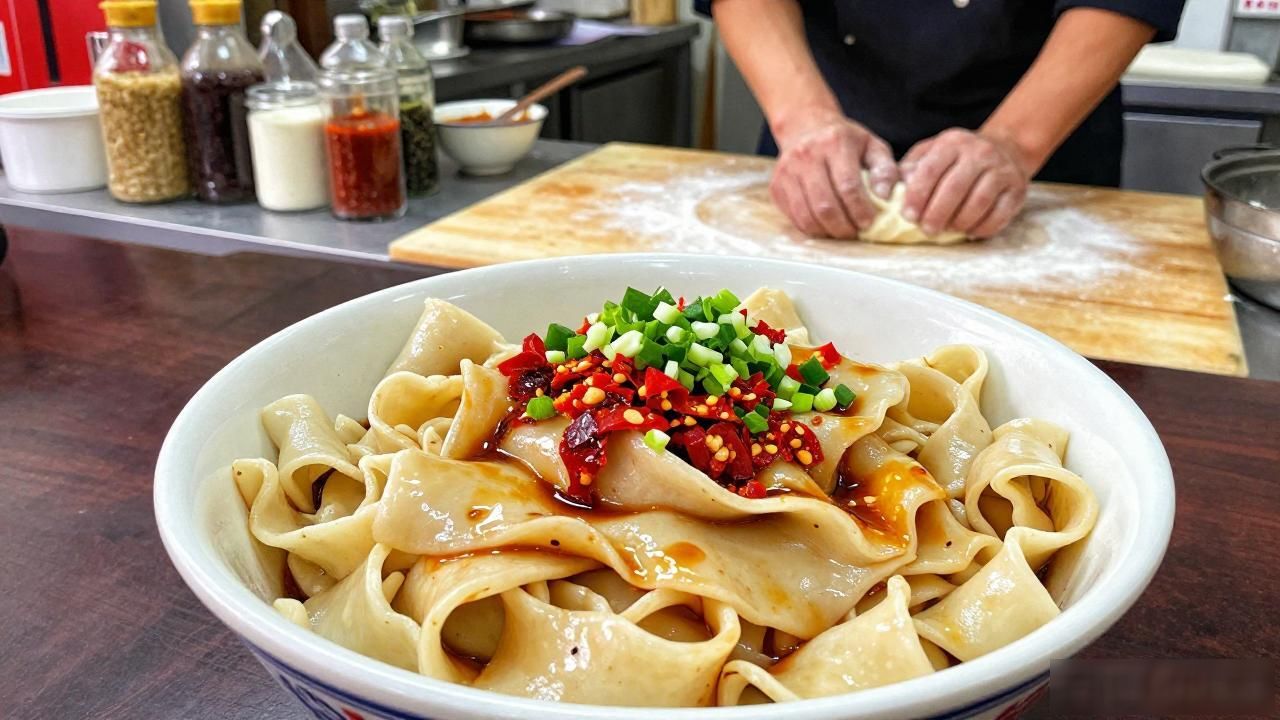
Biang biang noodles represent another must-try experience. These wide, hand-pulled ribbons of dough arrive at your table glistening with chili oil,garlic, and vinegar. The name comes from the sound the chef makes when slapping the dough against the counter during preparation. Eating them requires enthusiasm — these noodles are meant to be slurped with gusto.
How Does Xi’an Food Reflect Ancient Chinese Culture
To understand Xi’an’s cuisine is to understand China itself. This city served as the eastern terminus of the Silk Road for nearly a millennium, meaning caravans from Persia, Central Asia, and beyond passed through its gates bringing new ingredients, cooking methods, and spice blends. The result is a culinary landscape quite different from coastal regions. Wheat dominates here, grown abundantly in the surrounding Guanzhong plain.
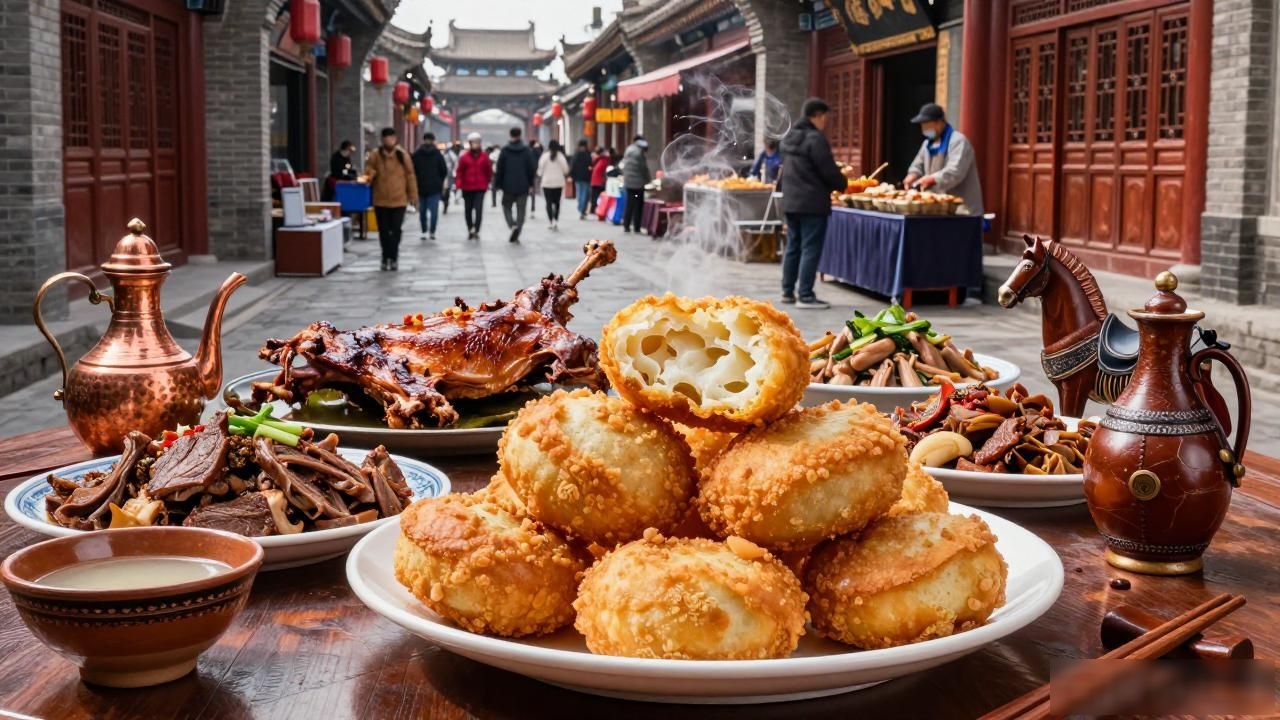
Many dishes trace back over a thousand years. The huimijiao, a sweet fried dough snack, appears in Tang Dynasty poetry. Lamb remains central to the diet, a legacy of Turkic and Mongolian influence that never faded even after dynasties rose and fell. Foreign visitors sometimes struggle with the heavy use of cumin and lamb combinations, but these flavors tell an honest story about cultural exchange that shaped entire civilizations.
What strikes me most during food tours here is how little has changed. The same clay ovens used for baking bing (flatbread) still operate in family-run shops. Grandparents teach grandchildren the exact pressure needed when hand-pulling noodles. This continuity offers something rare in modern China — a living connection to ancestral foodways that survived wars, revolutions, and rapid urbanization. Every meal becomes an act of cultural preservation.