
For anyone chasing the deeper layers of Chinese civilization, Xi’an is where the road begins. This ancient capital has worn more crowns than most countries have had kings. Han,Tang, Zhou — dynasties rose here, built monuments, and passed them down as legacy. A visitor walking its streets is not merely looking at old stones. They are stepping into a living archive. This guide cuts through the noise and points straight to the historical site that defines Xi’an and shows how to get the most from it.
What Makes the Terracotta Army the Must-See Xi’an Historical Site
Most first-time visitors book a day trip to the pits, and they come back breathless. There is a reason. Over 8,000 life-sized soldiers stand in silent formation beneath artificially preserved earth. Each face carries a different expression. Some look young, some weathered, some unreadable. No two visages repeat the same pattern. That level of individuality in mass production is almost impossible to grasp until you are standing three meters from the nearest figure.
The site is officially known as Emperor Qin Shi Huang’s Mausoleum Site Museum. It sits about forty kilometers east of the city center. The journey takes roughly an hour by car. Museums housing chariots, bronze birds, and crossbows sit adjacent to the main excavation pits. The scale of the whole complex far exceeds what appears on a standard tour brochure.
What strikes me every time I return is the silence inside the viewing platforms. Thousands of figures encased in rows. No battle cry, no movement. Just presence. That quiet force is why this must-see Xi’an historical site still ranks as one of the greatest archaeological discoveries of the twentieth century.
How the Ancient City Wall Transforms a Xi’an Historical Site Into an Experience
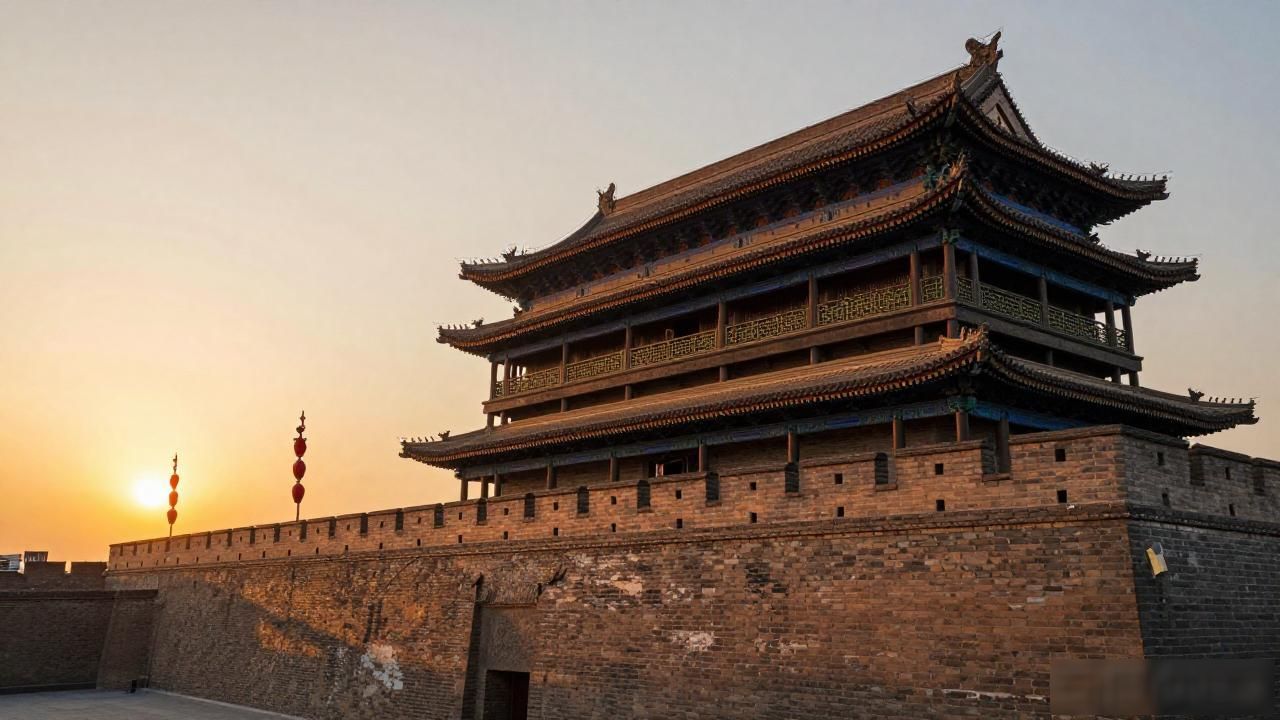
If the Terracotta Army shows imperial ambition, the city wall shows urban endurance. Encircling the old core, the fortification stretches nearly fourteen kilometers. Built during the Ming dynasty but tracing foundations that go back centuries earlier, the wall still hosts joggers, cyclists, and families on weekend afternoons.
Riding a bicycle atop the ramparts at dusk offers something no museum can replicate. You hear wind moving across crenellations older than Columbus. Beyond the parapets, the modern skyline rises, but down below narrow lanes hide tea houses and courtyard homes. The contrast between old and new here is not staged. It is daily life.

Several gates give access to the wall. South Gate, also called Yongningmen, remains the most atmospheric entrance. From there, the walk clockwise reveals watchtowers, arrow slits, and restored sections where soldiers once patrolled. Visiting at sunset turns the experience into something close to theatre. Golden light falls on grey bricks and paints the moat water copper.
Why the Muslim Quarter Should Anchor Your Xi’an Historical Site Itinerary
Between the wall and the city’s heart lies a district where history breathes through food, sound, and commerce. The Xi’an Great Mosque stands at the center, but the surrounding lanes tell a longer story. Sogdian traders, Arab merchants, and Central Asian caravans threaded their way through these streets a millennium ago. Silk Road influence did not stop at the city gate. It settled inside it.
Steaming bowls of beef noodles line narrow stalls. Lamb skewers smoke over open grills. The air carries cumin, chili oil, and roasted wheat. All of this sits within easy walking distance of a fifth-century pagoda and a Tang-era temple. Xi’an rewards slow movement. Rushing kills the texture.
A half-day here will feel like wandering through several eras at once. Ummayyad architecture shares walls with Ming-era wooden brackets. Modern electric scooters pass beneath eaves untouched since the seventeenth century. That layered reality makes the Muslim Quarter an essential companion to the heavier monuments outside town.
What Visitors Often Overlook About This Xi’an Historical Site
Guided tours sell speed. Independent travelers gain depth. The Terracotta pits fill fast after nine in the morning. Entering at opening or late afternoon reduces crowds significantly and changes the entire mood. Audio guides remain useful, but they summarize rather than illuminate. Standing still in front of Pit Two while a soldier stares back without instruction produces moments most guidebooks never capture.
The wall also behaves differently depending on when you climb it. Weekday mornings offer near solitude. Saturday evenings bring festival crowds and lantern light. Choosing the right moment matters as much as choosing the right site.
Finally, pairing the major monuments with smaller stops — the Small Wild Goose Pagoda, the Shaanxi History Museum, the Stele Forest — transforms a checklist trip into a coherent narrative. Xi’an reveals itself slowly. Those who linger usually leave with a stronger memory than those who race through.