
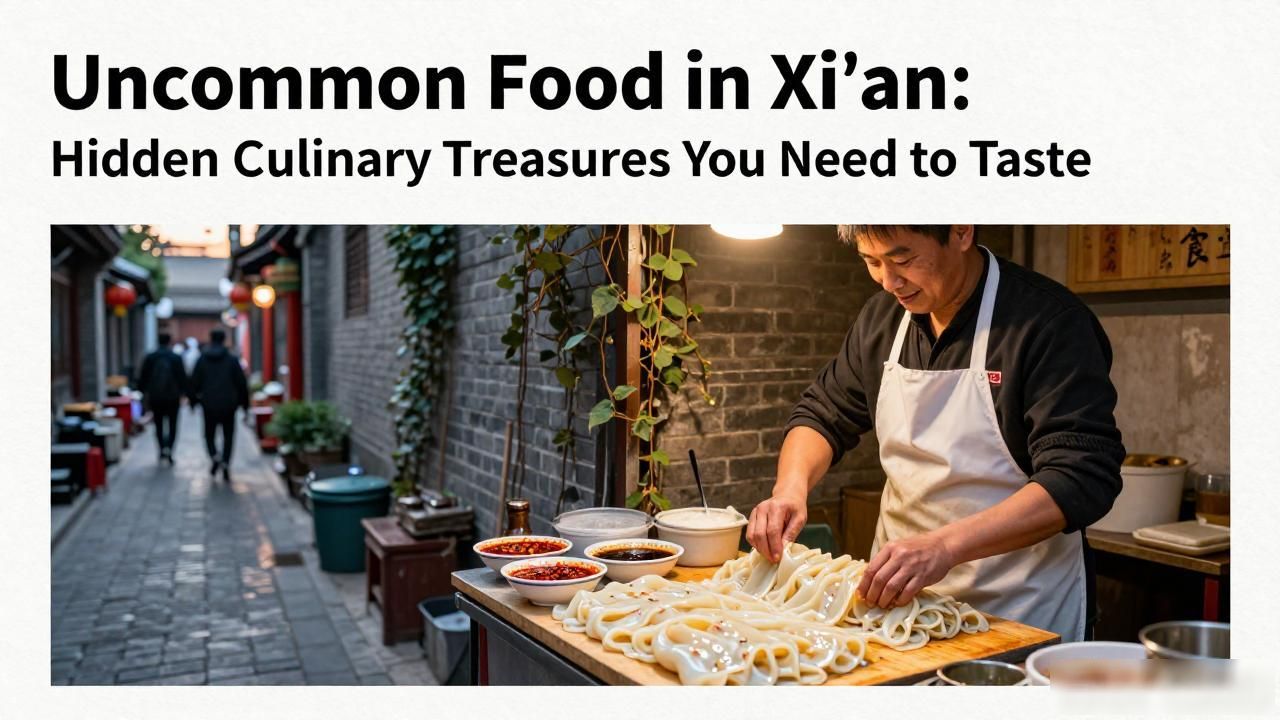
I have spent the last decade wandering through the narrow alleys of Xi’an, chasing flavors that most tourists never discover. While the famous Roujiamo and Yangrou Paomo draw massive crowds, the real magic of this ancient city’s food scene lies in its lesser-known dishes. These uncommon foods tell stories of Silk Road trade routes, minority cultures, and generations of family recipes passed down through whispered secrets.
What are the rarest street foods in Xi’an

If you venture past the tourist-heavy Muslim Quarter, you will stumble upon dishes that have barely appeared on any food blog. One such treasure is the Huimin district’s secret version of liangpi,made with a special grain blend that gives it an incredibly chewy texture. The vendor I found near a small temple in the old city wall area has been making this for over thirty years, using water sourced from a well that no longer exists.
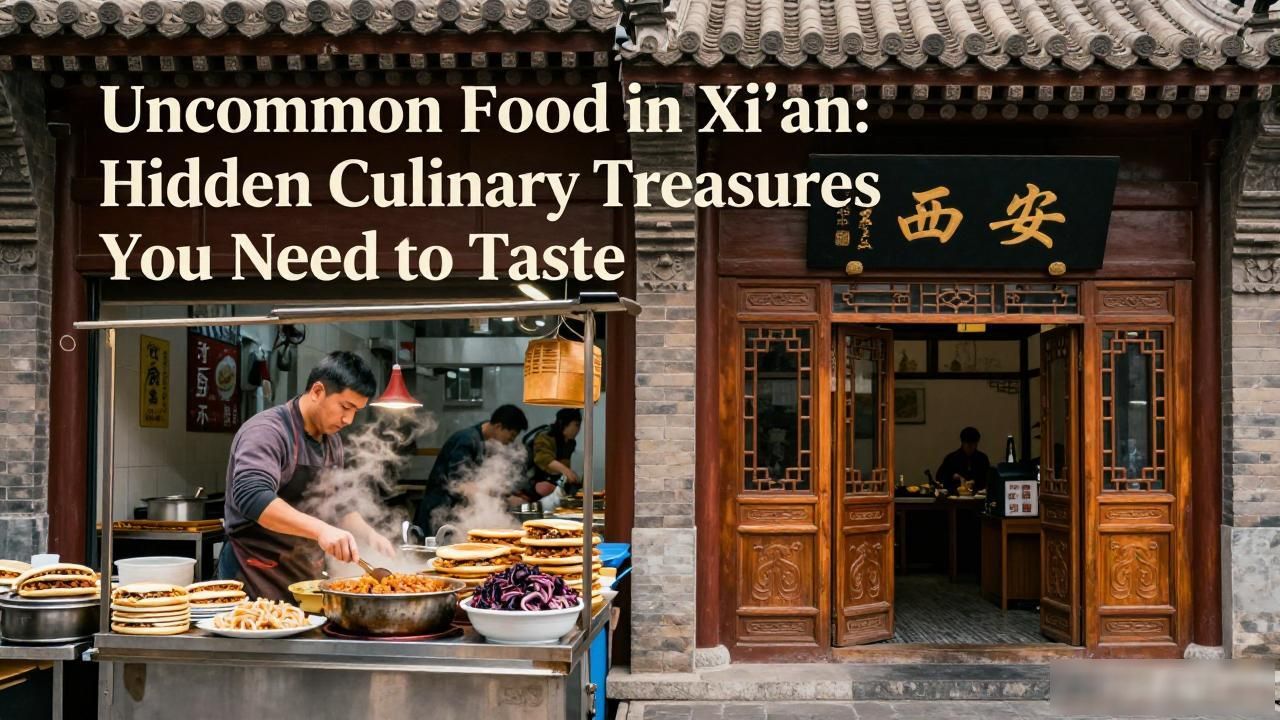
Another hidden gem is the camel meat skewer, a relic from the Silk Road era that few restaurants dare to serve. I discovered a small stall near the Drum Tower where an elderly Uyghur chef grills these skewers over charcoal. The meat is tender yet bold, carrying flavors that transport you directly to the deserts of Central Asia. Most visitors simply walk past this unmarked stall without realizing what they are missing.
Where to find unusual local dishes in Xi’an
The real challenge of finding uncommon food in Xi’an is that the best spots rarely have English menus or even signs that foreigners can read. My approach has been to follow the locals, particularly the elderly residents who gather in neighborhood parks during morning hours. These gatherings often revolve around shared meals featuring dishes that have not changed in centuries.
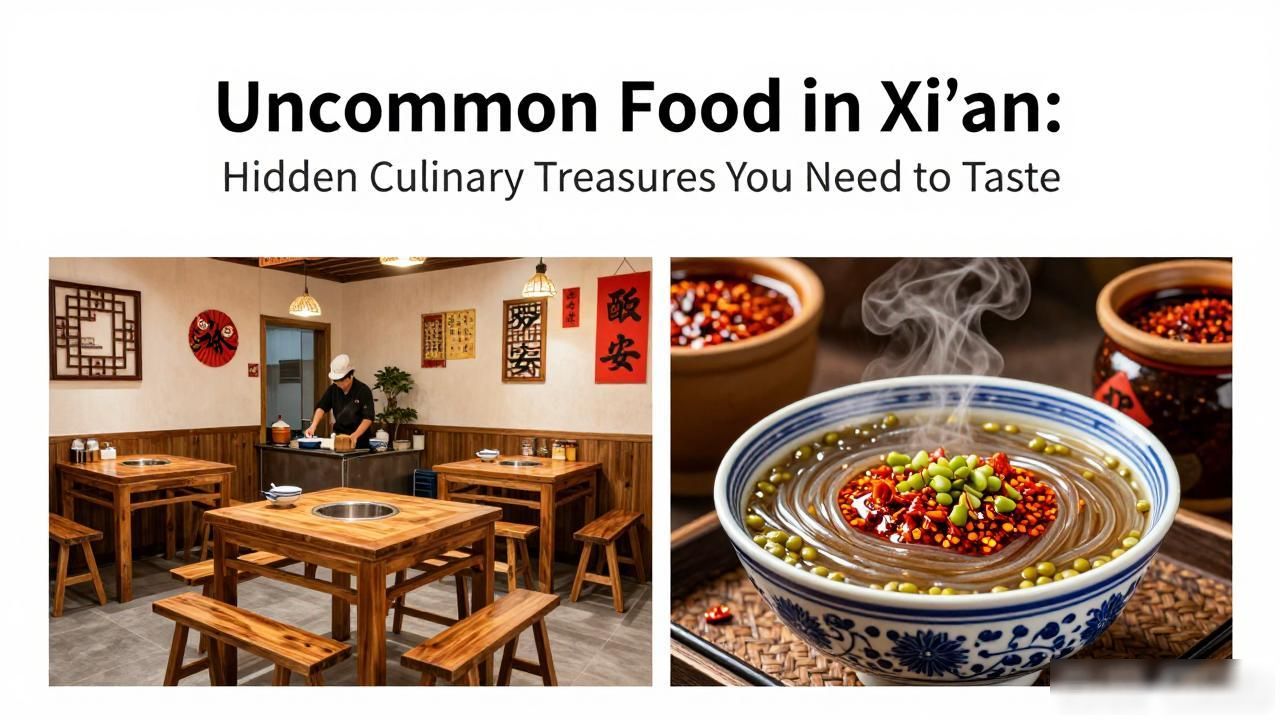
In the Yanta district, there is a small family-run restaurant serving a dish called suanla fen, a spicy and sour glass noodle soup that locals consider a hangover cure. The broth is made from fermented mung beans and chili oil that has been aging in clay pots for months. I have tried similar versions in other Chinese cities, but nothing compares to this particular recipe that the owner’s grandmother developed in the 1950s.
The most memorable meals I have had in Xi’an came from places with no online presence whatsoever. A woman in a residential courtyard once served me a lamb stew that she claimed was her husband’s family recipe from Gansu province. The meat melted on my tongue, and the spices reminded me of flavors I had experienced during a trip to the western regions of China decades earlier. These authentic encounters are what make exploring Xi’an’s uncommon food scene so rewarding.