
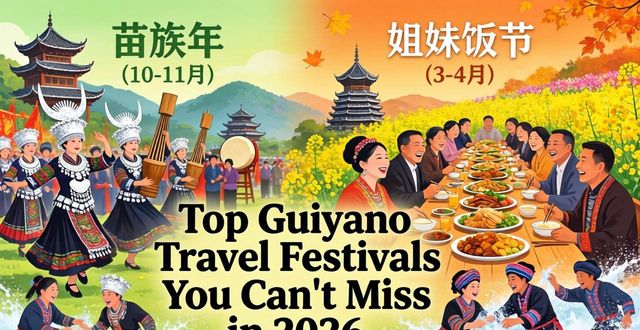
When planning a trip to China, most travelers think of Beijing or Shanghai. But if you truly want to immerse yourself in vibrant ethnic culture, Guiyang – the capital of Guizhou province – is a hidden gem. This city and its surrounding villages host some of the most authentic and colorful festivals in the country, celebrated by Miao, Bouyei, and Dong communities. From ancient love rituals to harvest dances, these events offer a rare window into living traditions. In this guide, I will share the must-see festivals, practical tips, and how you can join respectfully as a foreign visitor.
When is the best time for Guiyang festivals

The festival calendar in Guiyang follows the lunar cycle, so dates change every year. Generally, spring and autumn are the peak seasons. The Miao New Year often falls in October or November, while the Sister’s Meal Festival happens in March or April. If you love water fights, the Bouyei June 6 Festival (around mid-July) is perfect – it’s like a smaller, more intimate version of Thailand’s Songkran. I recommend checking the lunar calendar six months ahead and booking accommodations in nearby villages like Xijiang or Qingyan. Avoid China’s national holidays (May Day and October week) if you dislike huge crowds, as domestic tourists flood the region.
What makes the Sister’s Meal Festival unique
This is arguably the most romantic festival in all of Guizhou. Young Miao women prepare colorful sticky rice – dyed with wild plants like turmeric and butterfly pea – and wrap it in bamboo leaves. They offer these “sister meals” to men they are interested in. But here is the clever twist: the number of chopsticks hidden inside signals her feelings. Two chopsticks mean “I love you too,” while one chopstick means “let’s be friends.” Garlic suggests rejection. As a traveler, you won’t be expected to participate in the courtship game, but you can watch the lively singing duels and lusheng (reed pipe) dancing. Villages like Taijiang and Shidong are the best places to witness this. Remember to ask permission before taking close-up photos of people’s faces.
How to join the Bouyei June 6 Festival respectfully
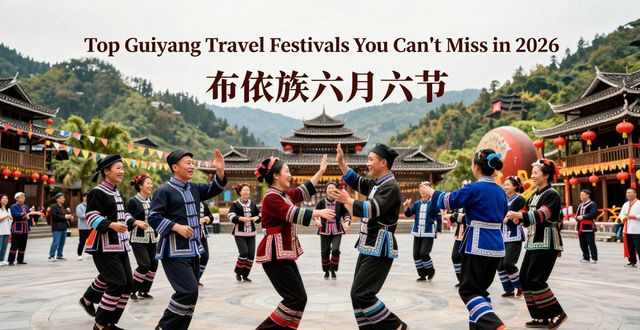
The Bouyei people celebrate June 6 as the “Day of the Mountain God.” In many villages near Guiyang, such as Huaxi and Zhenshan, you’ll see locals in indigo-dyed costumes walking in processions to ancient banyan trees. They offer chicken, wine, and rice cakes to ancestors, followed by horse racing, swing competitions, and a massive water-splashing ceremony. As a foreigner, you are welcome to watch and even get splashed – but never aim water at elders or monks. Also, do not touch offerings on altars. A simple “Meng hao” (Bouyei for hello) and a polite nod will open many doors. Try the sticky rice cakes wrapped in banana leaves, sold by village ladies for about 2 yuan each.
What should you eat at Guiyang festivals
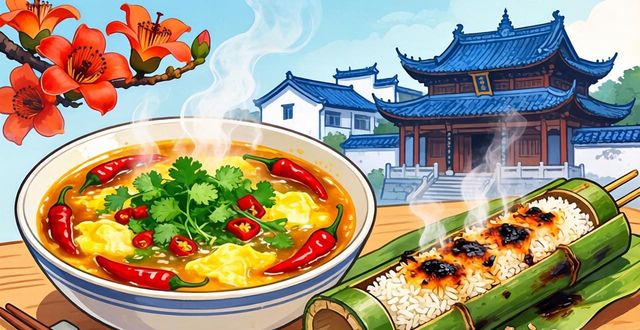
No festival is complete without food, and Guiyang’s street snacks are legendary. Look for siliu tang (sour and spicy soup) – it’s the local hangover cure after heavy rice wine drinking. Bamboo rice, cooked inside fresh green bamboo over open fire,has a smoky aroma that you won’t forget. During the Dong New Year, you might encounter oil tea (a savory soup with fried rice and peanuts). One practical tip: bring your own chopsticks or a small spoon, as disposable cutlery is rarely provided in remote villages. Also, carry wet wipes, because eating with your hands is common for sticky rice balls. If you have dietary restrictions, learn a few Chinese phrases like “wo bu chi rou” (I don’t eat meat). Most festival foods are gluten-free, but spicy levels can be intense – ask for “bu la” (not spicy).
Now I’d love to hear from you: which of these Guiyang festivals would you most want to experience live, and what’s the one thing you’d be nervous about as a first-time visitor to a rural Chinese celebration? Drop your thoughts in the comments, and don’t forget to share this with a travel buddy who loves off-the-beaten-path adventures