
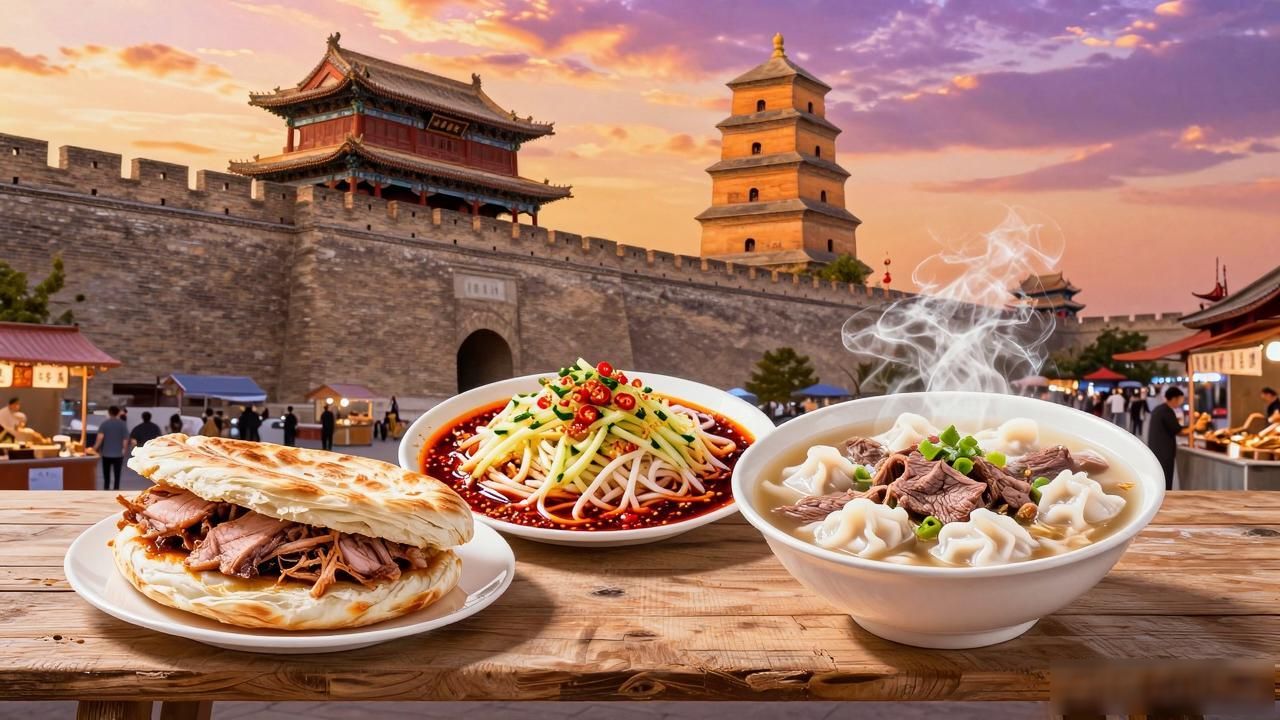
If you think Chinese food is just takeout boxes and sweet-and-sour chicken, you haven’t tasted the soul of China yet. Xi’an, the starting point of the Silk Road, offers a culinary landscape that is rugged, historical, and utterly unforgettable. This isn’t just about eating; it’s about stepping into a living museum where every bite tells a story of emperors, nomads, and merchants. The food here is distinct from the rest of China, leaning heavily on wheat, lamb, and bold spices. It is hearty, direct, and deeply rooted in the city’s ancient identity as Chang’an.
What Makes Xi’an Street Food Unique?

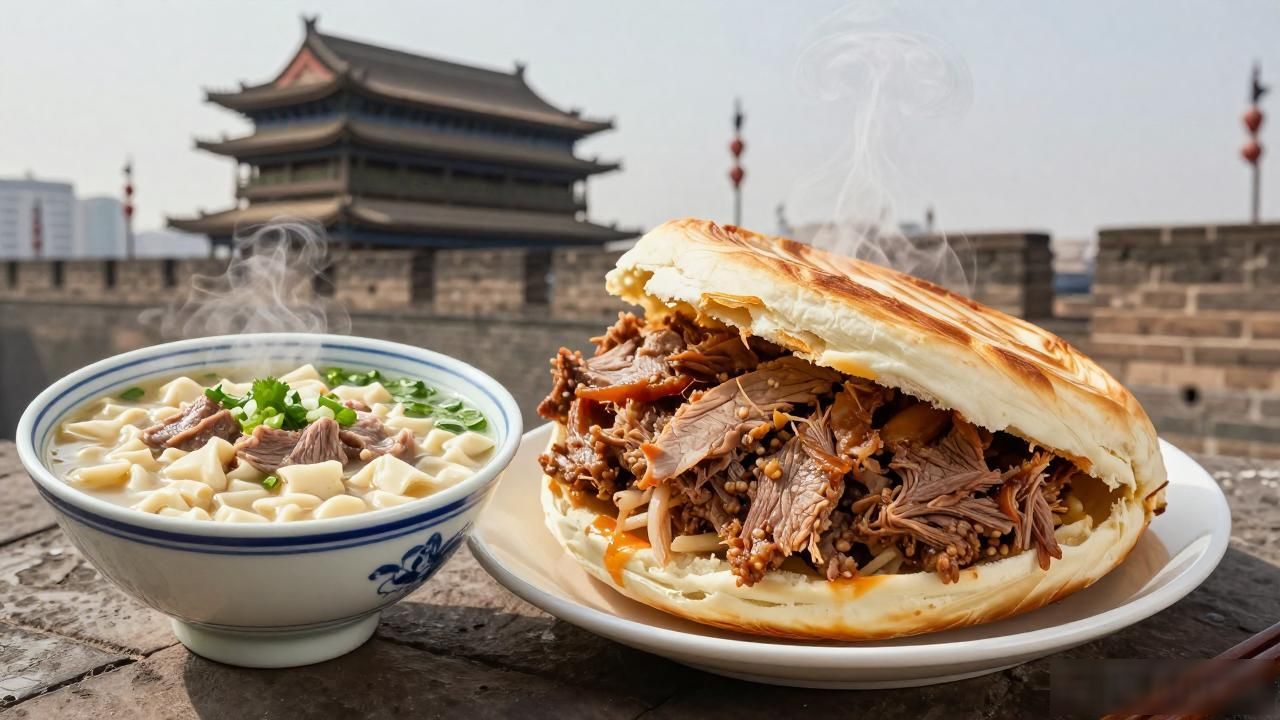
Most travelers come for the history, but they stay for the Roujiamo. Often called the “Chinese hamburger,” this dish is a masterpiece of texture and flavor. You will see stalls lining the streets, some operating for decades. The bun is baked in a clay oven until it is crispy on the outside and soft inside. Then comes the meat—slow-cooked beef or lamb that falls apart at the touch of a chopstick. It is not complicated, but the depth of flavor is staggering. You must try it hot, fresh from the pan.
Another essential item is the Liangpi,or cold skin noodles. In the summer heat of Shaanxi, this dish is a lifesaver. The noodles are chewy and smooth, washed clean of starch until they glisten. They are tossed with chili oil, vinegar, garlic, and peanuts. The combination of sour, spicy, and numbing is an explosion for your palate. It reflects the local preference for strong tastes that cut through the humidity. Eating this on a busy street corner, surrounded by locals shouting orders, makes you feel part of the rhythm of the city.
How to Navigate the Muslim Quarter Like a Local
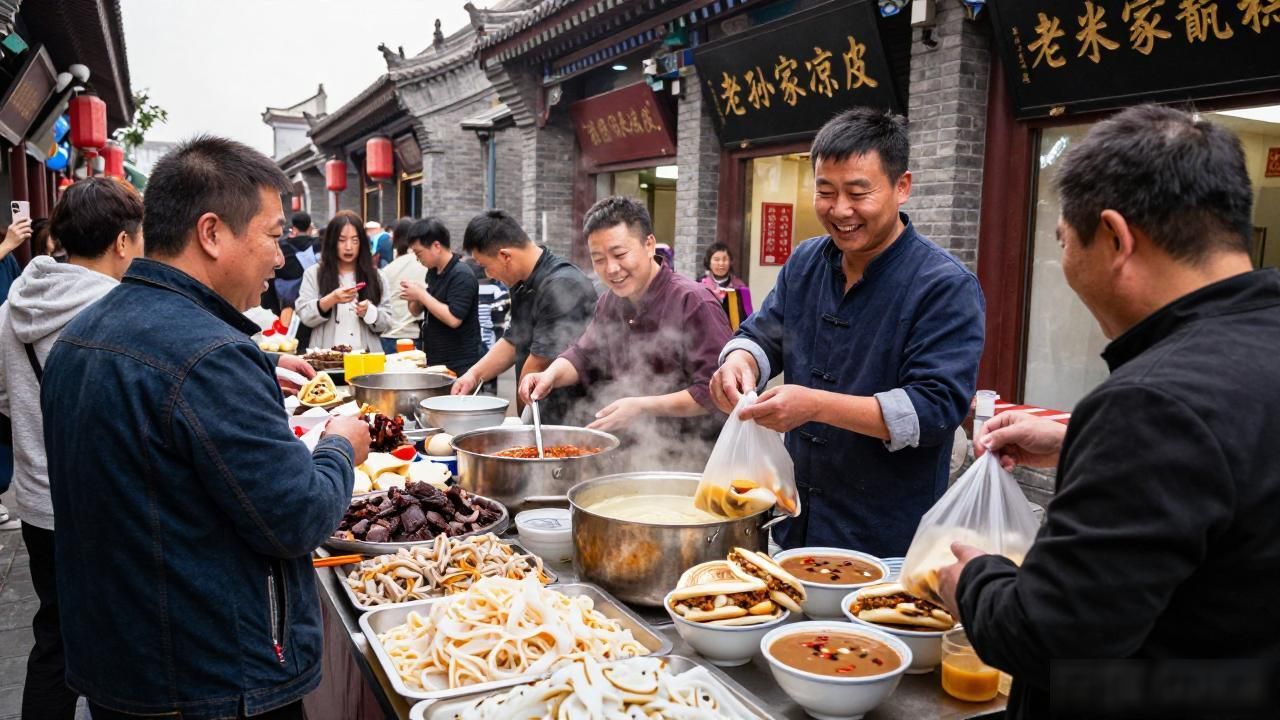
The Muslim Quarter is the heart of Xi’an’s food scene, but it can be overwhelming. Do not look at the menu if there is one; most stalls don’t have them. Look at what others are buying. Follow the smell of cumin and roasting meat. The key is to move slowly and observe. Try the Yangrou Paomo, a lamb soup where you tear up your own flatbread into tiny pieces. It is a ritual. You hand your bread to the chef, who cooks it in broth with tender lamb and cilantro. It takes time, but the effort is worth it.
Drinks are equally important. Forget the sugary sodas and order a glass of sour plum juice or fresh pomegranate juice. These traditional beverages balance the richness of the meat dishes. They are tart, refreshing, and often made right in front of you. The atmosphere in the quarter is chaotic but welcoming. Vendors shout, steam rises from pots, and the air smells of spice and dough. To truly experience this, go hungry and leave room for dessert. The sweet osmanthus cakes are a perfect end to a savory feast. This is not just dinner; it is a cultural immersion that engages all your senses.