
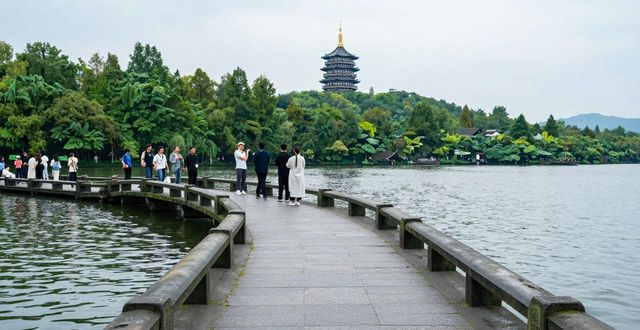
West Lake in Hangzhou is not just about calm waters and weeping willows; its bridges are the true storytellers. These architectural gems connect the shores and islands, but more importantly, they connect visitors to centuries of Chinese culture, poetry, and legendary romance. For any traveler exploring Hangzhou, understanding these bridges turns a simple walk into a journey through time.
Why is Broken Bridge not actually broken
The most famous bridge on West Lake is the Broken Bridge, or Duan Qiao. Despite its name, the bridge is perfectly intact and has a white stone balustrade. The name comes from a poetic winter scene: when snow covers the bridge, the sunny side melts first, making the remaining snow appear like a broken line from afar. This optical illusion has fascinated poets for hundreds of years. During the Lunar New Year, locals still come here to watch for this rare view.

More importantly, this bridge is the legendary meeting place of Xu Xian and the white snake spirit Bai Suzhen in the classic tale “Madame White Snake”. Every day, hundreds of tourists pause at its center to imagine that fateful encounter. Standing here, you can see the northern shore and the Baochu Pagoda rising from a hill. For first-time visitors, the Broken Bridge offers the most iconic West Lake photo opportunity, especially at sunrise when the mist hangs low.
What love stories hide behind Xiling and Long bridges
Xiling Bridge, also called the Bridge of the Western Hills, honors a different kind of romance. This is the resting place of Su Xiaoxiao,a talented courtesan from the Southern Qi Dynasty who became famous for her poetry and tragic love story. She died young, and generations of scholars and lovers have left poems on the bridge walls. Unlike the crowded Broken Bridge, Xiling Bridge feels quieter, with ancient camphor trees shading its path. Many young couples visit here to pay respect to a woman who loved truly but lost deeply.
Just a fifteen-minute walk away lies Long Bridge, which is actually quite short. Its name means “Long Bridge” in Chinese, but ironically it measures only a few meters. The humor hides a heartbreaking legend from the Butterfly Lovers story. Liang Shanbo and Zhu Yingtai supposedly said their final goodbye here, walking back and forth so many times that their farewell seemed to stretch the bridge forever. Today, you can see newlyweds taking wedding photos on this tiny bridge, symbolizing a love that never ends.
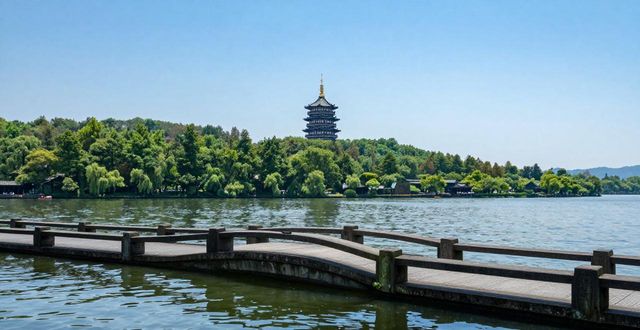
Which bridge offers the best view of Leifeng Pagoda
For photographers and sunset chasers, the Jade Belt Bridge offers the most stunning composition. This curved bridge with its elegant pavilion was built during the Qing Dynasty for Emperor Qianlong’s personal enjoyment. From its highest point, you get a perfect frame: Leifeng Pagoda rises on the southern hill, its reflection stretching across the water toward you. During golden hour, the pagoda’s lit windows glow like floating lanterns. Many professional photographers camp here for hours just to catch the moment when the sun dips behind the tower.
The bridge itself is a masterpiece of garden design. Its name comes from the jade-green water that flows beneath, but locals say it looks like a silk belt tying the lake together. Walk across slowly, stopping at each of the three arches. Unlike the busier northern bridges, the Jade Belt Bridge remains relatively peaceful even in peak season. Bring a wide-angle lens or your phone’s panorama mode. For travelers who want that postcard shot without fighting crowds, this is your secret weapon.
How to visit all major West Lake bridges in half a day

Start your bridge tour at the Broken Bridge before 8 AM to avoid tour groups. Walk south along the Bai Causeway, which links directly to the bridge. You will pass several smaller bridges, but keep going until you reach the Su Causeway. This two-kilometer path crosses six arched bridges: Yingbo, Suolan, Wangshan, Yadi, Dongpo, and Honghu. Each has a distinct shape and story. The best strategy is to rent a shared bicycle or take a sightseeing bus between causeways, because walking the entire loop takes over three hours.
From the Su Causeway, head west toward Xiling Bridge. Use a map app like Baidu Maps or Google Maps, as signs are mainly in Chinese. After Xiling, walk ten minutes south to Long Bridge. You can finish at the Jade Belt Bridge, which sits near the southern entrance of the Huagangguanyu Park. Allow at least four hours total. Wear comfortable shoes and bring water, as shade is limited on the causeways. Most bridges have no entrance fee, so this is a budget-friendly cultural adventure. Early spring or late autumn offers the best weather and the clearest light for photos.
Which of these West Lake bridges would you most want to visit for its history, and do you have a favorite love legend from your own culture to share? Drop your answer in the comments below, and don’t forget to save this guide for your Hangzhou trip. If you found this helpful, please like and share with fellow travelers.