
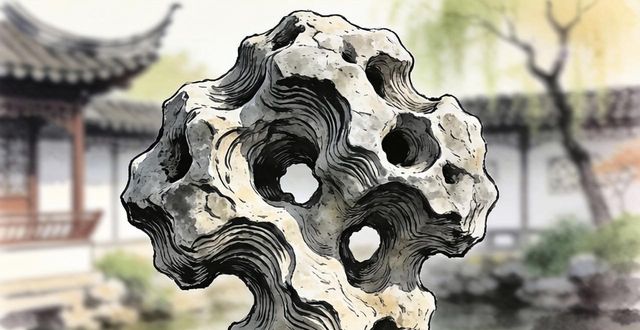
Suzhou gardens are famous worldwide for their poetic landscapes, but what truly sets them apart are the rockeries—artificial mountains made from Taihu stones. These rockeries are not just decorations; they are the soul of classical Chinese garden design. To the untrained eye, they may look like random piles of rocks, but each arrangement follows deep philosophical and aesthetic principles. In this guide, we will explore what makes these stone formations so special, how to appreciate them, and why they have fascinated scholars and travelers for centuries.
What makes Taihu rocks so special for rockeries

Taihu rocks, sourced from Lake Tai in Jiangsu Province, are the only stones used in authentic Suzhou rockeries. Their unique shapes come from thousands of years of water erosion, which creates deep grooves, hollows, and twisted forms. The classical aesthetic values them for four qualities: thinness (shou), perforations (lou), transparency (tou), and wrinkling (zhou). A good rock should look like a weathered mountain in miniature. When you walk through a garden like the Humble Administrator’s Garden, notice how the stones seem to dance rather than sit still. Their grey-blue colors mimic distant mountain ranges, and the hollow spaces allow light and air to pass through, giving the rock formations a breathing, organic feel.
How to read the hidden meanings in rock piles
Every rockery in Suzhou tells a story. In Chinese culture, rocks represent the mountain, which is a symbol of immortality,retreat, and the wild power of nature. By placing rockeries inside a city garden, the owner created a spiritual refuge from bureaucratic life. The Lion Grove Garden is the best example, where rockeries form a maze full of hidden caves, bridges, and paths. Walking through them, you are supposed to feel lost in a mountain range. Look for the main peak—the tallest stone—which symbolizes the owner’s aspiration. Surrounding smaller stones act as followers, showing harmony. Some rockeries even form animal shapes, like lions or turtles, which are lucky emblems. Understanding these symbols turns a simple walk into a deep cultural dialogue.
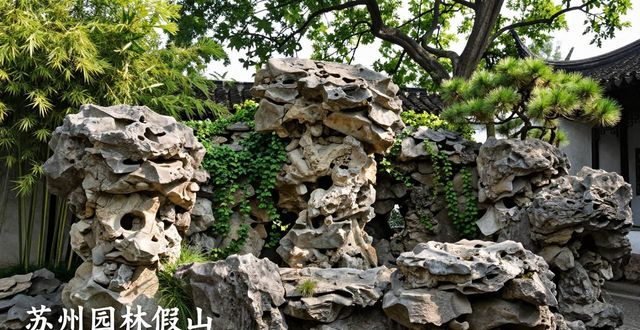
Why rockeries are not just decoration but engineering wonders
Building a Suzhou garden rockery is an art that requires both poetic vision and structural genius. Master rockery builders, known as “stacking masters,” spent years learning how to balance tons of stones without modern adhesives. They used hidden iron clamps and gravity alone to hold the piles together. Each stone is carefully selected and placed so that its weight presses against the next in a calculated way. The Lion Grove’s famous rock maze, for example, has stood for over 600 years through earthquakes and floods. Builders also considered drainage—rocks never sit flat on the ground but on hidden foundations that let water flow through. Next time you see a tall rockery, imagine the human effort it took to raise each stone by hand, using only ropes and wooden frames.
Where to find the most impressive rockeries in Suzhou
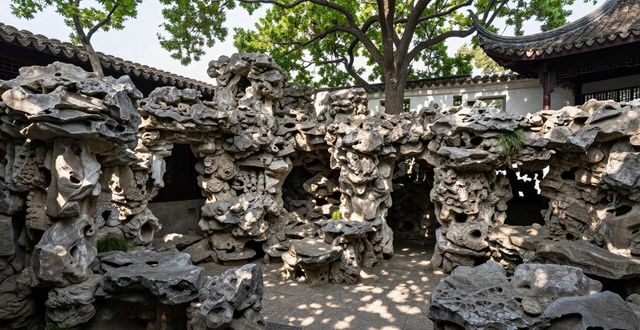
For first-time visitors, three gardens offer must-see rockeries. The Lion Grove Garden contains the largest and most complex rockery maze in Suzhou, covering almost 1,500 square meters. It is the only garden designed entirely around rock formations. The Lingering Garden features a famous “cloud-capped peak” stone called Guanyun Feng, a 6.5-meter-tall Taihu rock that stands alone like a giant’s chess piece. The Humble Administrator’s Garden has more subtle rockeries—look for the “Mountain in Summer” section near the lotus pond, where rocks look like a lush green peak. For a quieter experience, the Couple’s Garden Retreat hides a small but perfectly formed rockery that shows how even tiny spaces can embrace the spirit of a mountain.
Have you ever visited a Suzhou garden and felt a strange peace among the rocks? Which rock formation spoke to you the most? Share your experience in the comments below, and if this guide helped you see rockeries with new eyes, give it a like and share it with a travel buddy.