
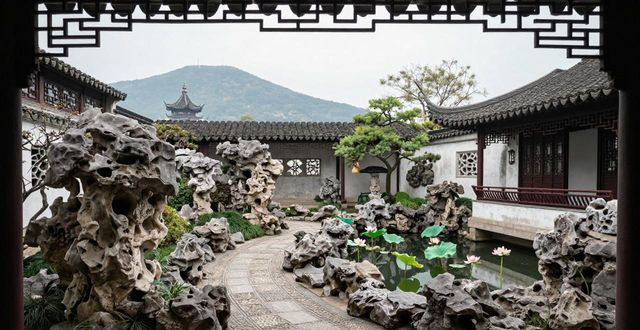
Suzhou Gardens represent one of the finest achievements in Chinese classical garden design, blending architecture, nature, and philosophy into a harmonious whole. Unlike Western gardens that emphasize symmetry and open vistas, Suzhou gardens create an intimate, ever-changing experience where every turn reveals a new scene. This unique architecture style has influenced landscape design worldwide for nearly a thousand years. In this article, we’ll explore the core principles, key architectural features, and practical tips for appreciating these masterpieces.
What makes Suzhou Gardens architecture style unique

The genius of Suzhou gardens lies in their ability to make small spaces feel vast and endlessly interesting. Architects achieved this through “borrowed scenery” (借景), where distant pagodas or hills become part of the garden’s view, and “framed scenery” (框景), where windows and doorways act like picture frames. Unlike the grand axial layouts of Versailles, Suzhou gardens use winding paths, hidden corners, and unexpected openings to delay completion. This approach creates a sense of discovery – you never see the whole garden at once. The goal is not to overwhelm but to invite quiet contemplation, turning every walk into a meditative journey.
How to identify classical Suzhou garden architecture
When you visit a Suzhou garden, look for four signature architectural elements. First, the whitewashed walls and dark grey roof tiles provide a neutral backdrop that makes rocks, plants, and shadows stand out. Second, the gracefully curved eaves (飞檐) lift upward at the corners, allowing more natural light inside while symbolizing a connection to heaven. Third, the lattice windows (漏窗) come in hundreds of patterns – from geometric shapes to plum blossoms – and they change with the sun’s angle, casting poetic shadows on the floor. Fourth,the rockeries (假山), especially those made of porous Taihu stones, are sculptural architecture in themselves. Master builders arranged these stones to resemble mountain ranges, creating trails that wind through caves and over bridges, mimicking nature’s chaos in a controlled space.
Key features of Suzhou garden buildings and pavilions
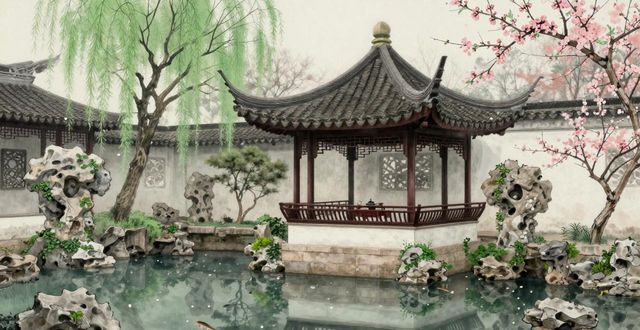
The pavilions, halls, and corridors in Suzhou gardens are not just shelters – they are viewing platforms that frame specific compositions. The Wave Pavilion (沧浪亭), for example, sits beside a pond so that its reflection doubles the visual depth. Corridors (廊) often zigzag to guide your gaze toward a particular tree or rock, while their open sides keep you connected to the outdoors even when sheltered. Many halls have no solid front walls; instead, they use floor-to-ceiling wooden lattices that can be fully opened, dissolving the boundary between inside and outside. This “borrowed interior” concept means you can sip tea in a room that feels like you’re sitting in the garden. The use of natural materials – wood, bamboo, stone, and clay – further blurs the line between human craft and natural growth, making the buildings appear as if they grew from the earth.
Why ponds and bridges matter in Suzhou garden design
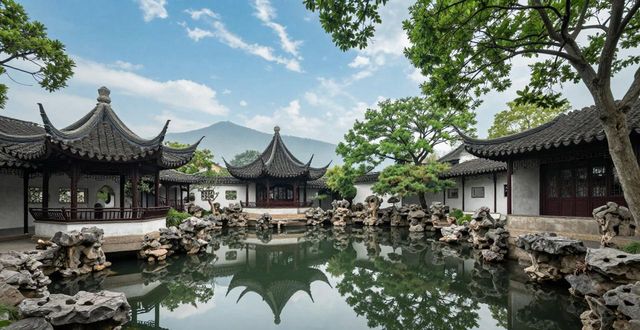
No discussion of Suzhou garden architecture is complete without water. Ponds are placed at the lowest point of the garden, often with an irregular, naturalistic shape that mirrors the sky and surrounding buildings. The water surface reflects pavilions and rockeries, visually doubling the garden’s size while creating a cool microclimate in summer. Bridges are deliberately short and arched – the famous Zigzag Bridge (九曲桥) at the Humble Administrator’s Garden forces you to slow down and change direction, preventing you from rushing through. Each turn offers a new angle of the lotus flowers or carp below. The positioning of bridges always leads to a pavilion or a notable rock, following the principle of “stopping and looking” rather than “crossing quickly.” This marriage of utility and poetry is what makes Suzhou gardens timeless.
Have you ever noticed how a simple garden path or a framed window changed your perception of space? Share your experience in the comments below, and if you found this guide helpful, give it a like and share it with a friend planning a trip to Suzhou!