
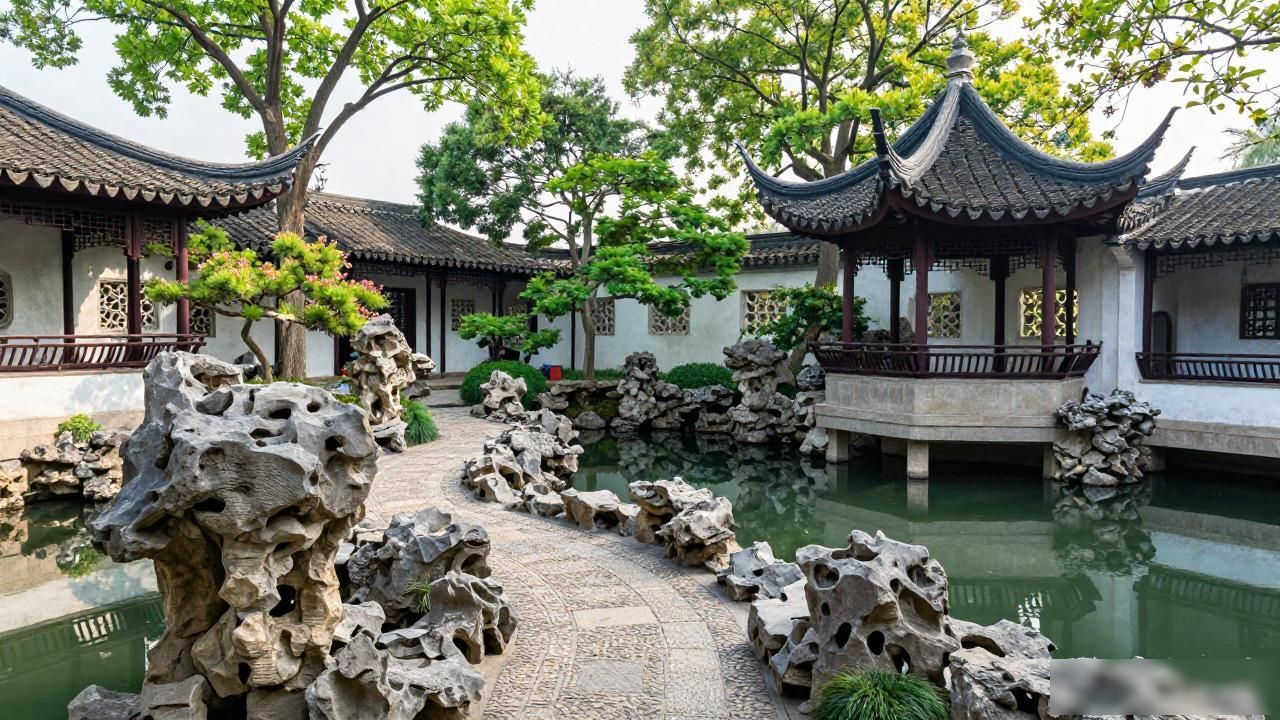
Suzhou Gardens are not just pretty landscapes. They are a carefully designed form of architecture that blends buildings, water, rocks, and plants into one harmonious whole. Unlike Western gardens that often focus on symmetry and open lawns, Suzhou Gardens use enclosed spaces, curved walls, and hidden views to create a sense of mystery and discovery.
What makes Suzhou Gardens architecture different from Western gardens
The most striking difference is the use of space and walls. In a Suzhou Garden, you never see everything at once. The architecture is built around a series of small courtyards connected by covered walkways, moon gates, and winding corridors. This creates a journey, not just a view.

The buildings themselves are low-rise, with dark wooden frames, white plaster walls, and grey tile roofs that curve upward at the eaves. These roofs are not just decorative. They help drain rainwater and create a soft,flowing line against the sky. Windows are often shaped like fans, circles, or vases, serving as frames for the scenery beyond.
Another key feature is the integration of rockeries. Large limestone boulders are placed to mimic mountains, and they are often positioned right next to pavilions or halls. This is not random. The rocks are chosen for their texture and shape, and they anchor the architectural layout, giving it a sense of weight and age.
How to identify the core design principles in Suzhou Gardens
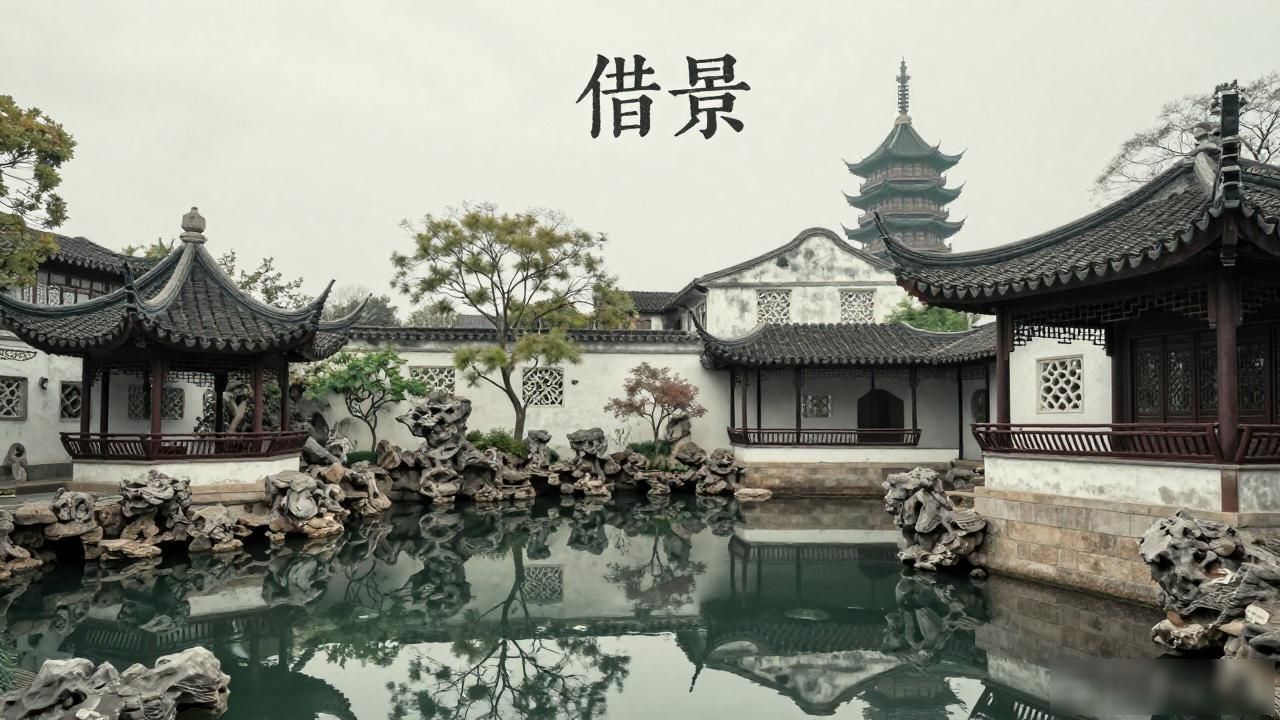
If you want to understand the architecture, look for three things: borrowed scenery, layered views, and the balance of solid and void. Borrowed scenery means using distant pagodas or trees outside the garden as part of your view. The garden architect often left gaps in walls or built elevated pavilions just to capture these outside sights.
Layered views are created by placing walls, corridors, and windows at angles. You might see a tree through a window, then another window behind it, and then a pond beyond that. This depth makes a small garden feel much larger.
The balance of solid and void is everywhere. A heavy stone wall is balanced by an open pavilion. A thick rockery is set against a still pond. Even the roof ridges and eaves are designed to contrast with the sky, making the building feel light despite its materials.
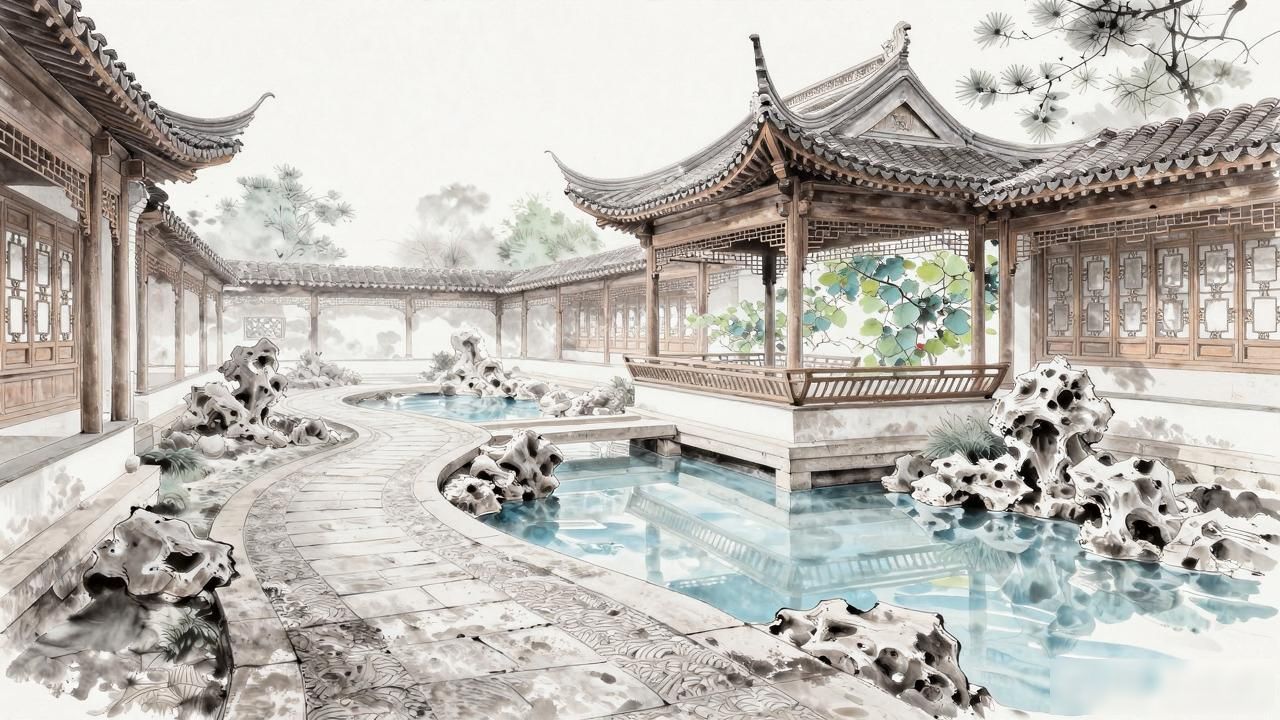
Suzhou Gardens architecture is not about grand scale. It is about thoughtful placement, subtle contrasts, and creating a world within a limited space. Every building, every window, every stone is placed with intention. Once you see these principles, you can recognize them in any classical Chinese garden.
For travelers, architects, or anyone interested in design, Suzhou Gardens offer a masterclass in how to make space feel infinite. The architecture does not dominate nature. It converses with it, and that is what makes it timeless.