
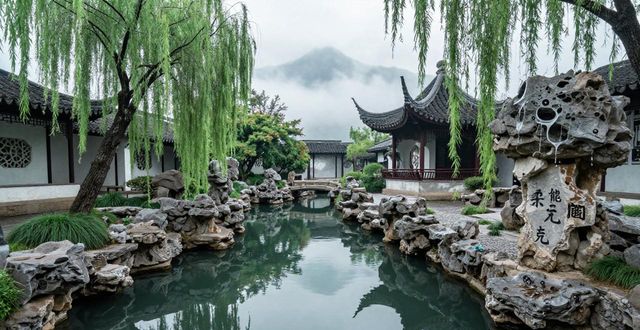
Suzhou gardens are renowned worldwide for their masterful integration of nature, architecture, and water. Unlike Western fountains or ponds that often serve as mere ornaments, water in these classical Chinese gardens is the very soul of the landscape. It brings tranquility, reflection, and a sense of boundless space. From the gentle ripple of a koi pond to the echo of a hidden stream, every water feature is carefully designed to mimic natural waterways while carrying deep cultural meanings. This article will guide you through the essence of Suzhou gardens’ water features, revealing why they captivate millions of visitors each year.
Why Water Matters in Suzhou Gardens
At first glance, a pond may just look like a pond. But in Suzhou gardens, water serves as the central organizing element. It connects rockeries, pavilions, bridges, and plants into a harmonious whole. Without water, the garden would feel static and dry. With water, the space breathes and moves. The reflections of willow branches and moon gates on the water surface double the visual richness, making a small garden appear much larger. This technique, called “borrowing scenery,” is amplified when water mirrors the sky and surrounding structures. Moreover, the sound of dripping water or a small waterfall masks city noise, creating an illusion of deep mountain seclusion right in the middle of Suzhou’s crowded old town.

Another reason water is indispensable lies in Chinese philosophy. The Taoist concept of “softness overcoming hardness” finds perfect expression in water. Unlike rigid rocks or carved wood, water adapts to any shape yet wears down stone over centuries. Garden owners, often retired scholars or officials, used water to symbolize a retreat from political turbulence. The calm, reflective surface represented a peaceful mind, while the occasional splash of a leaping fish reminded them of life’s spontaneity. Thus, water was not just aesthetic but also a daily meditation tool.
Key Design Principles of Water Features
One might wonder how Suzhou gardens achieve such natural-looking water features despite being entirely man-made. The answer lies in three principles: irregularity, concealment, and connection. First, irregularity means avoiding geometric shapes. Ponds are never round or square like Western pools. Instead, they follow a freeform, winding outline that resembles a natural lake. The edges are softened with weeping willows, aquatic irises, and uneven stones, so the boundary between water and land becomes blurred. This irregularity extends to the bottom as well – varying depths create different light refractions and habitats for fish and plants.
Concealment is the second principle. Water sources are never fully visible. A stream seems to emerge from under a rockery, and a waterfall hides behind layered stones. This mystery invites visitors to walk around and discover new perspectives. Finally, connection ensures that water flows through multiple spaces rather than sitting isolated. In the Humble Administrator’s Garden, a central pond connects to narrow canals that slip under covered walkways and reappear in side courtyards. This continuity tricks the eye into believing the water extends far beyond the garden walls, enhancing the feeling of boundless space.
Symbolism Hidden in the Waterscape
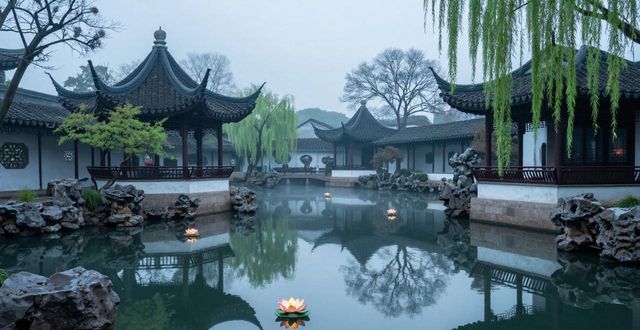
Every stone and ripple in Suzhou gardens carries symbolic meaning, and water features are no exception. The most famous symbol is the “Isle of the Immortals.” Many gardens feature a small island or a group of rocks rising from the pond, representing Mount Penglai, the legendary home of Daoist immortals. By placing a pavilion on such an island, reachable only by a zigzag bridge, garden owners expressed their longing for eternal life and spiritual freedom. The zigzag bridge itself is no accident – straight bridges were thought to let evil spirits run directly across, while curved ones block negative energy according to feng shui principles.
Another common symbol is the “hidden dragon.” A winding stream that disappears behind a rock implies that powerful forces lie unseen beneath the surface – a metaphor for the scholar’s hidden talent waiting for recognition. Lotus leaves floating on the water signify integrity because they rise clean from the mud. Koi carp, with their bright colors, represent perseverance and good fortune; watching them swim upstream is a reminder to overcome life’s hardships. Even the shape of the water body matters – a pond shaped like a heart or a cloud carries romantic or transcendental meanings. Understanding these symbols turns a simple walk into a treasure hunt of cultural insights.
How to Appreciate Water Features as a Visitor
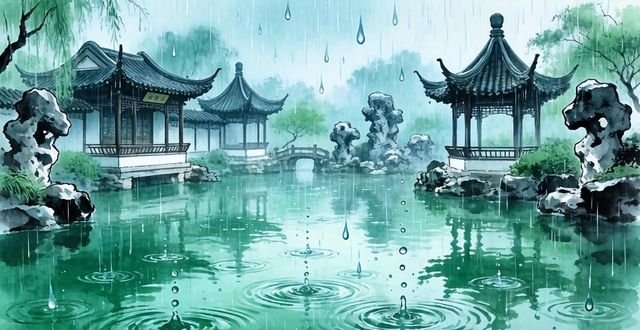
For a foreign visitor, seeing Suzhou gardens for the first time can be overwhelming. Here are practical tips to deepen your appreciation. First, visit during different weather conditions. Rain is not a disappointment – it is a gift. Raindrops create countless ripples that shatter reflections into dancing fragments, and the sound of rain on lotus leaves is considered one of the garden’s finest “musical instruments.” Sunny mornings offer crisp reflections, while overcast days soften contrasts, making the water appear like polished jade. Second, pay attention to viewing spots. Garden designers built pavilions and bridges at calculated angles so that specific water scenes “frame” themselves. For example, the Lotus Pavilion in the Humble Administrator’s Garden perfectly aligns with a distant pagoda reflected in the pond.
Third, engage your other senses. Close your eyes and listen – you might hear water trickling through bamboo pipes (a device called shui jian that marks time with its rhythmic drip). Smell the wet earth and blooming water lilies. Touch the water if allowed (in some gardens,dipping a finger is permitted). Finally, learn a few Chinese garden terms before you go. “One pond, three mountains” refers to the classic layout of a central pond with three rock islands. “Winding water for floating wine cups” describes a narrow, zigzag channel where ancient scholars would drink and compose poetry. With these keys, a casual stroll becomes a dialogue with history.
What is the most unforgettable water feature you have ever encountered in a garden, and how did it make you feel? Share your story in the comments – and if you found this guide helpful, please like and share it with fellow garden lovers. Your engagement helps more people discover the quiet magic of Suzhou.