
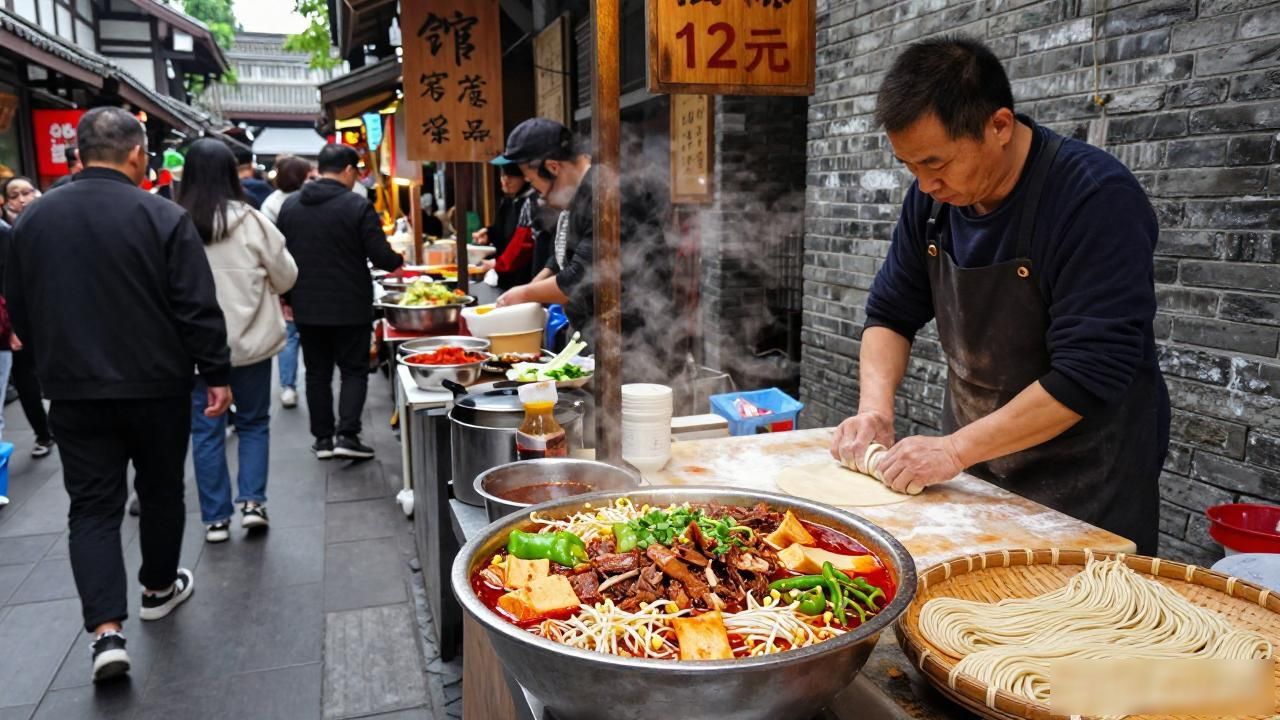
Street food stalls in China are where the country’s real culinary soul lives. From sizzling woks in Chengdu’s narrow alleys to paper-wrapped lamb skewers in Xi’an’s sprawling night markets, these small setups serve flavors that sit-down restaurants often simply can’t match. A little knowing how the system works will make the whole experience smoother, cheaper, and far more rewarding than you might expect.
Which street food stalls in China are worth trying

Chengdu’s Kuan Alley is ground zero for mala tang and hand-pulled noodles at around ¥12 a bowl—seriously, that price buys a steaming plate loaded with lamb, bean sprouts, and a broth so spicy your tongue goes numb within two bites. Xi’an’s Yongxingfang market runs from 5 p.m. well past midnight, and the biang biang noodle stall there has a line that barely thins all evening. In Guangzhou, the xiaolongbao cart near Beijing Road is worth the detour; each dumpling holds a pool of piping hot soup that can scald you if you’re not careful.
One rule saves you from tourist traps: follow the locals. A plastic table with six mismatched stools and a crowd of aunties haggling over the last plate of scallion pancakes is your signal to sit down. If the stall has a laminated English menu, spotless white tiles, and humming air conditioning, keep walking.
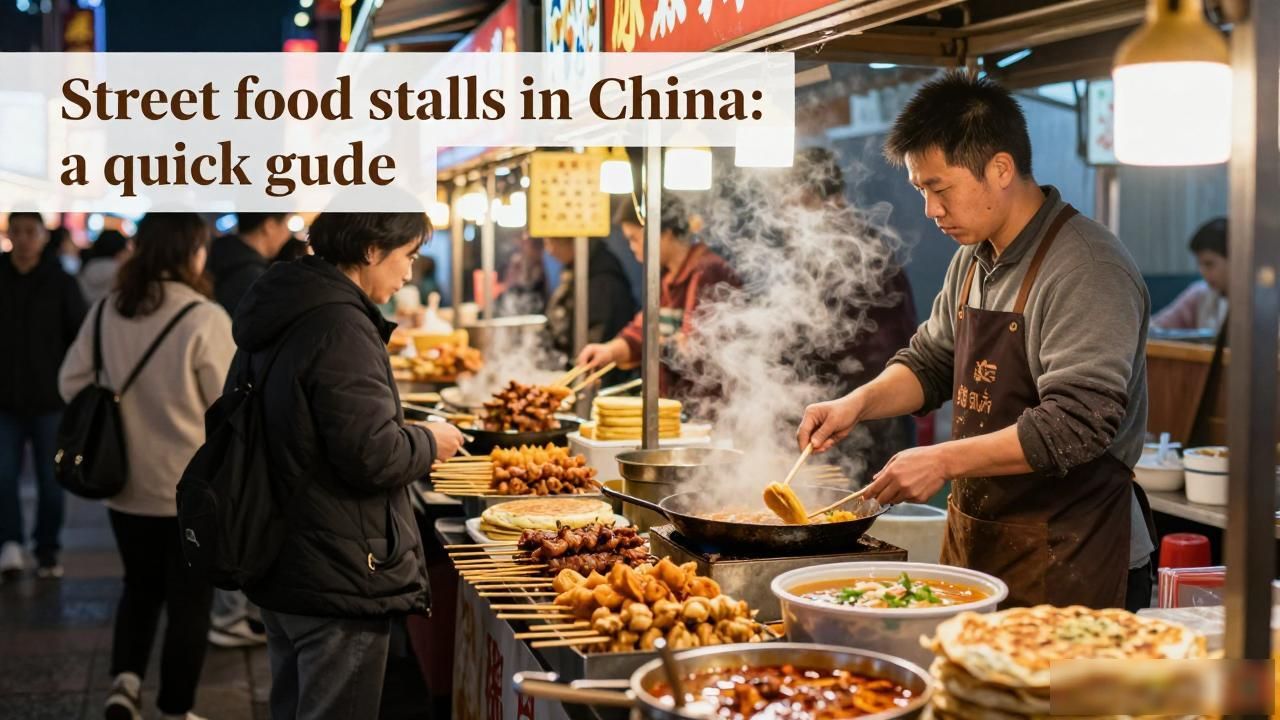
What time to visit street food stalls in China
Most stalls fire up their grills between 4 and 6 p.m., hitting peak around 7. By 9 you’re picking through the last batches, and many pull their awnings by 10. Morning markets in Foshan’s old quarter follow a completely different rhythm—congee, flaky turnip pastries, and steamed soy milk served between 6 and 10 a.m., after which the vendors pack up and vanish until the next day.
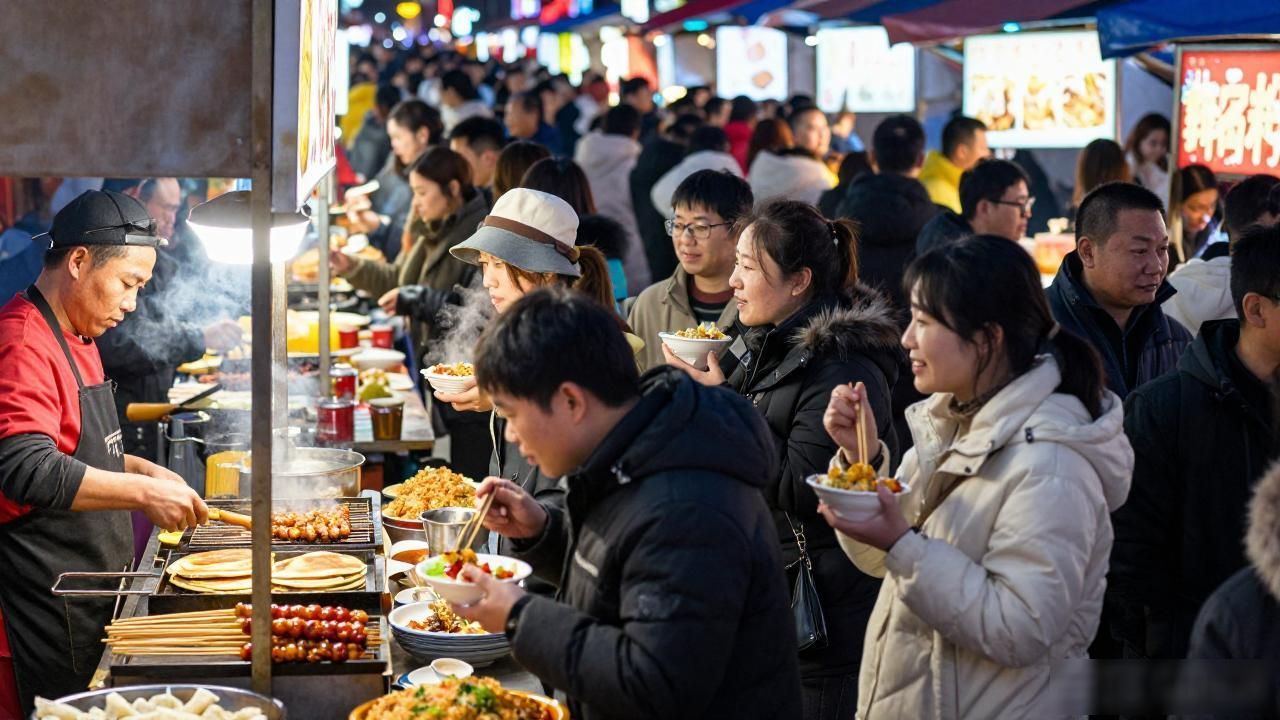
Weekend evenings draw the thickest crowds, especially around the major food courts. If you’d rather not stand shoulder-to-shoulder for twenty minutes, aim for a Tuesday or Wednesday night. Prices stay the same, but the queue drops noticeably and the stall owners actually have time to chat with you about which skewers came in fresh that evening.
You don’t need a reservation, a coupon, or a fancy app. Just walk, follow the smell of cumin and chili oil, point at whatever looks good, and open your phone for WeChat Pay. The owner will grin, shout the total to her helper, and within two minutes the wok is already on your food.
This is an exceptionally well-articulated discussion on “street food stalls in china quick guide”. Appreciate the dedication to detailed analysis here. Keep up the great work!