
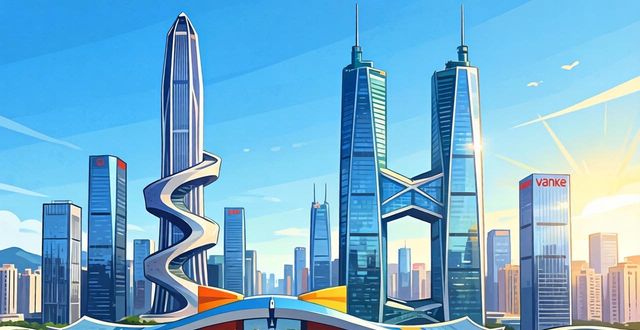
Shenzhen’s modern architecture tells the story of a fishing village turned global tech hub in just four decades. Unlike Beijing’s ancient courtyards or Shanghai’s colonial Bund, Shenzhen builds for the future – bold, experimental, and unapologetically new. From ecological skyscrapers to cloud-shaped cultural centers, this city has become a living lab for architects worldwide. Let me walk you through what makes Shenzhen’s skyline so breathtaking and why it matters beyond China’s borders.
How did Shenzhen become an architectural marvel
The secret lies in speed and ambition. In 1980, Shenzhen was designated China’s first Special Economic Zone, attracting investment and talent overnight. Without historic preservation constraints, developers could test radical designs that older cities couldn’t afford. By 2010, more than 160 skyscrapers had risen – including the 600-meter Ping An Finance Centre, second tallest in China. Foreign firms like KPF, SOM, and Zaha Hadid Architects rushed to leave their mark. Today, the skyline changes every six months, as cranes never stop dancing against the Pearl River Delta sunsets.

Local policies also played a huge role. The government offered land and tax breaks for “signature buildings” that would put Shenzhen on the map. Competitions attracted starchitects like Rem Koolhaas (Shenzhen Stock Exchange) and Steven Holl (Vanke Center). Each tower had to be distinctive – no boring glass boxes allowed. This creative pressure turned Shenzhen into a testing ground for parametric design, double-skin facades, and vertical gardens. For foreign architects, winning a Shenzhen project means instant global recognition.
What are the must-see modern buildings in Shenzhen
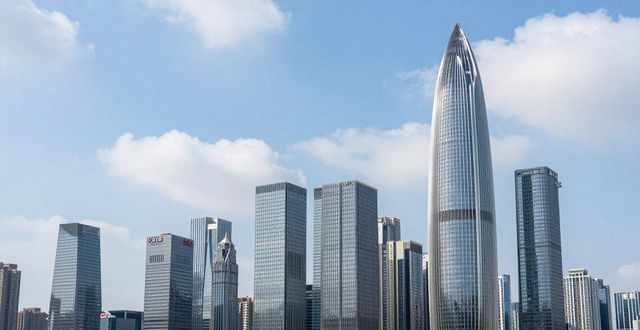
Start with the Ping An Finance Centre, a tapered stainless-steel needle that pierces clouds at 1,965 feet. Its observation deck offers a 360-degree view of Hong Kong, mountains, and endless urban sprawl. Below ground, the high-speed elevator takes just 55 seconds – your ears pop like on an airplane. Next, visit the new Shenzhen Bay Sports Center, shaped like a crystalline shell. Designed by GMP, its retractable roof opens for concerts and closes during typhoons, a practical nod to southern China’s climate. Don’t miss the Vanke Center, a “horizontal skyscraper” floating six stories above a tropical garden – a radical departure from vertical obsession.
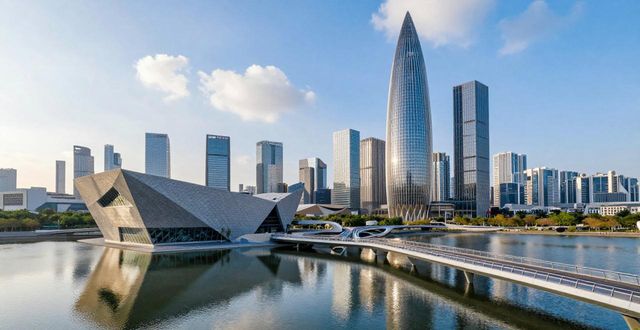
The Binhai Cultural Park deserves half a day. Here, SANAA designed the Shenzhen Museum of Contemporary Art with mirrored pools that reflect passing clouds, blurring boundaries between building and sky. Right next door, the OCT Harbour features wave-shaped pedestrian bridges and a 360-degree cinema wrapped in perforated aluminum. For night walks, Huaqiangbei’s electronics market district glows with digital facades – entire buildings become LED screens showing koi fish or stock tickers. It’s gaudy, chaotic, and utterly Shenzhen.
How does sustainability shape Shenzhen’s new landmarks
Green design isn’t an afterthought – it’s mandatory. Since 2016, all new public buildings must achieve at least China’s Two-Star Green Standard, comparable to LEED Gold. The Shenzhen International Energy Mansion, by SOM, uses solar chimneys and a saltwater cooling system that cuts electricity by 34%. Its facade rotates seven degrees per floor, creating self-shading without blinds. Another standout is the Qianhai Water City proposal (still rising), where every rooftop collects rainwater and every window generates solar power – essentially a mini power plant disguised as offices.
Architects also fight heat and humidity passively. The Kingkey 100 tower, designed by Farrells, features a triangular floor plan that maximizes natural ventilation while resisting typhoon winds. Double-skin glass facades, like those at the Tencent Seafront Towers,trap cool air in summer and retain warmth in winter. Even sidewalks use permeable pavers to prevent flooding – a cheap but smart solution for a city hit by five typhoons annually. For foreign visitors, it’s refreshing to see sustainability treated as beautiful rather than boring.
Why should architects look to Shenzhen for inspiration
Because Shenzhen teaches risk-taking without nostalgia. In Europe, architects fight preservation boards; in Shenzhen, they face empty plots and a “build it first, perfect it later” mentality. The city’s recent Qianhai Master Plan allows temporary buildings – structures meant to last only 15 years – so designers can test radical materials like bamboo composites or 3D-printed concrete. Once proven, successful prototypes become permanent. This rapid iteration resembles software development more than traditional construction. Young architects from India, Brazil, and Southeast Asia now intern in Shenzhen just to learn this experimental workflow.
Moreover, Shenzhen solves density with dignity. With 1,700 people per hectare in central districts, architects design for vertical communities. The Seafront Towers include sky gardens, running tracks, and daycare centers on every tenth floor – no one needs to touch ground for daily life. The Nanyue Phase 3 complex stacks basketball courts, vegetable farms, and a library into a single triangular prism. For cities struggling with sprawl, Shenzhen offers tested models. So here’s my question for you: If your hometown could demolish its oldest block and build one Shenzhen-style tower tomorrow, would you support it, or is history more important than the future? Share your thoughts below – and hit share if this changed how you see modern China.