
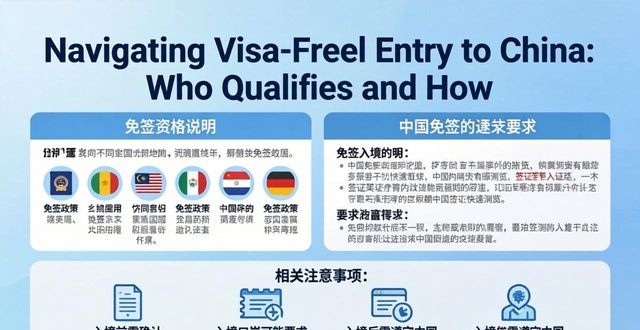
China‘s visa-free policies offer a convenient gateway for international travelers, simplifying entry for eligible passport holders. These arrangements, designed to foster tourism and business exchanges, vary significantly based on nationality, travel purpose, and duration of stay. Understanding the specific eligibility criteria is crucial for a smooth journey, as the rules are not one-size-fits-all but are tailored through bilateral agreements.
Which nationalities can enter China visa-free
Citizens from a growing list of countries enjoy visa-free access to mainland China for short stays. For instance, holders of ordinary passports from Singapore, Brunei, and Japan can visit for up to 15 days for business, tourism, or family visits without a visa. Many European nationals, including those from France, Germany, and Italy, benefit from a 15-day visa-free policy when transiting through certain Chinese regions like Beijing or Shanghai.

Furthermore, several ASEAN countries have mutual visa exemption agreements with China. Travelers from Thailand, Malaysia, and the United Arab Emirates, for example, can often enter for tourism for periods ranging from 15 to 30 days without prior visa application. It is essential to check the latest official announcements from Chinese embassies, as these policies are subject to change and may have specific entry port requirements.
What are the common visa-free transit rules
China’s 24, 72, and 144-hour visa-free transit policies are valuable tools for international connectors. These allow travelers from most countries to leave the airport and explore designated cities while in transit to a third destination. The key requirement is holding an onward ticket with a confirmed seat and valid visa for the next country, all within the strict time window.

Cities like Beijing, Shanghai, Guangzhou, and Chengdu offer these transit without visa (TWOV) facilities. The permitted stay area is typically restricted to the administrative region of the entry city. Travelers must register with local police if staying overnight, and the activities are generally limited to tourism; engaging in work or study is prohibited under this policy.
The specific duration—24, 72, or 144 hours—depends on the entry port and the traveler’s itinerary. Planning is critical: one must enter and depart from the same city or a specific pair of cities, and the connecting flight must be on a different airline in some cases. Always verify the exact requirements with your airline before departure.
How does the visa-free policy work for cruise groups and special zones
Organized tourist groups arriving via international cruise ships can benefit from visa-free entry at several Chinese ports. This policy, applicable to groups from many countries, allows a stay of up to 15 days, provided the entire group enters and exits together via the cruise. Popular ports for this scheme include Shanghai and Tianjin, facilitating coastal tours.

Additionally, China has established visa-free access for all foreign nationals entering the Hainan Island for tourism. Visitors can stay for up to 30 days when traveling as part of a tour organized by a registered travel agency based in Hainan. This policy aims to boost the island’s international tourism and is a significant exception to the general visa requirement.
For business and technical personnel in the Guangdong-Hong Kong-Macao Greater Bay Area, a 6-day visa-free entry is available when traveling between Hong Kong,Macao, and the nine Pearl River Delta cities. This facilitates regional economic integration by streamlining short-term business visits, though it requires an invitation from a registered enterprise within the zone.
While visa-free entry offers remarkable convenience, it carries strict limitations regarding permissible activities and length of stay. Overstaying or violating the terms can result in fines, deportation, and future entry bans. Eligibility is a privilege tied to bilateral relations and is subject to adjustment. Travelers are advised to consult the nearest Chinese diplomatic mission or official immigration website for the most current and personalized information before finalizing travel plans. Proper preparation ensures that the opportunity for visa-free entry becomes a seamless start to a Chinese journey.