
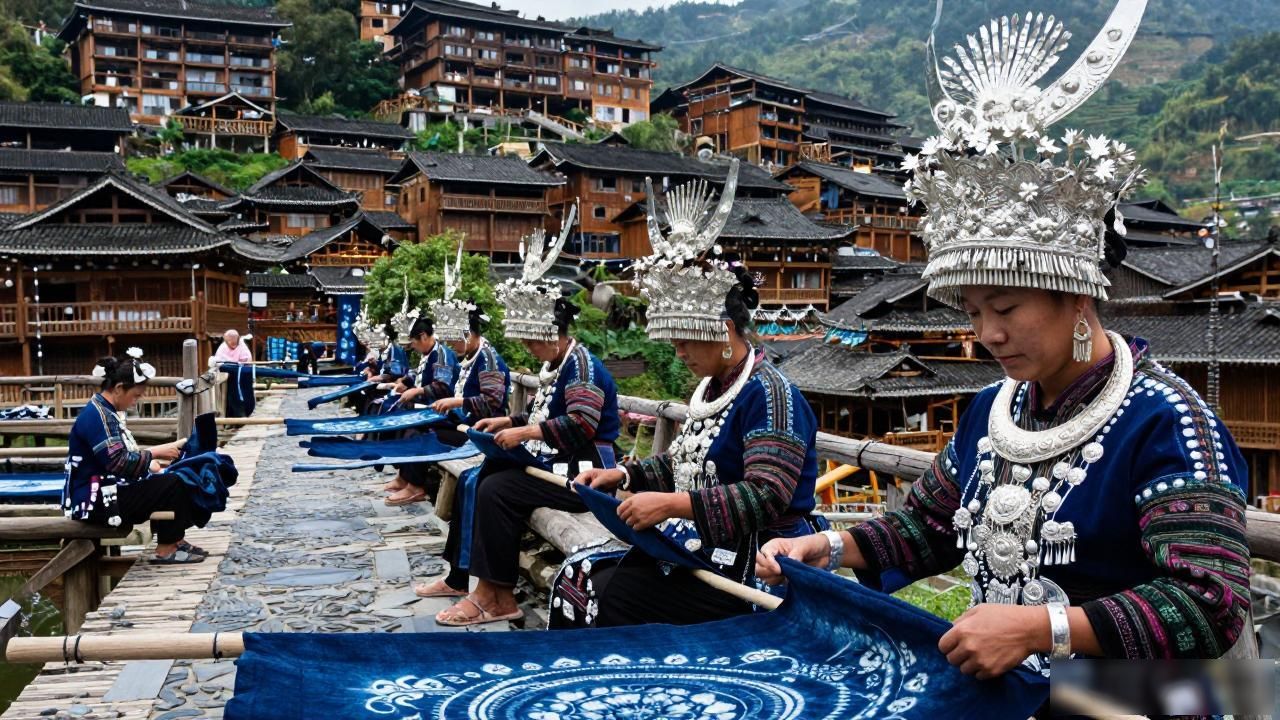
Guizhou‘s Miao villages are among the most authentically preserved ethnic communities in all of China. Tucked into the western karst highlands, these stilted wooden settlements still follow rhythms of silver craft,drum tower festivals, and rice-paddy terracing that have run unbroken for over two thousand years. Walking through them feels less like a guided tour and more like stepping sideways into another century.
What makes Miao villages Guizhou special

The villages in Leishan and Qianyan are the heart of Miao settlement. Stilted wooden houses stack in tight rows up steep hillside slopes, connected by narrow plank bridges and stone-paved lanes that shift and dip with the terrain. Women still spin indigo-dyed batik cloth and file enormous silver headdresses for the coming New Year. The craftsmanship here is not a museum display; it is daily labor you can watch happen in open-air workshops by the roadside.
What sets these villages apart from the touristified ethnic parks dotting other provinces is the drum tower. Each village builds its own—a multi-story unpainted wooden structure that doubles as a communal meeting hall and performance stage. Watching a horn-band procession spiral around the base at dusk, the entire village stops its errands and simply listens.
How to reach Miao villages Guizhou

Most travelers reach the villages by minibus from Kaili city, a two-hour ride south through terraced valley floors and narrow mountain passes. The main stops are Xiangshui Village and Langde, both reachable by a thirty-minute walk from the bus drop-off point. You can also trace a 120-kilometer ring road that links seven villages, giving you a full day of hilltop views without needing a car.
Local minibuses leave Kaili’s east bus station roughly every forty minutes between seven and four. The fare is under ten yuan, and the driver will drop you at whichever village you ask for. Bring small cash; most villages have no card readers, and mobile payments are still rare among the older shopkeepers selling thread and lacquer.
When to visit Miao villages Guizhou
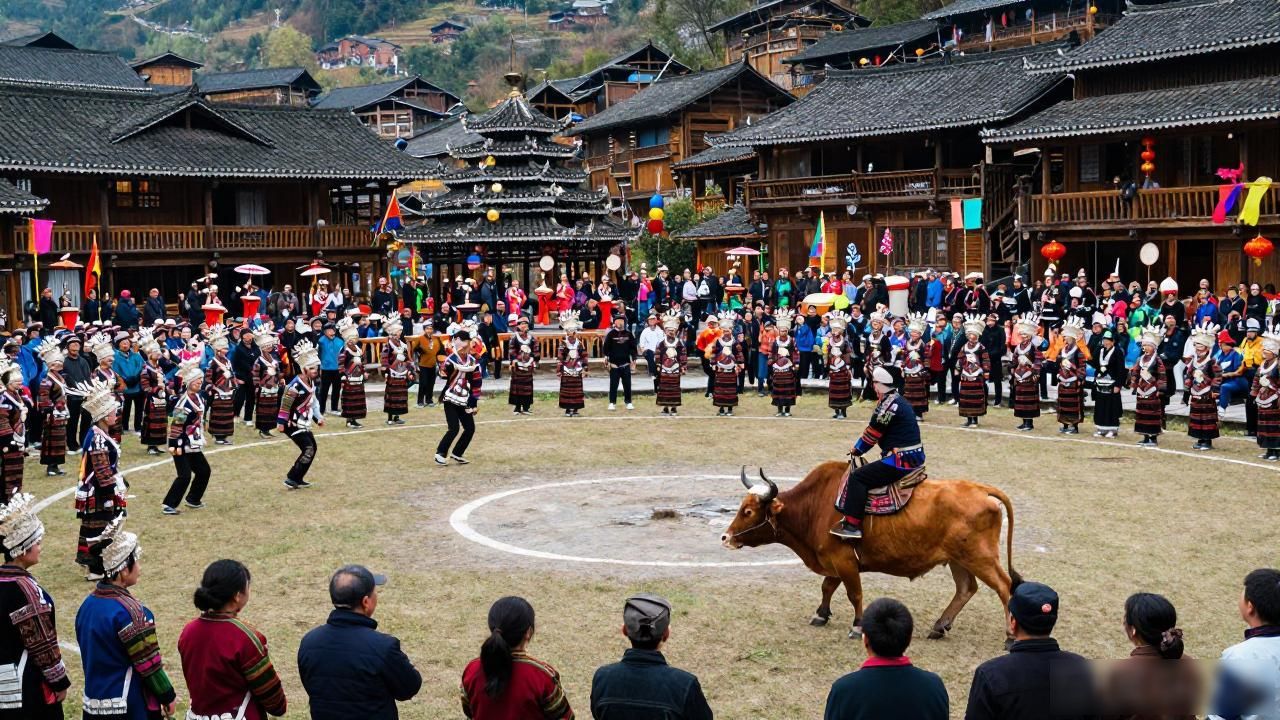
The Guandong Festival in early March is the major draw, with thousands gathering for traditional ball-field games and bull-riding contests. Outside festival season the villages grow quieter, but silver workshops stay open and you can sit with an aging artisan for an hour, watching a single earring take shape under the hammer. Spring brings the terraced paddies in their most photogenic shade of green.
I stayed three nights in Xiangshui and still could not work through the entire silver collection. These villages reward slow, unplanned travel far more than any itinerary app or highlight reel can suggest.