
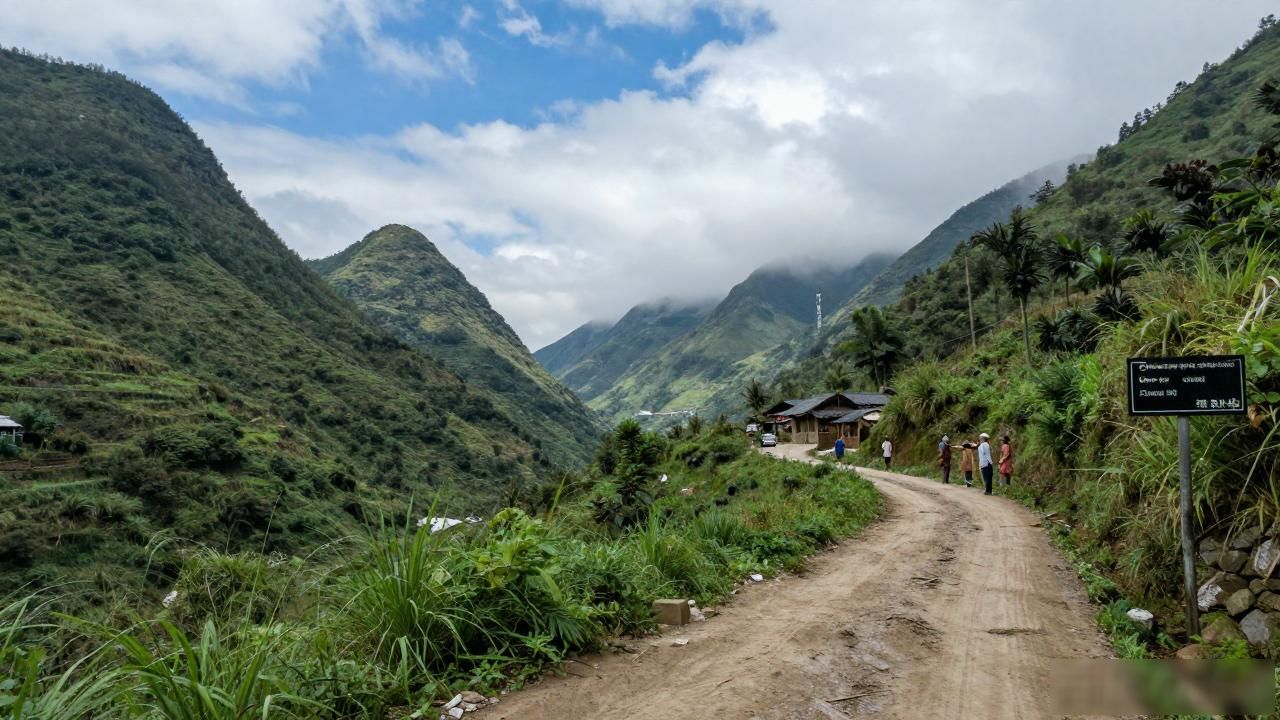
Guizhou is not just about the famous waterfalls and karst landscapes that fill your Instagram feed. Behind the well-trodden tourist paths lie mountains that have never made it onto the guidebooks. I spent three years trekking through this province, and what I discovered changed the way I think about travel in China. The real magic of Guizhou hides in its unmarked peaks, where mist clings to ancient forests and village temples sit untouched by mass tourism.
Where Is the Guizhou Hidden Mountain
Most travelers heading to Guizhou know about Huangguoshu Waterfall or the Qingyan Ancient Town. Very few have heard of the remote mountain ranges in the western part of the province near the border with Yunnan. This area, close to the town of Libo but far from any major road, holds what locals simply call “the old mountain behind the clouds.” It sits at an elevation of roughly 1,800 meters, accessible only by a six-hour hike from the nearest bus stop. The journey itself becomes part of the experience, winding through terraced rice fields and past Miao villages where elders still speak their ancestral language.

Getting there requires patience and a willingness to embrace the unknown. There are no signposts in English, no tourist information centers, and almost no cell service. You will need to ask directions from local farmers who may not speak a word of Mandarin, only their dialect. This is not a place for comfortable travel. It is a place for those who want to disappear for a few days and let the landscape speak for itself.
What Makes the Guizhou Hidden Mountain Worth Visiting
The answer is simple: silence. Not the absence of sound, but the kind of deep quiet that only exists where human footprints are rare. On the third day of my first visit, I sat on a granite outcrop at dawn and watched the fog roll through valleys that no map had ever properly recorded. A pair of golden eagles circled above me, and for the first time in years,I felt completely alone with nature.
The biodiversity here is extraordinary. Endangered species like the Guizhou snub-nosed monkey still roam these slopes, and ancient temples carved into cliff faces date back over four hundred years. Local Buyi and Miao communities maintain small shrines along the trails, leaving offerings of rice wine and incense. The spiritual atmosphere is palpable, not because of any grand religious display, but because the people who live here still treat the mountains as living beings.
For photographers and writers, this place offers something increasingly rare: the chance to capture moments that have not been photographed a thousand times before. The light here behaves differently. It filters through bamboo canopies in ways that feel almost staged, and the stone formations along the ridgeline resemble nothing so much as the spines of sleeping dragons.
How to Prepare for Your Visit
The best time to attempt this trek is between October and April, when the weather is dry and the air is crisp enough to make the climb bearable. Summer brings heavy rain that turns trails into rivers of mud, and winter can bring ice to the higher elevations. Pack light but warm, bring more water than you think you need, and carry cash in small denominations since there are no ATMs for two days’ walk.
The most important thing you can bring is humility. This is not a mountain that belongs to you. It belongs to the people who have lived in its shadow for centuries, and to the animals and plants that share its slopes. Approach it with respect, and it will reward you with memories that no brochure could ever promise.