
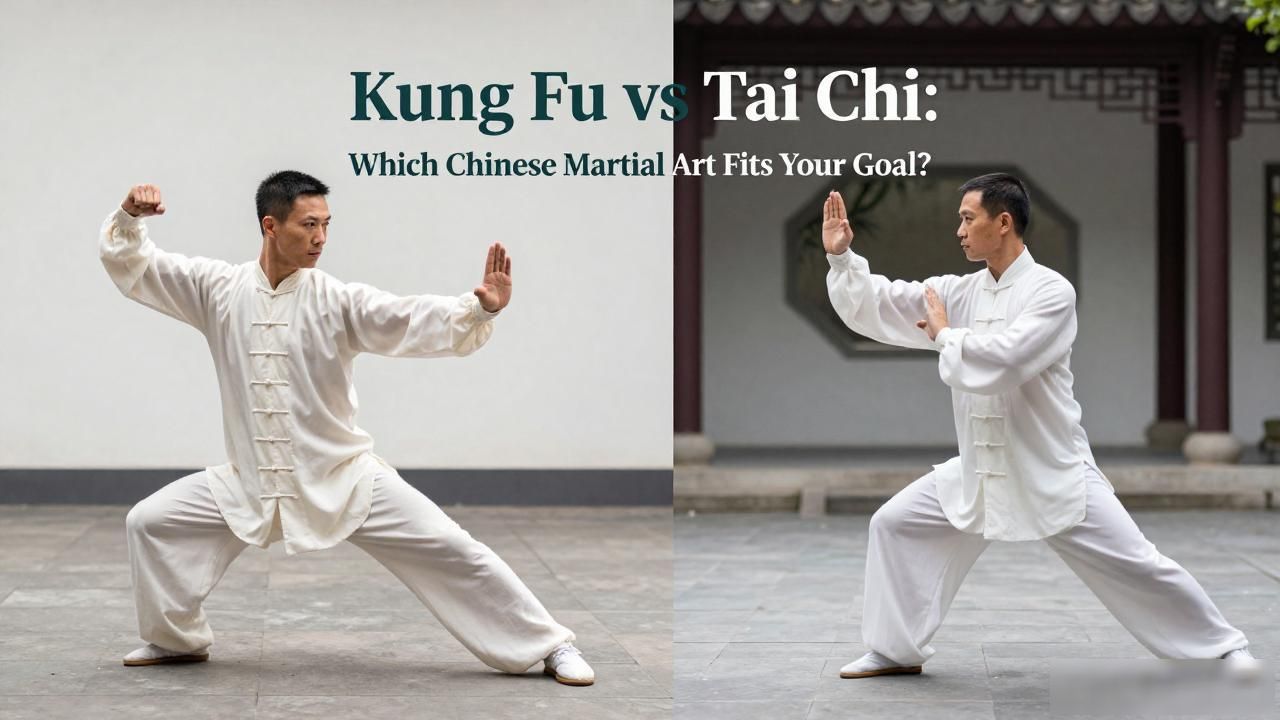
What Is the Difference Between Chinese Kung Fu and Tai Chi?
Chinese Kung Fu and Tai Chi are two of China’s most celebrated martial arts, yet they represent very different philosophies and approaches. Understanding their distinctions can help foreigners decide which path suits them best.
What Are Kung Fu and Tai Chi?
Kung Fu, also known as Wushu, is a broad term covering hundreds of fighting styles that developed in China over centuries. Each style carries its own philosophy and techniques shaped by the surrounding environment and culture. Styles like Shaolin emphasize speed and power through rigorous physical training, while others like Wing Chun focus on close-range combat efficiency. Kung Fu practitioners train their bodies to become weapons, developing strength, flexibility, and coordination through repeated forms and sparring exercises. The art has deep connections to Chinese medicine and Buddhist philosophy, especially in temple-based traditions.
Tai Chi, or Taijiquan, is fundamentally different in purpose and movement. Originating from Taoist philosophy, it combines slow flowing movements with deep breathing and mental focus. Unlike Kung Fu’s explosive energy, Tai Chi cultivates internal strength through gentle, continuous motion that appears almost dance-like to outsiders.
Kung Fu vs Tai Chi: How Do They Differ?
The contrast between these two disciplines reveals how differently Chinese martial artists approach human potential. Kung Fu trains the body for practical combat and self-defense, demanding hours of repetitive conditioning to build muscle memory and physical resilience. Training sessions often involve jumping, kicking, punching, and falling drills that test endurance and toughness.
Tai Chi takes an entirely different path toward bodily mastery. Practitioners move through slow, deliberate postures that build balance, flexibility, and deep breathing control. Tai Chi is essentially a moving meditation that improves mental clarity while strengthening the lower body and core. Many Western seniors discover Tai Chi in parks and never consider it a martial art at all, which perfectly illustrates how these practices diverge in public perception.
Both arts share common roots in Chinese philosophy, particularly the balance of Yin and Yang. However, Kung Fu tends toward the active, yang expression while Tai Chi emphasizes receptive, yin principles. This philosophical difference shapes every aspect of training from breathing technique to mental focus.
Which One Should You Choose?

The right choice depends entirely on your personal goals and physical condition. If you want to learn practical self-defense skills and build explosive strength, Kung Fu offers a comprehensive fighting education. Beginners often find certain styles accessible,while others demand years of grueling preparation before showing results.
Tai Chi appeals to those seeking stress relief, improved balance, and long-term health benefits without violent contact. The gentle pace makes it suitable for people of all ages and fitness levels. Many foreigners start with Tai Chi before exploring other martial arts, finding it opens their understanding of Chinese culture and philosophy in profound ways.
Consider visiting local schools to observe both practices firsthand before committing. The cultural experience of either art can enrich your life far beyond physical training alone.