
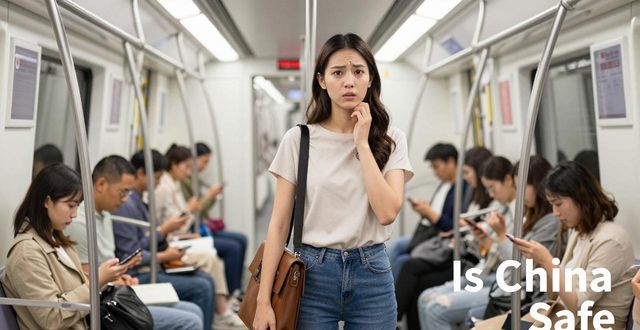
When people ask me “Is China safe?” I usually smile and share my own experience of living here for several years. As someone who has traveled to over twenty countries and now calls Shanghai home, I can tell you that personal safety is one of the things that surprised me most positively about China. From walking alone at midnight to using public transport with expensive gear, the sense of security is genuinely remarkable. Let me break down the reality based on what I have seen and lived every single day.
What is the crime rate in China really like

Statistics from the Chinese government show that the number of criminal cases has been falling steadily for two decades. But numbers aside, let me give you a real example. I once left my laptop bag on a subway train by accident. Forty minutes later, after panicking and returning to the station, a staff member handed it to me with everything inside untouched. My Chinese friends were not even surprised. Pickpocketing exists,sure, but violent street crime is extremely rare. Even late at night in big cities like Beijing or Guangzhou, you see women jogging alone with headphones on, something I would never dare do in many European or American cities.
How safe is public transportation in China
China’s public transport system is not only efficient but also incredibly secure. Every subway station has security checks for bags, and cameras cover every corner of trains and buses. The high-speed rail network carries millions of passengers daily with almost zero safety incidents. I once forgot my backpack on a bullet train and realized it two hours later. The train staff had already logged it, and I picked it up from the lost-and-found at the terminal station. Taxis and ride-hailing apps like Didi have real-time tracking and emergency buttons that share your route with local police if you press once. For a foreigner who does not speak perfect Mandarin, this layer of security is very reassuring.
Can foreigners feel safe in China without speaking Chinese
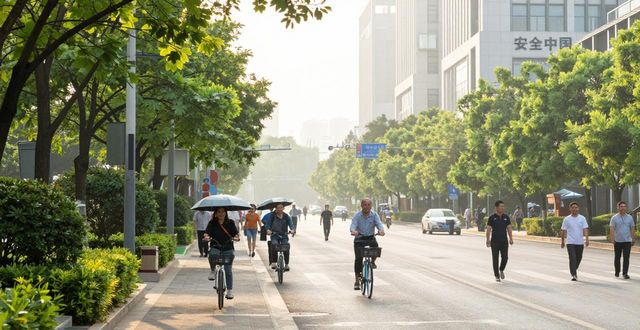
Absolutely. Police officers in tourist areas and major cities often carry translation apps on their phones. I remember getting lost in a small alley in Chengdu at 11 PM. Two patrol officers approached me not to question me but to ask if I needed help. They used a translation device to guide me back to my hotel. Moreover, neighborhoods in China have community watch systems and local committee members who know every resident. When I moved into my apartment, the neighborhood manager came by to introduce herself and gave me her WeChat for any concerns. Foreigners are treated with curiosity and respect, not suspicion. Of course, you should carry your passport or a photo of it, as random ID checks happen, but they are quick and polite.
How does China’s surveillance affect daily life

You have probably heard about China’s camera network and facial recognition systems. Let me tell you what that means for an ordinary person. Cameras are everywhere: street corners, elevator lobbies, bus stops, even inside some restaurants. But I have never felt watched in an uncomfortable way. Instead, I appreciate knowing that if anything happened, there is always footage. For example, a friend’s bicycle got moved by a street cleaner who thought it was abandoned. Within two hours, the police reviewed the camera and found the bicycle at a maintenance shed. No crime, just a misunderstanding solved quickly. The system is not about controlling daily life; it is about keeping things orderly and helping people when things go wrong. In three years, I have never been stopped or questioned by police for no reason.
Here is a question for you: If you could experience a week of living in a city where you can walk alone at 2 AM without fear, would you give China a chance to show you that safety? Share your thoughts below, and if this helped you understand the real situation, please like and share so more travelers can see the truth.