
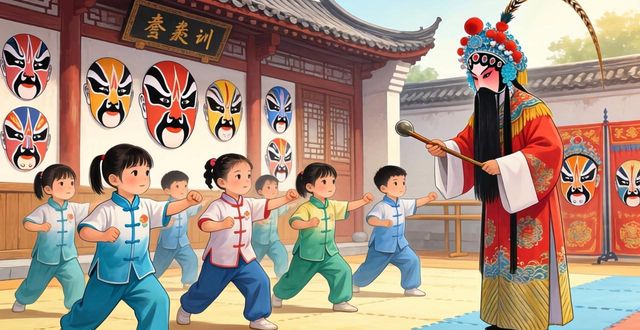
If you have ever watched a Sichuan Opera performance, you were probably amazed by the rapid face-changing, the dazzling costumes, and the lively music. But have you ever wondered how performers learn these incredible skills? Sichuan Opera training is a structured and demanding process that blends physical conditioning, vocal techniques, acting, and traditional acrobatics. Unlike Western theater training, this art form requires years of disciplined practice under a master. In this article, I will walk you through what real Sichuan Opera training involves, what students learn at each stage, and whether anyone can pick it up. By the end, you will have a clear picture of the commitment and reward behind this unique Chinese theatrical tradition.
How long does Sichuan Opera training take

Most professional performers begin training as children, usually between six and ten years old. The complete training cycle lasts from six to ten years before a student is considered ready for independent performances. However, basic stage competence takes about three to four years of daily practice. During the first two years, students focus entirely on physical foundations: stances, jumps, rolls, and basic acrobatics. After that, they slowly add vocal training and character work. Many training schools in Chengdu offer structured programs that combine general education with opera classes. Keep in mind that even after graduation, an artist continues to refine their skills throughout their career. Face-changing alone often takes two to three years to master at a basic level, and another five years to perform smoothly on stage under varying conditions.
What skills are taught in Sichuan Opera training
Sichuan Opera is not just singing or acting. It combines five major skill categories: singing (qiang), speaking (jiang), acting (zuo), acrobatic fighting (da), and special techniques like face-changing (bian lian) and fire-spitting (tu huo). A typical training day starts with morning vocal warm-ups and breathing exercises, because the style uses a distinct high-pitched nasal voice. Then students practice basic movements such as walking, turning sleeves, and using props like fans and swords. Afternoons are for learning specific roles: male (sheng), female (dan), painted face (jing), or clown (chou). Each role has its own walking style, hand gestures, and emotional expressions. Advanced students spend extra hours mastering the famous mask-changing trick, which involves quick hand movements, layered silk masks, and precise timing. Fire-spitting training only begins after at least five years of foundation, as it requires swallowing kerosene safely and adjusting the spray angle to avoid burning the face.
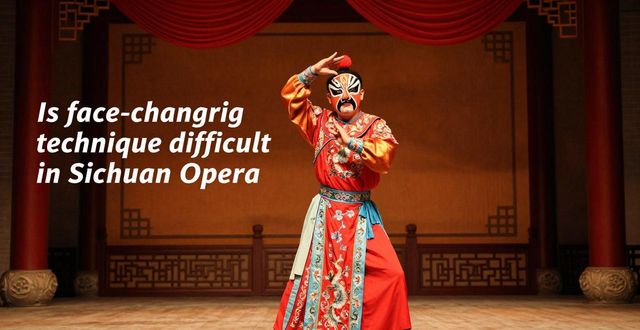
Is face-changing technique difficult to learn in Sichuan Opera
Yes, face-changing is one of the hardest skills to acquire. The technique originally came from ancient mask rituals but was later refined into an opera secret. Students first learn to control silk masks that are glued together in layers and attached to thin strings or elastic bands. A single flick of the hand, a turn of the head, or a sweep of the sleeve can change the mask in under half a second. The hardest part is not the mechanical motion but the acting that hides the movement. A good performer makes the change seem effortless and magical, while the audience never sees the hand pull the string. Training involves practicing the same sequence hundreds of times in front of a mirror until the hand motion becomes subconscious. Many students fail at this stage because they cannot maintain the relaxed expression required to distract the viewer. Instructors often break down the movement into tiny steps: first touching the string, then flicking the wrist, then coordinating with a head turn. On average, a student needs two years of daily repetition to change four to five masks in a single routine without exposing the mechanism.
Where can foreigners experience authentic Sichuan Opera training
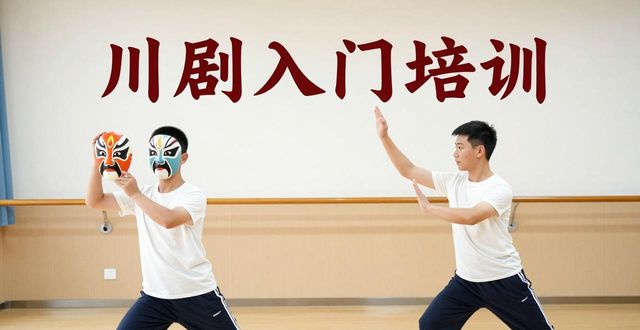
Several institutions in Chengdu and Chongqing now offer short-term workshops for international visitors. The Sichuan Opera Academy has a special summer program that runs for two to four weeks, where beginners learn basic movements, a simple mask-changing trick using training masks, and a few lines of a famous aria. Another option is the Shu Feng Ya Yun theater in Chengdu, which organizes daily one‑hour trial classes before the evening show. These classes teach basic fan work and a simple vocal exercise. For more serious study, private masters sometimes accept foreign students for three‑month intensives, though you will need a basic Mandarin level to follow instructions. Western students often find the physical demands challenging but the cultural insights rewarding. You can also find online courses that explain the theory and demonstrate basic footwork, but nothing replaces in‑person correction from a teacher. If you ever plan a trip to Sichuan, booking a trial session is a great way to understand why this art form has survived for over three centuries.
What aspect of Sichuan Opera training would you most like to try—the acrobatics, the singing,or the famous face-changing? Share your thoughts in the comments, and if you found this guide useful, please like and share it with fellow culture lovers.