

Planning a trip across China? The high-speed rail network is your best bet, but navigating its schedule can feel daunting at first. In this guide, I’ll walk you through everything you need to know about checking, understanding, and using the China high-speed train schedule like a local. Whether you’re a first-time visitor or a seasoned traveler, these tips will save you time and headaches.
Where to find the official China high-speed train schedule

The most reliable source is the official ticketing platform, , which also has an English app. Many foreigners worry about language barriers, but the English version covers all major routes. Simply enter your departure city, arrival city, and travel date. The system will display a complete list of trains, including departure times, arrival times, duration, and seat availability. For quick checks, you can also use third-party apps like or China Travel Guide – they offer user-friendly interfaces and accept international payment methods. However, always cross-reference with 12306 for real-time updates, as schedules can change due to holidays or weather.
How often do China high-speed trains run on major routes
On popular routes like Beijing-Shanghai or Guangzhou-Shenzhen, trains run every 5 to 10 minutes during peak hours. Imagine a metro system, but at 300 km/h. For example, from Beijing South to Shanghai Hongqiao, there are over 100 daily departures between 6:00 AM and 10:00 PM. First trains usually start around 6:00 AM, and last trains depart near 10:00 PM. On less busy routes, such as Chengdu to Kunming, you might find 20 to 30 trains per day. Weekends and Chinese national holidays (like Lunar New Year or October Golden Week) see extra trains added. Always book a few days in advance for popular routes, or weeks ahead during holiday seasons.

Can I book a last-minute ticket using the China high-speed train schedule
Yes, but with conditions. If you check the schedule on 12306,you’ll see that tickets go on sale 15 days in advance. However, unsold seats can be bought up to 30 minutes before departure for non-holiday periods. For last-minute travel, focus on shorter routes like Hangzhou to Shanghai (45 minutes) where turnover is high. At the station, use the self-service kiosks (they have English options) to scan your passport and buy tickets. Keep in mind that during peak seasons, even last-minute spots vanish quickly. A smart trick: search for trains with “R” (reserved) or “D” (dynamic) – they often have cancellations. Also, consider buying a standing ticket (only available on some G-trains) if you’re desperate, though it’s not comfortable for long rides.
What do the train codes like G D C mean in the schedule
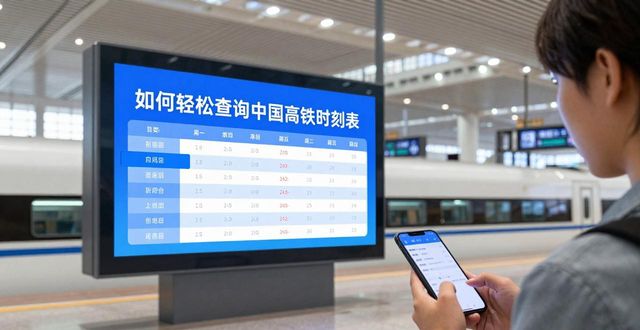
Understanding these codes is crucial when reading the China high-speed train schedule. G-trains (Gaotie) are the fastest, reaching 350 km/h, and cover major long-distance routes like Beijing to Guangzhou. D-trains (Dongche) are slightly slower (200-250 km/h) but cheaper, perfect for medium trips like Xi’an to Chengdu. C-trains (Chengji) connect nearby cities, such as Tianjin to Beijing, with frequent stops. The schedule will show these letters followed by a number. Always compare G and D options: a G-train might save 2 hours but cost double. For example, from Shanghai to Nanjing, a G-train takes 1 hour, while a D-train takes 2.5 hours. If you’re on a budget, C-trains are the most economical, though they rarely have first-class seats.
Now that you know how to decode the China high-speed train schedule, you’re ready to explore this amazing country with confidence. Have you ever tried booking a Chinese train ticket online, and what challenge did you face? Share your story in the comments – your experience could help fellow travelers. If you found this guide useful, give it a like and share it with your travel group.