
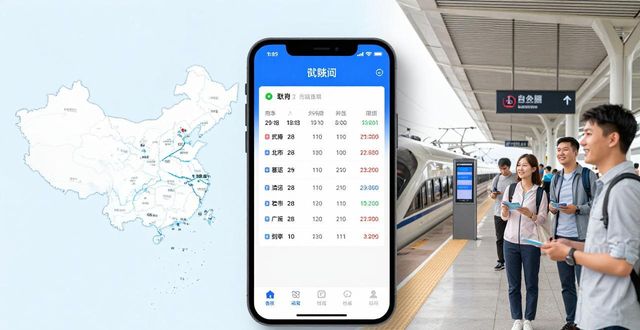
Planning a trip across China? The high-speed train network is your best bet, but figuring out the schedule can feel overwhelming at first. From my experience as a frequent traveler on the Beijing-Shanghai and Guangzhou-Shenzhen lines, I’ve learned that mastering the timetable is the key to a smooth journey. This guide breaks down everything you need to know about China’s high-speed train schedule, from where to find real-time updates to understanding the different train classes and avoiding common booking mistakes.
Where can I find China high-speed train schedule online
The official source is the website or its mobile app, run by China Railway. While the site has an English version, many international travelers find it tricky to navigate. Third-party platforms like or China DIY Travel offer user-friendly interfaces and show schedules in your local time zone. Simply enter your departure city, arrival city, and travel date, and you’ll see a list of trains with departure times, arrival times, duration, and seat availability. For example, a G-train from Beijing to Shanghai runs every 10-15 minutes from 6 am to 10 pm, taking about 4.5 hours.

Another reliable method is using WeChat mini-programs. Search for “Train Schedule” or “12306” within WeChat, and you can access real-time data without downloading a separate app. I always recommend checking two or three sources to confirm, especially during holidays like Chinese New Year when schedules change frequently. Remember that tickets go on sale 15 days in advance, so plan ahead. If you see a train marked “No tickets,” try adjusting your departure time by an hour or choosing a nearby city as your starting point.
What do the train codes mean on China high-speed schedule
Understanding train codes is essential for reading any schedule correctly. China’s high-speed trains use letters followed by numbers: G (Gāosù) stands for the fastest trains, reaching 300-350 km/h and making few stops. D (Dòngchē) is slightly slower at 200-250 km/h with more stops. C (Chéngjì) connects nearby cities like Beijing-Tianjin. K, T, and Z are conventional trains, not high-speed. On a schedule, a G1 train is the flagship Beijing-Shanghai service, while a D313 might take a longer route through smaller cities.
The number also gives clues: lower numbers (G1-G100) are usually express trains between major hubs, while four-digit numbers (G1234) indicate regional services. For instance, G89 from Beijing to Chengdu takes about 8 hours, but a four-digit G train on the same route could take 10 hours due to extra stops. When scanning a schedule, focus on G and D trains for high-speed travel. If you value speed over price, pick a single-digit or double-digit G train. If you’re on a budget, D trains offer similar comfort at about 70% of the G fare.
How to avoid peak hours when booking China high-speed train
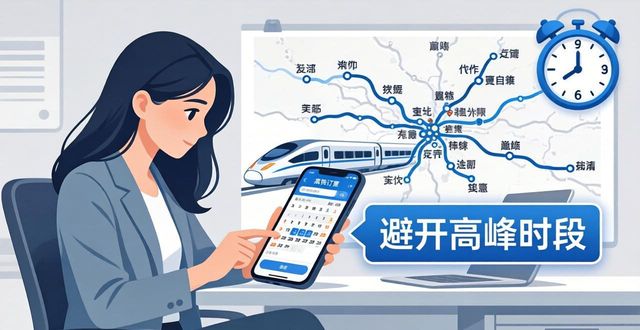
Peak hours on China’s high-speed rail generally fall into two periods: weekday mornings from 7-9 am when business travelers commute, and Friday evenings from 5-8 pm when people leave cities for weekends. Holiday periods like Labor Day (May 1st) or National Day (Oct 1st) see trains sold out within minutes. To avoid crowds, check the schedule for departures between 11 am and 2 pm, or after 8 pm. I once took a G train from Shanghai to Hangzhou at 9 pm – the carriage was half-empty, and I got a whole row of seats to myself.
Use the schedule’s filtering options to hide trains with “many stops” or “long duration” because those attract more leisure travelers. Also, avoid trains that arrive at major hubs exactly at 6 pm, as stations become chaotic with transfer passengers. If you must travel during peak season, book a seat on the first or last carriage – those are usually quieter because they’re farther from the station entrance. Set an alarm for ticket release time (typically 8 am local time, 15 days before departure) and be ready to book within the first 10 minutes.
Can I trust the real-time updates on China high-speed schedule
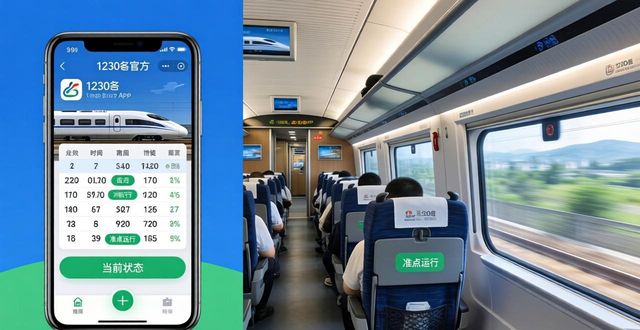
Yes, the official 12306 system provides highly accurate real-time updates, with delays rarely exceeding 5 minutes for G and D trains. However, third-party apps may lag by 1-2 minutes. I always cross-check the “current status” feature: green means on time, yellow means delay under 10 minutes, red means over 30 minutes. Weather events like typhoons or heavy snow in southern China can cause cancellations, and the schedule will show “C” for canceled. When that happens, the system automatically suggests alternative trains within two hours.
One trick experienced travelers use: the schedule often updates with last-minute tickets about 30 minutes before departure, as some passengers cancel their bookings. If you see a train marked “sold out” online, check again at the station’s self-service machines – they sometimes have a separate inventory. Also, note that the schedule displayed in English on third-party sites might not show all trains, especially regional D trains. For the most reliable info, use the Chinese interface of 12306 with browser translation. Delays do happen, but they’re rare – in over 50 high-speed trips, I’ve only experienced two delays longer than 15 minutes.
Have you ever struggled to understand a train schedule in a foreign country, and what’s your biggest tip for navigating China’s high-speed rail system? Share your story in the comments below – and if this guide helped you, give it a like and share it with a friend planning a trip to China!