
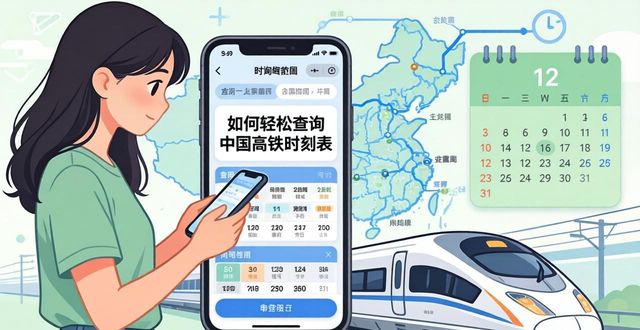
If you are planning to travel around China by train, understanding the high-speed train China schedule is one of the first things you need to master. China’s high-speed rail network is the largest in the world, covering almost every major city and many smaller ones. The schedule can seem overwhelming at first, but once you know where to look and how to read the information, it becomes very simple. In this guide, I will share practical tips based on my own travel experience to help you navigate train times without stress.
How to read a China high-speed train schedule

A typical China high-speed train schedule lists the train number, departure and arrival times, duration, and seat classes. The train number usually starts with G (high-speed, up to 350 km/h), D (electric multiple unit, slightly slower), or C (intercity). For example, G1 runs from Beijing to Shanghai in about 4.5 hours. The schedule also shows the station names – note that major cities like Beijing have several stations (Beijing South, Beijing West, etc.), so always check which station your train leaves from. The departure time is always in 24-hour format, and the arrival time is local. Some schedules also show stops along the way, but the most important columns are the train number, origin, destination,and travel time.
Best apps for checking train times
Forget printed schedules – the best way to access the real-time high-speed train China schedule is through mobile apps. The official railway app is called Railway 12306, but it is only in Chinese and requires a Chinese ID or passport verification. For foreign travelers, I recommend using or China Train Booking. These apps have English interfaces and show live schedules, seat availability, and prices. You can search by route (e.g., Shanghai Hongqiao to Hangzhou East) and see all trains for a specific date. The apps update instantly when there are delays or cancellations. Another reliable option is the China Travel Guide app, which also shows platform numbers at some stations. Avoid using random websites – stick to these proven ones to avoid fake data.
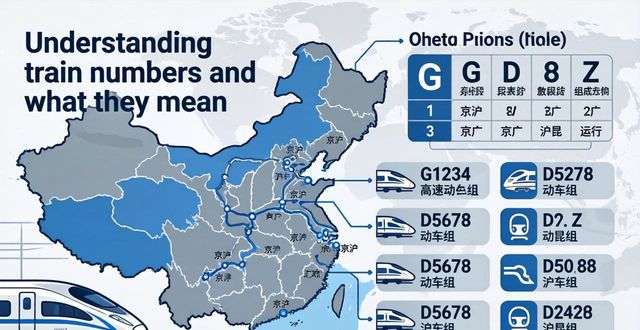
Understanding train numbers and what they mean
Every high-speed train has a unique number, and that number tells you a lot about the schedule. G-trains are the fastest and most frequent on busy routes like Beijing–Shanghai and Guangzhou–Shenzhen. D-trains run overnight or on secondary lines and are slightly slower but cheaper. C-trains connect nearby cities, like the Beijing–Tianjin intercity line. The first digit after the letter often indicates the direction: odd numbers usually go north or east, even numbers go south or west. For example, G1 goes from Beijing (north) to Shanghai (south), while G2 returns from Shanghai to Beijing. Knowing this helps you guess the route without looking at the full schedule. Also, if the train number has four digits, it might be a regional service with more stops. When browsing the schedule, pay attention to the number because it affects travel time and price.
Tips for booking tickets in advance
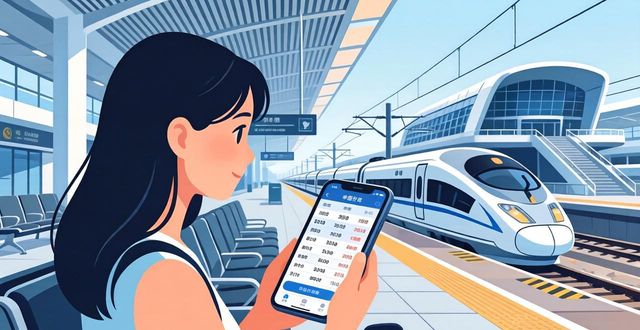
The high-speed train China schedule becomes available for booking 15 days before the departure date. Trains on popular routes like Beijing–Xi’an or Chengdu–Chongqing sell out within hours, especially before holidays like Chinese New Year or National Day. So book as early as possible. Use the apps I mentioned earlier, and have your passport ready because ticket inspectors check ID at the gate. You can book soft sleepers, first-class seats, or second-class seats – second class is fine for trips under 5 hours. If your schedule is flexible, look for trains that start early in the morning (around 6:00–8:00) or late at night (after 21:00), as they are less crowded. Also, note that some stations have a separate high-speed rail area, so arrive at least 45 minutes early to clear security. If a train shows “no tickets,” keep checking because the system releases returned tickets randomly.
Now I want to ask you: Have you ever tried to book a high-speed train ticket in China, and what was the hardest part about understanding the schedule? Share your experience in the comments, and if you found this guide helpful, please like and share it with fellow travelers.