
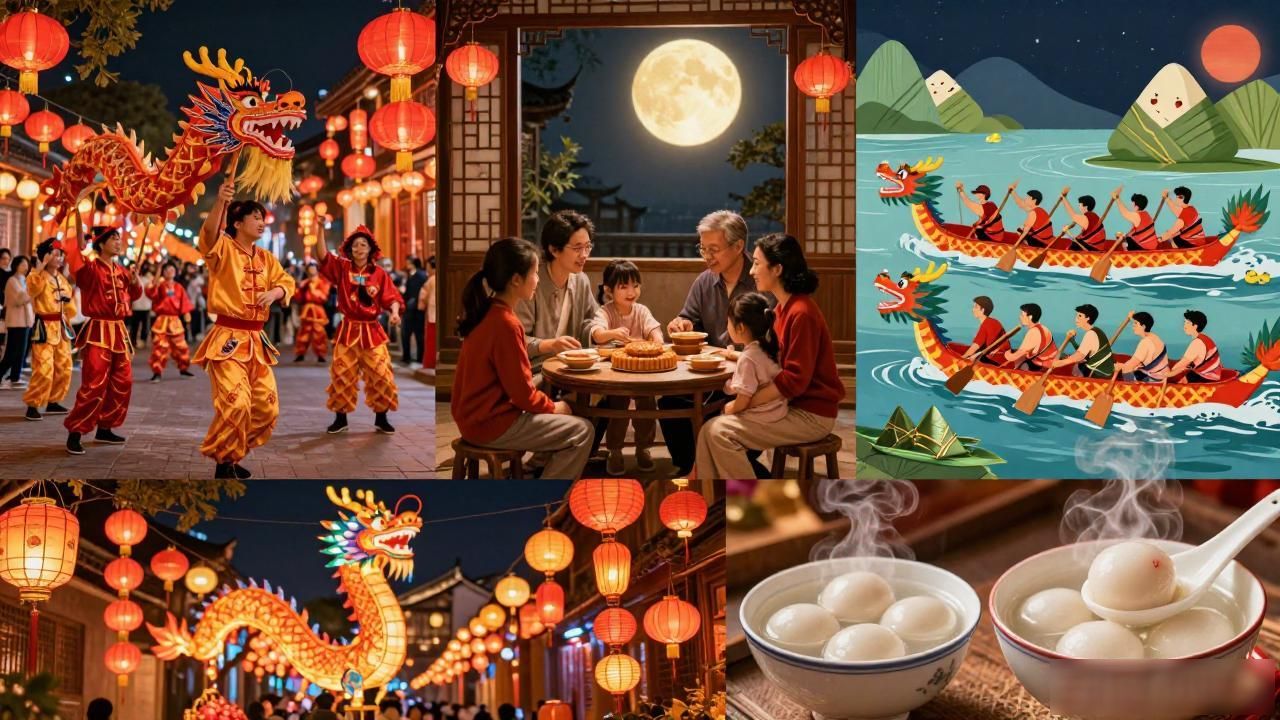
Traditional Chinese festivals are deeply rooted in thousands of years of history, blending family values, seasonal changes,and ancient customs. For many foreigners, these celebrations can seem mysterious or hard to navigate. But once you understand the core traditions behind each festival, you will find them welcoming, colorful, and surprisingly easy to join.
What makes Chinese New Year so special
Chinese New Year, also known as Spring Festival, is the most important holiday in China. It marks the beginning of the lunar calendar and usually falls between late January and mid-February. Families travel across the country to reunite, making it the world’s largest annual human migration. The celebration lasts about 15 days, with each day carrying its own meaning.
The most iconic tradition is the giving of red envelopes, called hongbao, which contain money and symbolize good luck. You will see red decorations everywhere, from lanterns to couplets on doors. Fireworks and dragon dances are also common, especially in cities and rural towns. If you are invited to a Chinese home during this time, bring a small gift like fruit or tea, and avoid giving clocks or sharp objects, as they carry unlucky meanings.
Food plays a huge role during Chinese New Year. Dumplings represent wealth, fish stands for surplus, and rice cakes symbolize progress. Each dish has a story, and sharing a meal is a way to strengthen family bonds. Even if you are not Chinese, many communities host public celebrations where you can taste these foods and watch performances.
How to experience the Dragon Boat Festival
The Dragon Boat Festival, or Duanwu, happens on the fifth day of the fifth lunar month, usually in June. It honors the ancient poet Qu Yuan, who drowned himself in protest against corruption. People race dragon-shaped boats and eat sticky rice dumplings wrapped in bamboo leaves, called zongzi, to remember him.

If you want to join the fun, find a local dragon boat race. Many cities in China and abroad hold these events, and some even let tourists participate as rowers. The atmosphere is loud and exciting, with drums beating and crowds cheering. You can also try making zongzi at home, though it takes practice to wrap them tightly.
Another key tradition is hanging herbs like mugwort and calamus on doors to ward off evil spirits. Some people drink realgar wine, though it is less common today. Children often wear colorful silk pouches filled with fragrant herbs. These small customs show how festivals blend history with everyday life.
What to expect during the Mid-Autumn Festival
The Mid-Autumn Festival falls on the 15th day of the eighth lunar month, usually in September or October. It celebrates the full moon and the harvest season. The moon is believed to be the brightest and roundest on this night, symbolizing family unity.
Mooncakes are the star of this festival. These dense pastries come with various fillings, from sweet lotus seed paste to savory ham. They are often given as gifts, and sharing them with friends and coworkers is a common practice. If you are in China, you might also see people lighting lanterns or watching moon-themed performances.
Families gather outdoors to admire the moon while eating pomelos and drinking tea. In some regions, people float sky lanterns or write wishes on them. The festival is quieter than Chinese New Year but equally meaningful. For foreigners, it is a perfect chance to experience Chinese hospitality and enjoy a peaceful evening under the moonlight.
Traditional Chinese festivals offer a window into the country’s soul. Whether you are racing a dragon boat, unwrapping a mooncake, or receiving a red envelope, each moment connects you to centuries of storytelling and community. The best way to appreciate them is to participate with an open heart and a curious mind.