
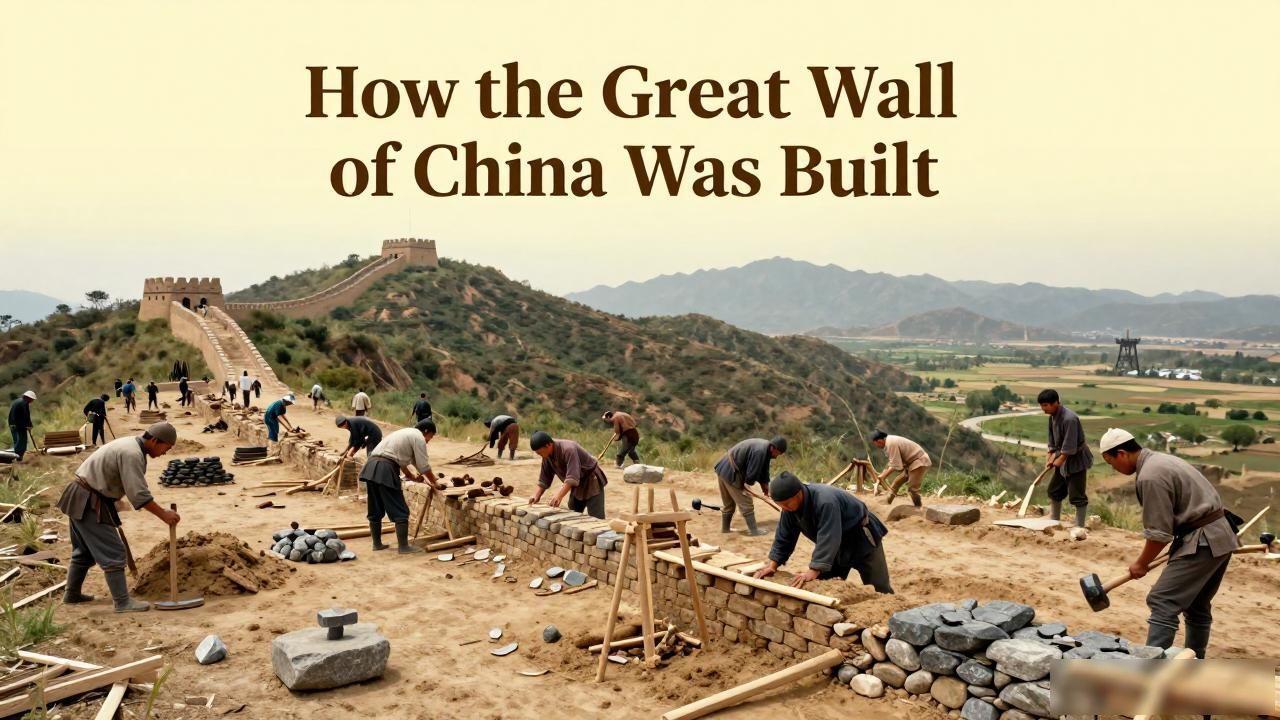
Standing atop the Great Wall, you can’t help but feel overwhelmed by its sheer scale. But here’s something most tourists miss: this wasn’t built in one go. The Great Wall construction spanned nearly 2,000 years, involving multiple dynasties, millions of workers, and some seriously impressive engineering. Let me take you behind the scenes of one of humanity’s most ambitious building projects.
When Was the Great Wall Built
The story starts way before most people realize. During the Warring States period around 7th century BC, various states built defensive walls to protect their borders. These early walls were rough affairs — mostly just dirt and wood, thrown up in a hurry because neighboring states were constantly at each other’s throats.

The real turning point came with Qin Shi Huang, the first emperor of China, who unified the country around 221 BC. He ordered these scattered walls to be connected and expanded into a single defensive system. That’s where the popular idea of “the Great Wall” really takes shape, even though most of what we see today came much later.
The Ming Dynasty, ruling from 1368 to 1644,did the bulk of the construction we recognize. They rebuilt and reinforced sections using bricks and stone, added watchtowers, and created a proper military network stretching over 13,000 kilometers. Most of the Great Wall that tourists visit today was built during Ming Dynasty times, not by Qin Shi Huang as many assume.
How Was the Great Wall Constructed
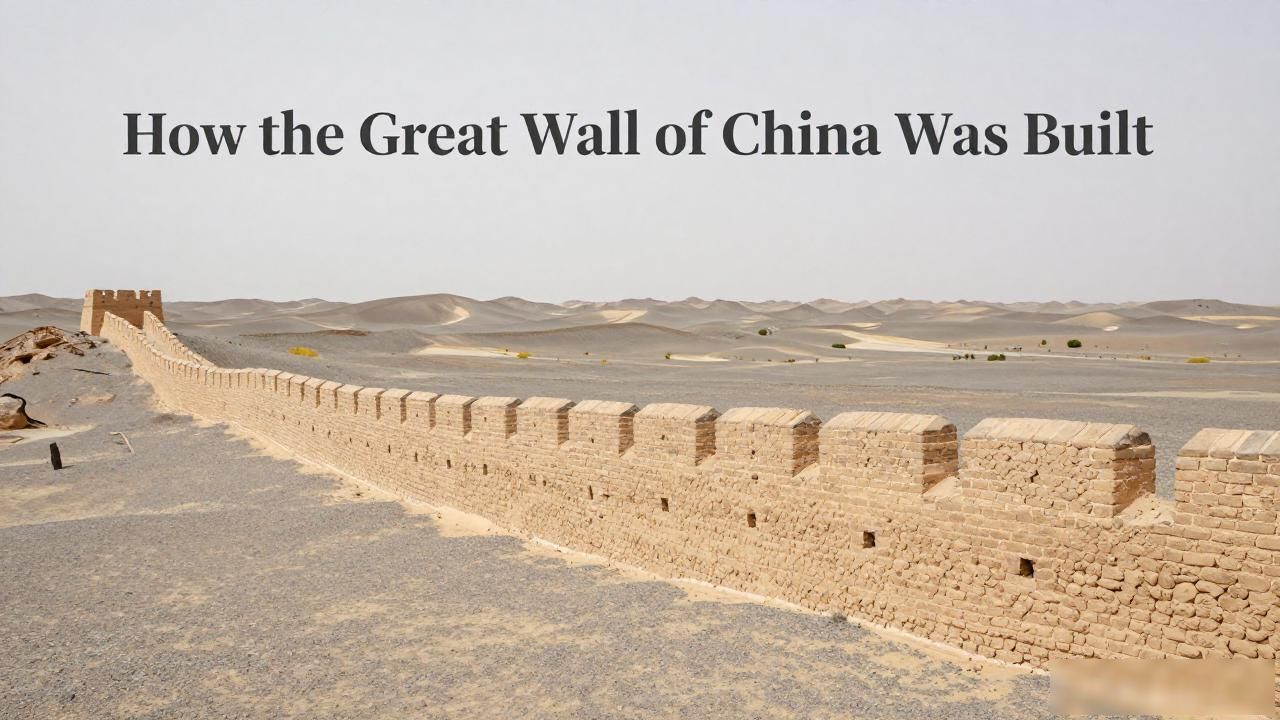
The construction methods varied wildly depending on where you were and what materials were available. In the western desert regions, builders used packed sand and gravel because stone and brick were scarce. These sections still stand surprisingly well after centuries, which says something about the quality of ancient Chinese engineering.
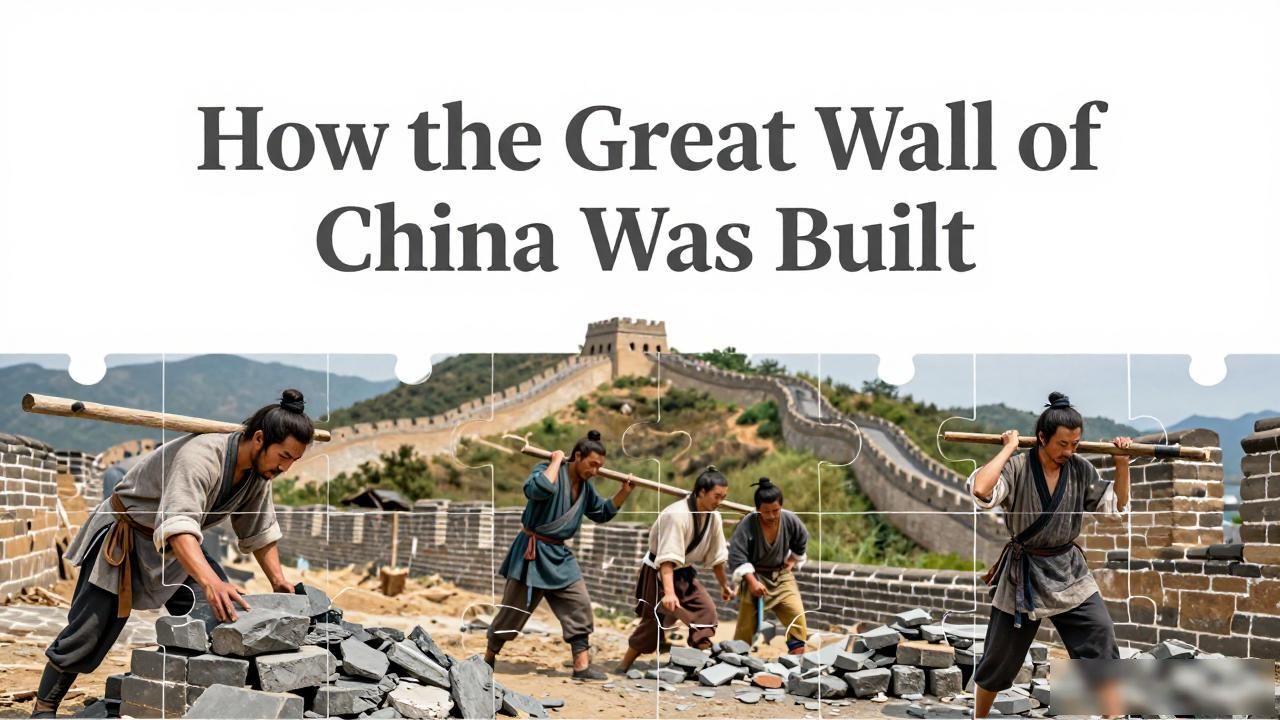
In the mountainous central and eastern sections, things got more complicated. Workers hauled massive stones up steep ridges by hand. There were no cranes, no trucks, no machinery. They used simple wooden sleds, ropes, and an incredible amount of human labor. Some estimates suggest up to one million workers died during construction, though exact numbers are impossible to verify.
Here’s where it gets interesting: the Ming builders developed a secret ingredient in their mortar. They mixed slaked lime with sticky rice soup, creating a bond so strong that the mortar used in the Great Wall construction is still intact after 600 years. The organic compounds in the rice actually made the wall more resistant to weathering than pure lime mortar would have been.
What You Can See on the Wall Today
If you’re planning to visit, knowing what to look for makes the experience infinitely better. The Badaling section near Beijing is the most restored and tourist-friendly, but it’s also the most crowded. The Mutianyu section offers a great balance of restoration and natural beauty, with fewer visitors and some of the best watchtower views.
For the adventurous, the Jiankou section is untouched and dramatic, but it’s also dangerous. Crumbling steps, missing sections, and steep drops make it unsuitable for casual visitors. The wild sections show the original construction methods most clearly — you can see where bricks give way to rough stone, where repairs are obvious, and where nature is slowly reclaiming what humans built.
What strikes me most is how the wall follows the terrain rather than fighting it. The builders were smart enough to place it along ridge lines for maximum visibility and defense. That’s why it looks like it’s growing out of the mountains rather than sitting on top of them. That’s the real genius of Great Wall construction.